

In 2009, Bitcoin demonstrated to the world that decentralized systems could power the transfer of money without intermediaries.
But quietly, it pointed to something bigger: the ability to program anything of value and automate its execution through code running on a decentralized network. This gave rise to Ethereum and the introduction of smart contracts.
Yet, Chainlink Co-Founders Sergey Nazarov and Steve Ellis recognized early on that smart contracts lacked one critical capability. They couldn’t communicate with the outside world.
This was the oracle problem. Chainlink was created in 2017 to solve it.
As outlined in the original whitepaper, the goal was simple but ambitious. Make smart contracts truly useful by connecting them to real-world data, existing systems, and other blockchains.
From that core belief, Chainlink began by solving the most urgent oracle requirement: bringing trusted data onchain to unlock decentralized finance (DeFi).
Chainlink Data Feeds launched in 2019 and fueled the explosive rise of DeFi. Now, Chainlink data powers over ~70% of the industry, including many of its biggest protocols, such as Aave, Lido, ether.fi, Maple Finance, Jupiter, Kamino, and many more.
That was only the start. Chainlink started applying its decentralized oracle networks to use cases beyond data in 2020, laying the foundation for the Chainlink we see today: a full-stack platform powering advanced institutional smart contracts.
Today, Chainlink spans five key verticals:
1. Data: Delivering high-quality data securely onchain to power critical smart contract execution
2. Interoperability: Enabling the secure movement of data and value across public and private blockchains
3. Compliance: Embedding identity and policy controls in smart contracts to enable regulated onchain activity
4. Privacy: Preserving confidentiality of sensitive data and business logic while maintaining verifiability
5. Orchestration: Coordinating workflows across blockchains, offchain systems, and Chainlink services in a unified environment
Chainlink is no longer just a data oracle; it’s the infrastructure layer enabling global capital markets to move onchain.
First, it powered the rise of DeFi. Now, it’s accelerating the adoption of smart contracts and tokenized assets across traditional financial institutions, including Swift, UBS, Euroclear, and others.
All of this is leading to the end goal of converging DeFi and traditional finance into a single, global financial system where value, data, and contracts move seamlessly, with cryptographic guarantees at every step.
But quietly, it pointed to something bigger: the ability to program anything of value and automate its execution through code running on a decentralized network. This gave rise to Ethereum and the introduction of smart contracts.
Yet, Chainlink Co-Founders Sergey Nazarov and Steve Ellis recognized early on that smart contracts lacked one critical capability. They couldn’t communicate with the outside world.
This was the oracle problem. Chainlink was created in 2017 to solve it.
As outlined in the original whitepaper, the goal was simple but ambitious. Make smart contracts truly useful by connecting them to real-world data, existing systems, and other blockchains.
From that core belief, Chainlink began by solving the most urgent oracle requirement: bringing trusted data onchain to unlock decentralized finance (DeFi).
Chainlink Data Feeds launched in 2019 and fueled the explosive rise of DeFi. Now, Chainlink data powers over ~70% of the industry, including many of its biggest protocols, such as Aave, Lido, ether.fi, Maple Finance, Jupiter, Kamino, and many more.
That was only the start. Chainlink started applying its decentralized oracle networks to use cases beyond data in 2020, laying the foundation for the Chainlink we see today: a full-stack platform powering advanced institutional smart contracts.
Today, Chainlink spans five key verticals:
1. Data: Delivering high-quality data securely onchain to power critical smart contract execution
2. Interoperability: Enabling the secure movement of data and value across public and private blockchains
3. Compliance: Embedding identity and policy controls in smart contracts to enable regulated onchain activity
4. Privacy: Preserving confidentiality of sensitive data and business logic while maintaining verifiability
5. Orchestration: Coordinating workflows across blockchains, offchain systems, and Chainlink services in a unified environment
Chainlink is no longer just a data oracle; it’s the infrastructure layer enabling global capital markets to move onchain.
First, it powered the rise of DeFi. Now, it’s accelerating the adoption of smart contracts and tokenized assets across traditional financial institutions, including Swift, UBS, Euroclear, and others.
All of this is leading to the end goal of converging DeFi and traditional finance into a single, global financial system where value, data, and contracts move seamlessly, with cryptographic guarantees at every step.
Shared byShawn Noor - 8 days ago
Log in to comment
Loading ..
Related Articles
Citi's Tokenization 2030: Chainlink CCIP as the Future of Financial Interoperability

NYC Capital Markets Event on Tokenization & Stablecoins with Chainlink on June 11
Reducing AI Hallucinations with Chainlink's Consensus Oracles
Saturn Integrates Chainlink CCIP for Secure Onchain STRC Distribution

24/7 Trading on CME Group: The Future of Digital Commodity Markets
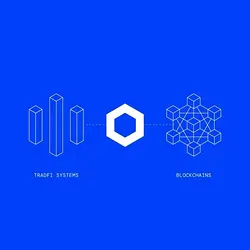
Chainlink's Role in Bridging Major Financial Institutions and Blockchain Networks
84
0/100