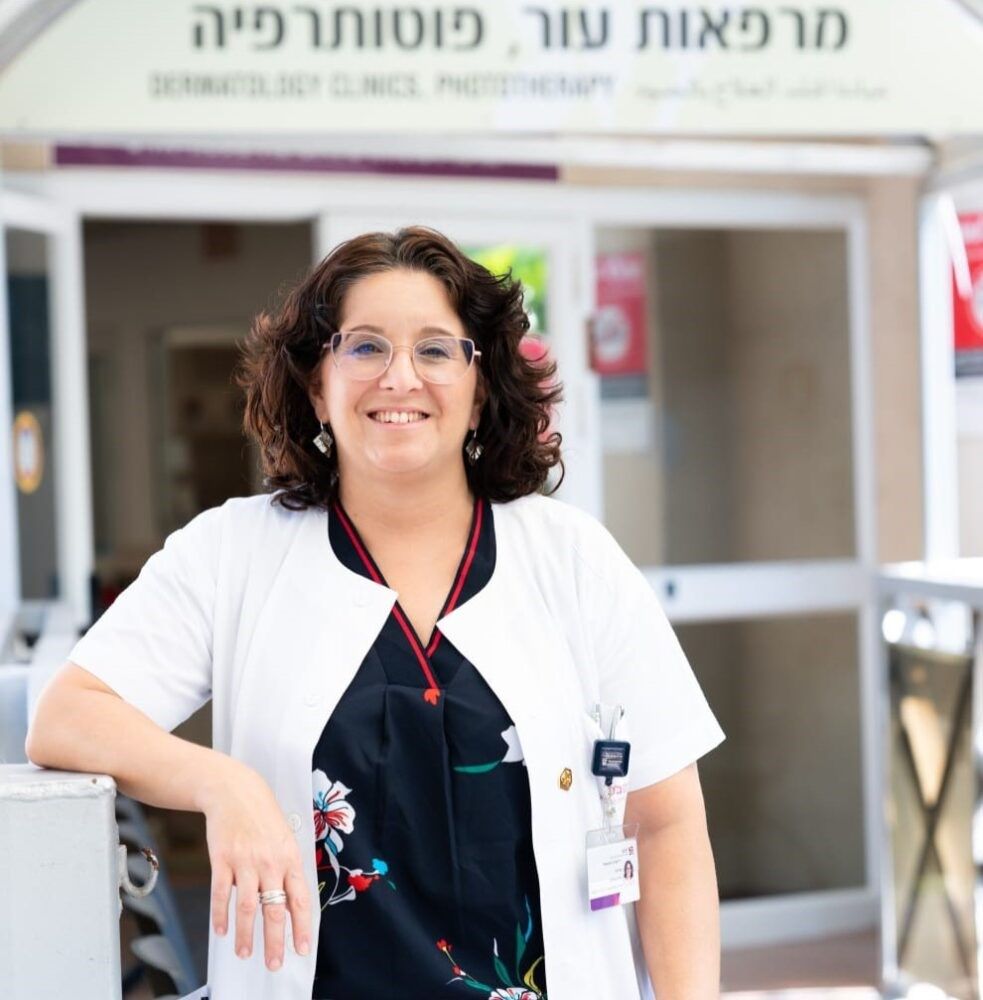
Discover Breakthroughs in 3D Bioprinting at Rambam Health Care Campus

Zooming in on 3D Bioprinting at Rambam
With a global shortage of organs for transplantation and many unmet medical challenges, solutions are taking shape via advanced technologies such as 3D bioprinting. At Rambam Health Care Campus (Rambam), significant breakthroughs are already underway.
Imagine a future with an almost-unlimited, ready‐to‐use supply of organs—potentially without the risk of rejection. This vision is moving closer to reality.
Rambam’s Applied Medical Technology Research Center (MATRiC) is a leading hub for regenerative medicine. MATRiC focuses on developing clinically relevant human tissues—from the cellular level to complex structures—for transplantation, drug testing, and precision (personalized) medicine.
At MATRiC, what looks like a standard 3D printer is, in fact, a state-of-the-art bioprinter. Rather than ink, living tissue is printed layer by layer using the patient’s own cells and other biological substances—referred to as bio-ink. The final printouts are used by clinicians to create disease models and test new drugs before they move on to human trials. This is personalized medicine at its finest, and the potential is enormous.
Read more here: https://www.facebook.com/share/p/1Fj5UipZMp/
#3Dbioprinting #regenerativemedicine #organtransplantation #medicalinnovation #personalizedmedicine
With a global shortage of organs for transplantation and many unmet medical challenges, solutions are taking shape via advanced technologies such as 3D bioprinting. At Rambam Health Care Campus (Rambam), significant breakthroughs are already underway.
Imagine a future with an almost-unlimited, ready‐to‐use supply of organs—potentially without the risk of rejection. This vision is moving closer to reality.
Rambam’s Applied Medical Technology Research Center (MATRiC) is a leading hub for regenerative medicine. MATRiC focuses on developing clinically relevant human tissues—from the cellular level to complex structures—for transplantation, drug testing, and precision (personalized) medicine.
At MATRiC, what looks like a standard 3D printer is, in fact, a state-of-the-art bioprinter. Rather than ink, living tissue is printed layer by layer using the patient’s own cells and other biological substances—referred to as bio-ink. The final printouts are used by clinicians to create disease models and test new drugs before they move on to human trials. This is personalized medicine at its finest, and the potential is enormous.
Read more here: https://www.facebook.com/share/p/1Fj5UipZMp/
#3Dbioprinting #regenerativemedicine #organtransplantation #medicalinnovation #personalizedmedicine
Shared byJules Lim - A month ago
Log in to comment
Loading ..
Related Articles
Rambam Health Care Campus and Milu-EM Partnership: Supporting Israel’s Emergency Departments
Global Humanitarian Missions: Rambam Physicians Transform Lives in Tanzania
Innovative 'Smart' Brush Boosts Cancer Diagnosis Accuracy

New Hope in Pancreatic Cancer Treatment: mRNA Vaccine Insights from Rambam Expert

Join Rambam Health Care Campus at the Northern Israel Tech Fund Event in NYC
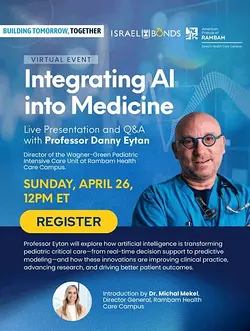
AI in Pediatric Medicine: A Transformative Approach by Professor Danny Eytan
5
0/100