
High Tea Exchange: Future Proofing Surveillance, Diagnostics & Care
Scaling smarter solutions for resilient health systems
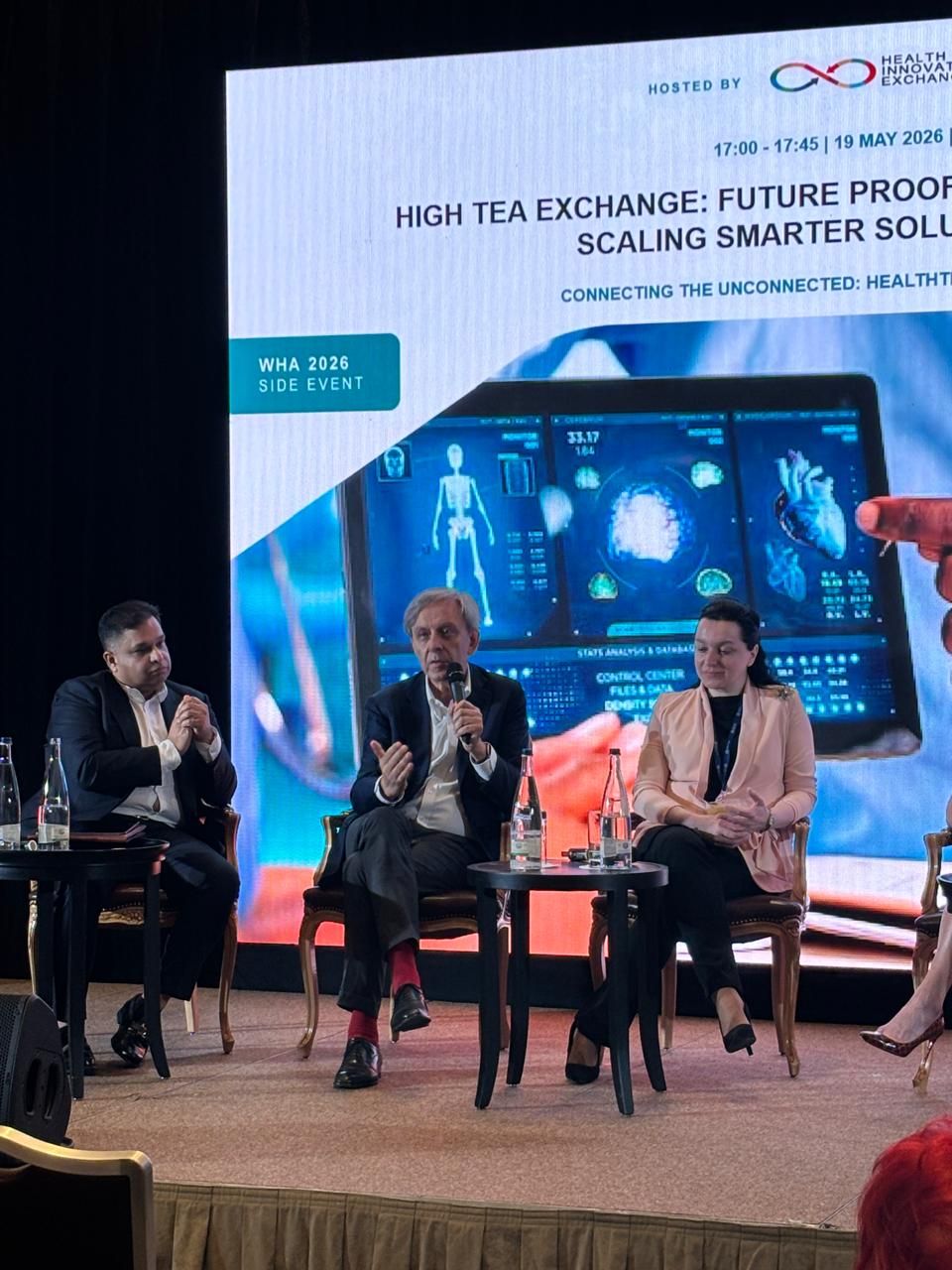
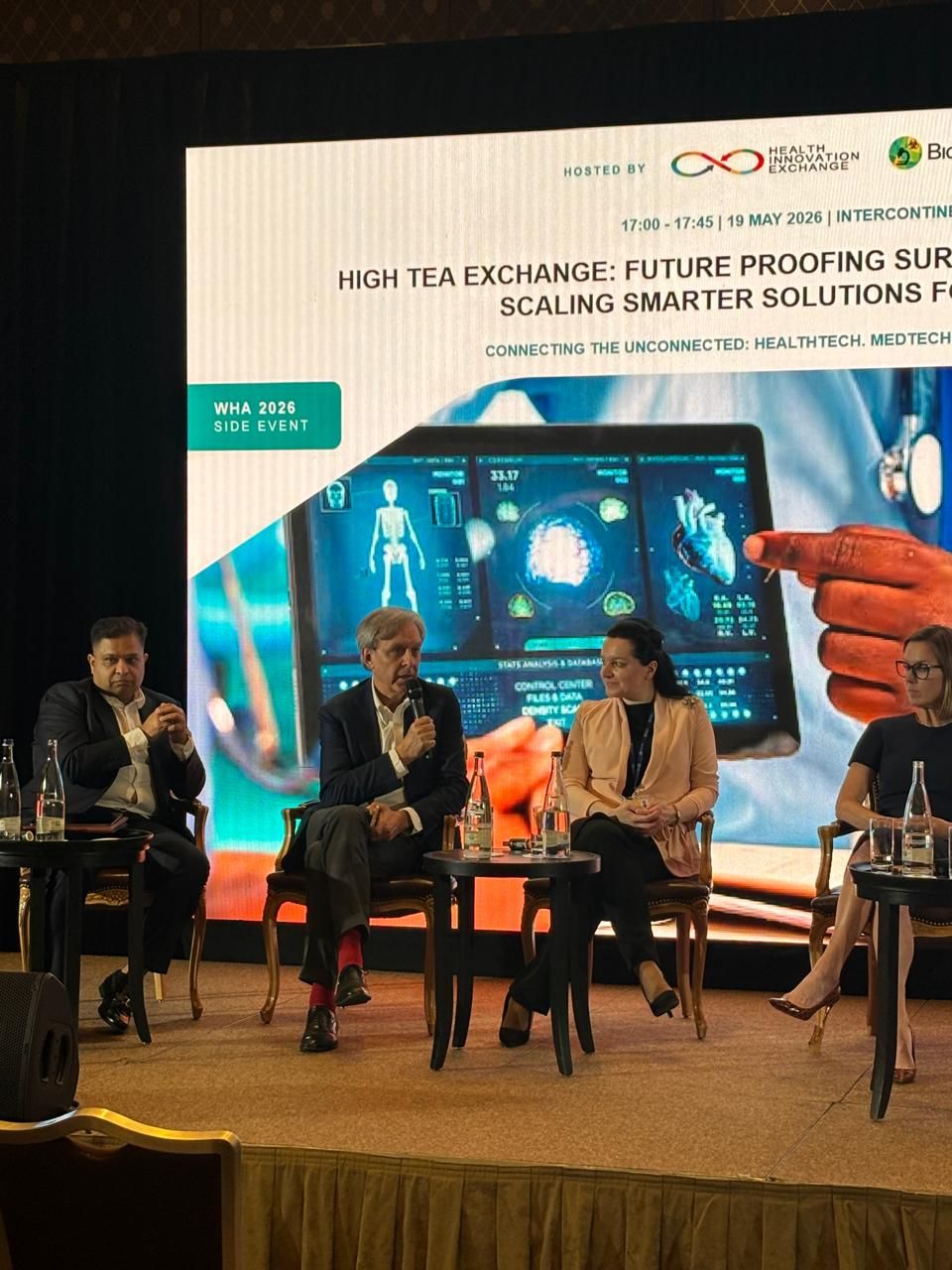
Yesterday, I had the pleasure of participating in the side event organized by Health Innovation Exchange - HIEx during #WHA79, focused on how to build more resilient, accessible, and future-ready healthcare systems.
One of the key themes discussed was the critical role of #infectionprevention, #sepsis awareness, and antimicrobial resistance (#AMR), challenges that continue to place an enormous burden on global health systems.
Sepsis remains one of the leading causes of death worldwide, affecting millions every year and accounting for approximately 11 million deaths annually - nearly 1 in 5 deaths globally. These numbers show the urgency of investing not only in treatment, but also in prevention and safer healthcare environments.
It was especially meaningful to engage with Global Sepsis Alliance and its CEO Mariam Jashi, whose work continues to drive global awareness and action around sepsis prevention and patient safety, alongside the other distinguished speakers of the panel.
But we cannot continue to consider sepsis and healthcare-associated infections merely as clinical events. They are often the consequence of a chain of failures: contamination, transmission, delayed control, microbial overload, and vulnerability.
This is why prevention must become part of the infrastructure itself.
In hospitals, ICUs, long-term care facilities, and public spaces, the environment can no longer be passive. It must become an active component of healthcare resilience and infection prevention.
Reducing environmental microbial burden upstream may help reduce downstream escalation. This does not replace medicine. It strengthens medicine.
Today, building resilient health systems means rethinking prevention ecosystems: surveillance, diagnostics, continuity of care, infection control, and innovative technologies must work together to reduce clinical risk and improve patient safety.
In this context, BIOVITAE represents a concrete solution to help reduce microbiological contamination in healthcare and shared environments through a #continuous, #sustainable, and #safe sanitization technology, supporting the fight against healthcare-associated infections and AMR.
The future of healthcare will not depend only on stronger drugs, but on smarter ecosystems.
Sometimes innovation means rediscovering principles we forgot.
The hospital of the future may resemble a living organism more than a machine: adaptive, responsive, preventive by design: air, light, surfaces, water, circadian rhythms, and microbial balance should become integral components of healthcare design.
Perhaps the next revolution in infection prevention will come from building environments that work with biology instead of against it.
#GlobalHealth #HealthcareInnovation #PatientSafety #InfectionPrevention #Biovitae #HealthSystems #PublicHealth
Scaling smarter solutions for resilient health systems
Yesterday, I had the pleasure of participating in the side event organized by Health Innovation Exchange - HIEx during #WHA79, focused on how to build more resilient, accessible, and future-ready healthcare systems.
One of the key themes discussed was the critical role of #infectionprevention, #sepsis awareness, and antimicrobial resistance (#AMR), challenges that continue to place an enormous burden on global health systems.
Sepsis remains one of the leading causes of death worldwide, affecting millions every year and accounting for approximately 11 million deaths annually - nearly 1 in 5 deaths globally. These numbers show the urgency of investing not only in treatment, but also in prevention and safer healthcare environments.
It was especially meaningful to engage with Global Sepsis Alliance and its CEO Mariam Jashi, whose work continues to drive global awareness and action around sepsis prevention and patient safety, alongside the other distinguished speakers of the panel.
But we cannot continue to consider sepsis and healthcare-associated infections merely as clinical events. They are often the consequence of a chain of failures: contamination, transmission, delayed control, microbial overload, and vulnerability.
This is why prevention must become part of the infrastructure itself.
In hospitals, ICUs, long-term care facilities, and public spaces, the environment can no longer be passive. It must become an active component of healthcare resilience and infection prevention.
Reducing environmental microbial burden upstream may help reduce downstream escalation. This does not replace medicine. It strengthens medicine.
Today, building resilient health systems means rethinking prevention ecosystems: surveillance, diagnostics, continuity of care, infection control, and innovative technologies must work together to reduce clinical risk and improve patient safety.
In this context, BIOVITAE represents a concrete solution to help reduce microbiological contamination in healthcare and shared environments through a #continuous, #sustainable, and #safe sanitization technology, supporting the fight against healthcare-associated infections and AMR.
The future of healthcare will not depend only on stronger drugs, but on smarter ecosystems.
Sometimes innovation means rediscovering principles we forgot.
The hospital of the future may resemble a living organism more than a machine: adaptive, responsive, preventive by design: air, light, surfaces, water, circadian rhythms, and microbial balance should become integral components of healthcare design.
Perhaps the next revolution in infection prevention will come from building environments that work with biology instead of against it.
#GlobalHealth #HealthcareInnovation #PatientSafety #InfectionPrevention #Biovitae #HealthSystems #PublicHealth
Shared byBlair Jordan - 10 days ago
Log in to comment
Loading ..
Related Articles

Continuous Disinfection: Solving the Occupied-Space Challenge with Omar El Fata

I-Pro Shine BIOVITAE Expands Across Europe Post Milan Design Week
Introducing the World's First Biovitae Antimicrobial Dishwasher from Haier
Revolutionize Sanitation with Haier Europe’s I-Pro Shine Biovitae Collection

Discover Technological Innovation in Home Design at Milan Design Week
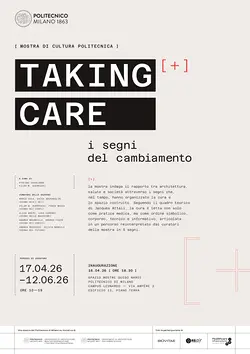
Explore Architecture, Health & Society at 'TAKING CARE' Exhibition
5
0/100