A new report from Green Adelaide’s Rocky Reef Program brings together more than 18 years of biodiversity data from over 40 monitoring sites, providing one of the most consistent records of reef condition in South Australia.
Much of this monitoring draws on standardised Reef Life Survey methods, allowing local reef data to be compared with other temperate reef systems across southern Australia.
Importantly, much of this dataset reflects conditions prior to recent harmful algal bloom events meaning the report now serves as a valuable baseline, allowing future comparisons to assess the scale of ecological change and recovery.
Before these recent disturbances, the data pointed to a relatively stable system across much of the study area. Several subregions showed stable or improving trends in key indicators, including increases in canopy-forming macroalgae in some locations and generally stable levels of large reef fish.
The report also found no strong trend in the reef fish thermal index, suggesting climate-driven shifts were not yet clearly evident in the fish communities surveyed.
This work provides a strong foundation, but it is important to recognise its scope. The program focuses on reefs across metropolitan Adelaide, Gulf St Vincent and parts of the Fleurieu Peninsula. Large sections of SA’s coastline, particularly more remote regions and offshore systems, still lack comparable long-term monitoring and baseline ecological data.
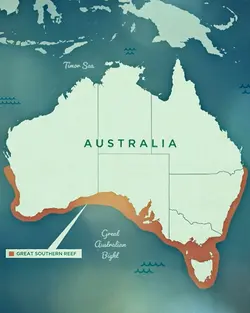
As impacts continue across the Great Southern Reef, datasets like this become increasingly valuable. We need to maintain and build on what already exists, extend monitoring into underrepresented regions, and improve connections between datasets across southern Australia.
Much of this monitoring draws on standardised Reef Life Survey methods, allowing local reef data to be compared with other temperate reef systems across southern Australia.
Importantly, much of this dataset reflects conditions prior to recent harmful algal bloom events meaning the report now serves as a valuable baseline, allowing future comparisons to assess the scale of ecological change and recovery.
Before these recent disturbances, the data pointed to a relatively stable system across much of the study area. Several subregions showed stable or improving trends in key indicators, including increases in canopy-forming macroalgae in some locations and generally stable levels of large reef fish.
The report also found no strong trend in the reef fish thermal index, suggesting climate-driven shifts were not yet clearly evident in the fish communities surveyed.
This work provides a strong foundation, but it is important to recognise its scope. The program focuses on reefs across metropolitan Adelaide, Gulf St Vincent and parts of the Fleurieu Peninsula. Large sections of SA’s coastline, particularly more remote regions and offshore systems, still lack comparable long-term monitoring and baseline ecological data.
As impacts continue across the Great Southern Reef, datasets like this become increasingly valuable. We need to maintain and build on what already exists, extend monitoring into underrepresented regions, and improve connections between datasets across southern Australia.
Shared byJamie Park - 6 days ago
Log in to comment
Loading ..
Related Articles
Philanthropy-Backed Fund Invests in Kelp Resilience to Combat Climate Change
2024 Marine and Coastal Environment Report Released: Great Southern Reef Insights

Chef Jamie Steele Champions Underutilized Sea Urchin at Glenelg Festival
Deakin's Marine Biobank: Preserving Endangered Species for Future Restoration
Australia's Underwater Forests Take Center Stage on Gardening Australia
Year 11 and 12 Students Complete Marine Biology Course on Maria Island
21
0/100