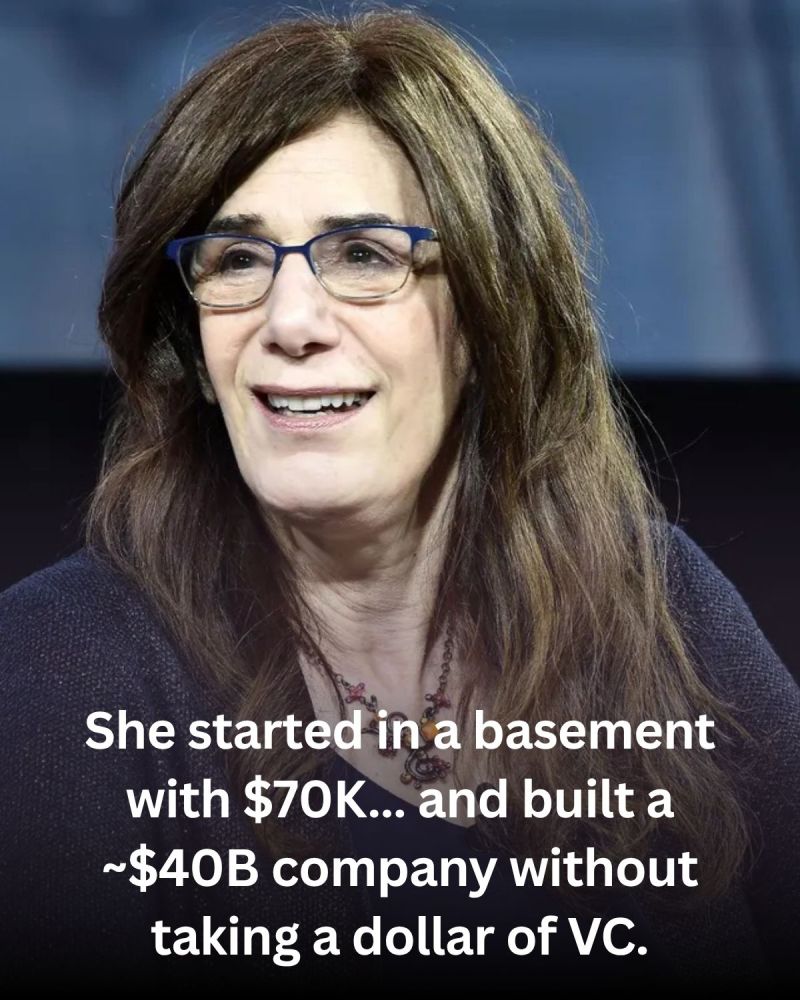
Judith Faulkner's Epic Success: Building a $40B Healthcare System Without VC

Everyone is obsessed with raising money.
She started in a basement with $70K... and built a ~$40B company without taking a dollar of VC.
In 1979, Judith Faulkner was a programmer with a simple idea:
Healthcare runs on broken, fragmented systems.
So she started coding a better one herself.
No team.
Just her, two part-time assistants, and a belief that hospitals needed something that actually worked.
That company became Epic.
It’s not “just software.”
It’s the operating system of a hospital.
Everything runs through it:
→ Patient records (history, diagnoses, medications)
→ Doctor workflows (orders, clinical decisions)
→ Billing & insurance
→ Scheduling & operations
→ Patient apps like MyChart
If Epic goes down...
The hospital doesn’t slow down.
It stops.
Now here’s where it gets interesting.
Judith Faulkner didn’t just avoid venture capital.
She redesigned the entire way a software company makes money.
Most SaaS companies think like this:
→ Sell fast
→ Land small
→ Expand later
→ Optimise for volume
Epic did the opposite.
They sold fewer deals... but insanely big ones.
Here’s how the model actually worked:
1. They sell transformation, not software
Epic doesn’t plug into your business. It replaces it.
→ 10–20+ systems unified into one
→ workflows rebuilt from scratch
→ entire organisations retrained
That’s why deals are:
→ $100M+ implementations
→ sometimes $1B+ all-in
Because you’re not buying a tool. You’re rebuilding the hospital.
2. Implementation is the real moat
Months (sometimes years) onsite. Teams embedded inside hospitals:
→ mapping real workflows
→ fixing inefficiencies
→ customising everything
By the time they’re done...
Epic isn’t a vendor. It’s part of how the hospital operates.
3. Recurring revenue that compounds
After implementation:
→ ~$2K–3K per hospital bed, per year
→ long-term contracts, support, hosting
So revenue doesn’t just grow. It locks in.
4. Switching costs are brutal
Once Epic is in:
→ every patient record lives there
→ every doctor is trained on it
→ every process depends on it
Switching isn’t “changing tools.”
It’s:
→ operational risk
→ regulatory risk
→ hundreds of millions in cost
So churn?
Basically zero.
5. No VC = full control
No pressure to:
→ grow at all costs
→ exit early
→ optimise for short-term metrics
Instead:
→ ~30%+ margins
→ ~$5–5.7B annual revenue
→ decades-long customer relationships
All reinvested back into the product.
Faulkner didn’t build a SaaS company.
She built infrastructure you can’t rip out.
And this is where most founders go wrong:
They optimise for:
→ speed
→ volume
→ visibility
But ignore:
→ depth
→ systems
→ durability
So they grow...
...but underneath, things are fragile.
Faulkner built something different.
Not just big.
Unreplaceable.
#healthcare software #Epic Systems #Judith Faulkner #SaaS business model #healthcare innovation
She started in a basement with $70K... and built a ~$40B company without taking a dollar of VC.
In 1979, Judith Faulkner was a programmer with a simple idea:
Healthcare runs on broken, fragmented systems.
So she started coding a better one herself.
No team.
Just her, two part-time assistants, and a belief that hospitals needed something that actually worked.
That company became Epic.
It’s not “just software.”
It’s the operating system of a hospital.
Everything runs through it:
→ Patient records (history, diagnoses, medications)
→ Doctor workflows (orders, clinical decisions)
→ Billing & insurance
→ Scheduling & operations
→ Patient apps like MyChart
If Epic goes down...
The hospital doesn’t slow down.
It stops.
Now here’s where it gets interesting.
Judith Faulkner didn’t just avoid venture capital.
She redesigned the entire way a software company makes money.
Most SaaS companies think like this:
→ Sell fast
→ Land small
→ Expand later
→ Optimise for volume
Epic did the opposite.
They sold fewer deals... but insanely big ones.
Here’s how the model actually worked:
1. They sell transformation, not software
Epic doesn’t plug into your business. It replaces it.
→ 10–20+ systems unified into one
→ workflows rebuilt from scratch
→ entire organisations retrained
That’s why deals are:
→ $100M+ implementations
→ sometimes $1B+ all-in
Because you’re not buying a tool. You’re rebuilding the hospital.
2. Implementation is the real moat
Months (sometimes years) onsite. Teams embedded inside hospitals:
→ mapping real workflows
→ fixing inefficiencies
→ customising everything
By the time they’re done...
Epic isn’t a vendor. It’s part of how the hospital operates.
3. Recurring revenue that compounds
After implementation:
→ ~$2K–3K per hospital bed, per year
→ long-term contracts, support, hosting
So revenue doesn’t just grow. It locks in.
4. Switching costs are brutal
Once Epic is in:
→ every patient record lives there
→ every doctor is trained on it
→ every process depends on it
Switching isn’t “changing tools.”
It’s:
→ operational risk
→ regulatory risk
→ hundreds of millions in cost
So churn?
Basically zero.
5. No VC = full control
No pressure to:
→ grow at all costs
→ exit early
→ optimise for short-term metrics
Instead:
→ ~30%+ margins
→ ~$5–5.7B annual revenue
→ decades-long customer relationships
All reinvested back into the product.
Faulkner didn’t build a SaaS company.
She built infrastructure you can’t rip out.
And this is where most founders go wrong:
They optimise for:
→ speed
→ volume
→ visibility
But ignore:
→ depth
→ systems
→ durability
So they grow...
...but underneath, things are fragile.
Faulkner built something different.
Not just big.
Unreplaceable.
#healthcare software #Epic Systems #Judith Faulkner #SaaS business model #healthcare innovation
Shared byMicah Garcia - A day ago
Log in to comment
Loading ..
Related Articles

Google's Fitness Wearables Shift: Fitbit Air and Google Health Disruption

Unveiling Saudi Arabia's Vast Family Office Wealth: Numbers You Need to Know

Empowering Daughters: The Impact of Working Mothers on Future Success
From Tragedy to Triumph: Karen Lynch's Journey to CVS Health CEO and Beyond

Women Set to Inherit $30 Trillion: A Shift in Wealth and Investment
Unlock $2M in Funding: May's Best Opportunities for Underrepresented Founders
719
0/100