
Your ATS is full of data. That doesn't mean you can use it.
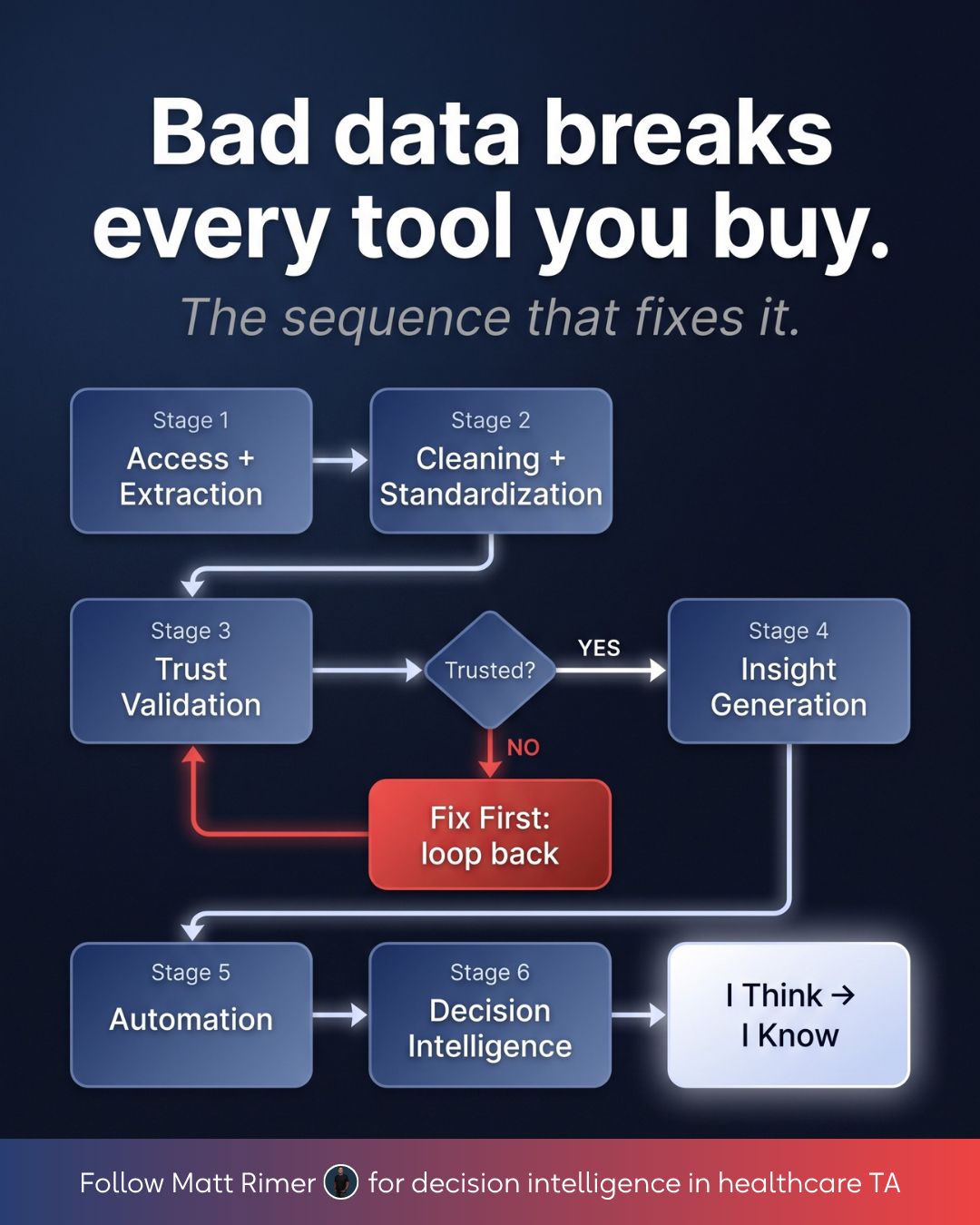
Most TA teams skip steps in the sequence below, then wonder why their AI tools, automation, and CFO-ready reports keep falling apart.
Here's the order that actually works:
→ Access and extraction. Getting data out in a usable format. Sounds simple until you try to build a single "report of truth" across reqs, recruiters, and sources.
→ Cleaning and standardization. Raw ATS data is inconsistent almost universally. Job titles drift. Status codes mean different things depending on who configured them. This is the step everyone wants to skip.
→ Trust validation. Does the data reconcile across systems? Do your funnel stages match how reqs actually move through the process? If your dispositions, source tags, and stage definitions don't hold up under audit, the numbers downstream won't either.
→ Insight generation. Pipeline health by req. Candidate stall points. Real time-to-source by role family.
→ Automation. Nudges, alerts, programmatic spend decisions. None of this runs reliably without steps 1–3 solved.
→ Decision intelligence. Moving from "I think" to "I know." What did last quarter actually look like? What does next quarter need? What's productivity per recruiter by role type?
If you're investing in AI or automation before step 3 is solved, you're building on a foundation that isn't ready.
Which step in the sequence is hardest to move past
#ATS optimization #data cleaning #automation insights #AI tools #decision intelligence
Most TA teams skip steps in the sequence below, then wonder why their AI tools, automation, and CFO-ready reports keep falling apart.
Here's the order that actually works:
→ Access and extraction. Getting data out in a usable format. Sounds simple until you try to build a single "report of truth" across reqs, recruiters, and sources.
→ Cleaning and standardization. Raw ATS data is inconsistent almost universally. Job titles drift. Status codes mean different things depending on who configured them. This is the step everyone wants to skip.
→ Trust validation. Does the data reconcile across systems? Do your funnel stages match how reqs actually move through the process? If your dispositions, source tags, and stage definitions don't hold up under audit, the numbers downstream won't either.
→ Insight generation. Pipeline health by req. Candidate stall points. Real time-to-source by role family.
→ Automation. Nudges, alerts, programmatic spend decisions. None of this runs reliably without steps 1–3 solved.
→ Decision intelligence. Moving from "I think" to "I know." What did last quarter actually look like? What does next quarter need? What's productivity per recruiter by role type?
If you're investing in AI or automation before step 3 is solved, you're building on a foundation that isn't ready.
Which step in the sequence is hardest to move past
#ATS optimization #data cleaning #automation insights #AI tools #decision intelligence
Shared byAri Silva - 22 days ago
Log in to comment
Loading ..
Related Articles
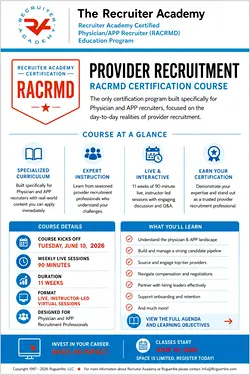
Join the Next Recruiter Academy Cohort Starting June 10th
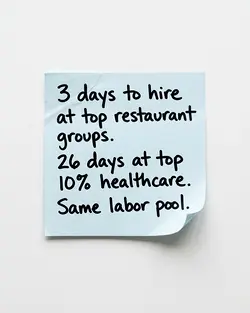
Comparing Health Systems: What Sets Them Apart?
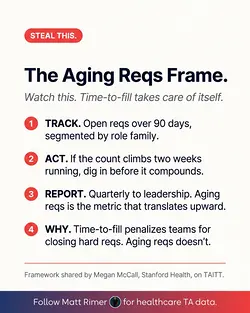
Stanford Healthcare Achieves Zero RN Requisitions Over 90 Days for 15+ Months
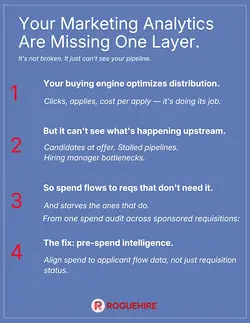
Overcoming Costly Recruitment Marketing Habits: A Guide
Scripps Health Achieves Zero Open ICU Nursing Requests: A Case Study

Unlock Data's Power for Seamless Healthcare Talent Transitions on April 23rd
34
0/100