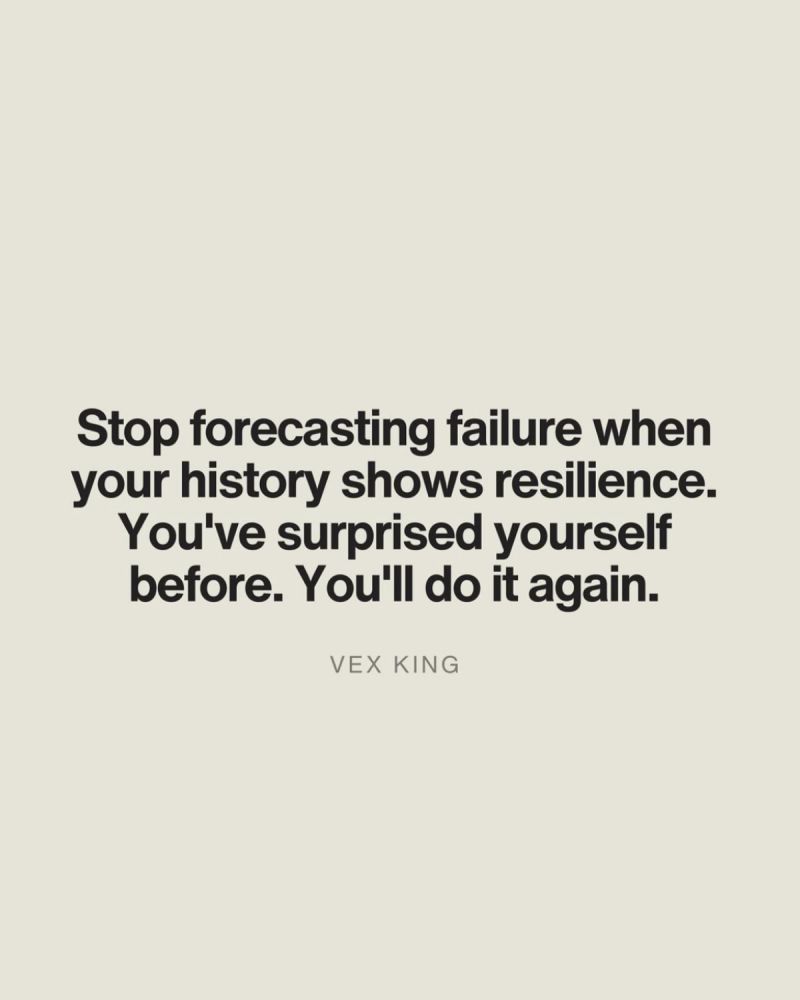

You’ve already proven your resilience.
So why does your mind still prepare you for failure?
There is a strange contradiction in leadership.
Your past may show strength, recovery, and endurance.
And still, in the moment that matters, your brain whispers:
“This time you won’t manage.”
From a neuroscience perspective, this is not weakness.
It is threat prediction.
The brain is not built to give you a neutral assessment of your capacity.
It is built to keep you alive.
So it overweights uncertainty.
It remembers pain more vividly than recovery.
It rehearses negative outcomes before positive ones.
Useful in some situations.
Dangerous in leadership.
Because when capable people believe every internal alarm,
they begin to lead below their capacity.
The conversation is postponed.
The decision is delayed.
The opportunity is overanalyzed.
Not because resilience is missing.
But because fear has louder access than evidence.
This is why resilience is not “feeling strong.”
It is learning to retrieve proof under pressure.
Proof that you adapted before.
Proof that you recovered before.
Proof that you acted despite doubt.
The strongest leaders I know do not eliminate fear.
They ask better questions:
“Is this danger, or memory bias?”
“Is this failure, or discomfort?”
“Is this my future, or my brain forecasting too early?”
Leadership requires courage.
But it also requires the ability to distinguish signal from simulation.
Your mind will not always feel ready.
But readiness is not the same as capacity.
Your history contains data.
Use it.
♻️ Kindly repost to share with others
Follow Benjamin Bargetzi for more on
Neuroscience, Psychology & Future Tech
#leadership #neuroscience #resilience #decisionmaking #psychology
So why does your mind still prepare you for failure?
There is a strange contradiction in leadership.
Your past may show strength, recovery, and endurance.
And still, in the moment that matters, your brain whispers:
“This time you won’t manage.”
From a neuroscience perspective, this is not weakness.
It is threat prediction.
The brain is not built to give you a neutral assessment of your capacity.
It is built to keep you alive.
So it overweights uncertainty.
It remembers pain more vividly than recovery.
It rehearses negative outcomes before positive ones.
Useful in some situations.
Dangerous in leadership.
Because when capable people believe every internal alarm,
they begin to lead below their capacity.
The conversation is postponed.
The decision is delayed.
The opportunity is overanalyzed.
Not because resilience is missing.
But because fear has louder access than evidence.
This is why resilience is not “feeling strong.”
It is learning to retrieve proof under pressure.
Proof that you adapted before.
Proof that you recovered before.
Proof that you acted despite doubt.
The strongest leaders I know do not eliminate fear.
They ask better questions:
“Is this danger, or memory bias?”
“Is this failure, or discomfort?”
“Is this my future, or my brain forecasting too early?”
Leadership requires courage.
But it also requires the ability to distinguish signal from simulation.
Your mind will not always feel ready.
But readiness is not the same as capacity.
Your history contains data.
Use it.
♻️ Kindly repost to share with others
Follow Benjamin Bargetzi for more on
Neuroscience, Psychology & Future Tech
#leadership #neuroscience #resilience #decisionmaking #psychology
Shared byHarper Tran - 3 days ago
Log in to comment
Loading ..
Related Articles

Unlocking Employee Potential: Focus on Attitude, Trust, and Progress

Breaking Mental Barriers: How to Expand Your Possibilities

Cultivate a Strong Mindset: Tips for Staying Positive and Resilient
The Silent Decline in Workplace Engagement and Its Impact on Leadership
Fixing Broken Systems to Build Real Culture: A Leadership Guide

48 Years Old: Important Life Lessons You Wish You Knew Sooner
1520
0/100