Most public service systems talk about outcomes far less than
Most public service systems talk about outcomes far less than they think they do. They talk about activity. Referrals. Assessments. Contacts. Waiting lists. Reviews. Contracts. KPIs.
All useful - but not the same as outcomes in peoples' lives.
One of the simplest things we use in the Commissioning Academy is the ‘I-statement’.
A statement written from the point of view of a citizen or community.
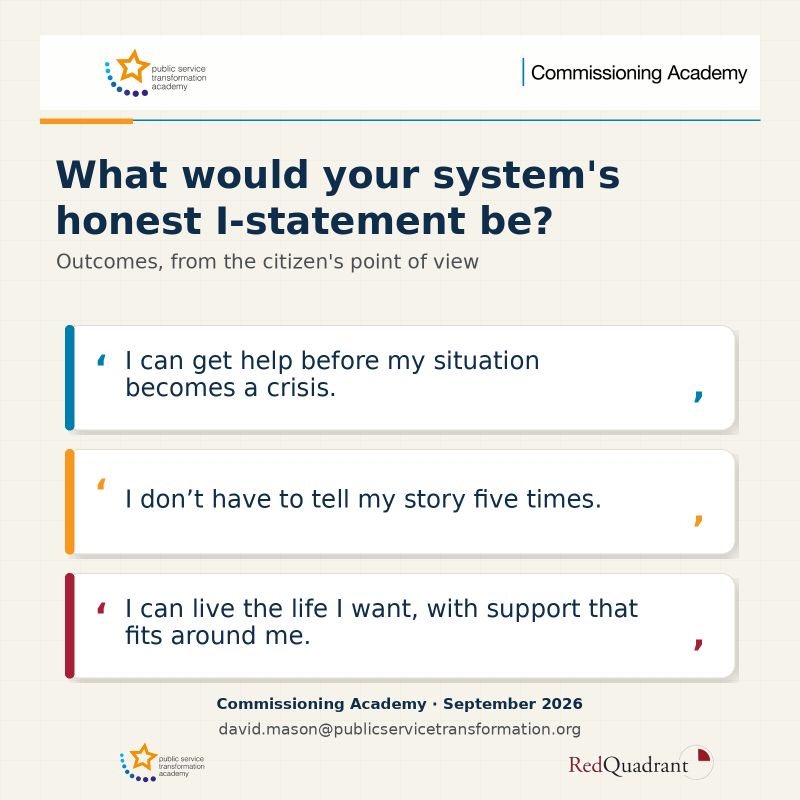
‘I can get help before my situation becomes a crisis.’
‘I know who to turn to, and I don’t have to tell my story five times.’
‘I can live the life I want, with support that fits around me.’
The point isn’t the wording - the point is the shift in attention, from what the service does, to what people experience. Measuring transactions to checking whether life is actually getting better.
That shift matters because commissioning can easily become a professional conversation about services, budgets, providers, contracts, and governance. Necessary, yes. But insufficient.
The next Commissioning Academy, starting in September 2026, will build strongly on this work: citizen outcomes, systems thinking, relational commissioning, action learning, and the practical use of the Commissioning Compass.
It ain't abstract theory; it's the work of helping real systems produce better lives.
If your system had to write one honest ‘I-statement’ from the citizen’s point of view, what would it be?
(Remeber: the hard part is making the I-statement honest; what people would actually recognise.)
All useful - but not the same as outcomes in peoples' lives.
One of the simplest things we use in the Commissioning Academy is the ‘I-statement’.
A statement written from the point of view of a citizen or community.
‘I can get help before my situation becomes a crisis.’
‘I know who to turn to, and I don’t have to tell my story five times.’
‘I can live the life I want, with support that fits around me.’
The point isn’t the wording - the point is the shift in attention, from what the service does, to what people experience. Measuring transactions to checking whether life is actually getting better.
That shift matters because commissioning can easily become a professional conversation about services, budgets, providers, contracts, and governance. Necessary, yes. But insufficient.
The next Commissioning Academy, starting in September 2026, will build strongly on this work: citizen outcomes, systems thinking, relational commissioning, action learning, and the practical use of the Commissioning Compass.
It ain't abstract theory; it's the work of helping real systems produce better lives.
If your system had to write one honest ‘I-statement’ from the citizen’s point of view, what would it be?
(Remeber: the hard part is making the I-statement honest; what people would actually recognise.)
Shared byAri Sato - 9 days ago
Log in to comment
Loading ..
Related Articles
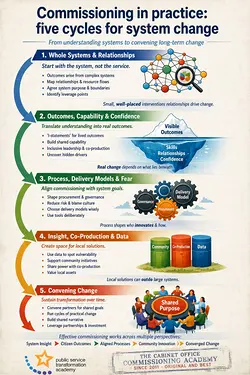
Transform Public Service Systems with the New Commissioning Academy
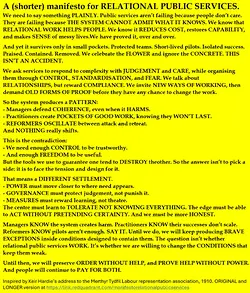
A Manifesto for Relational Public Services: Breaking the Cycle of Control and Fear
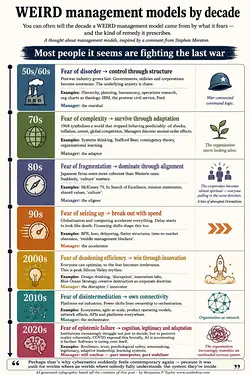
Decoding Management Models: A Historical Perspective on Organizational Fear and Strategy

Why Agility Initiatives Fail: The Importance of Accurate Sense-Making
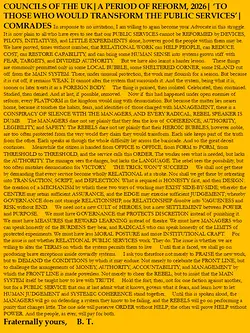
A Manifesto for Relational Public Services: A Call to Action
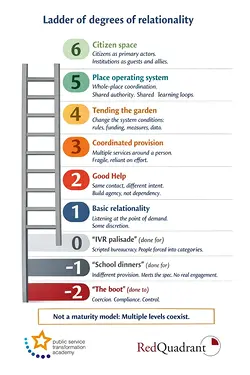
Understanding 'Relational' in Public Services: A Different Operating System
21
0/100