
CIOs in Singapore keep the same conversation alive every
budget cycle: the data centre is too expensive, too fragile,
and too far behind where the business needs to go.
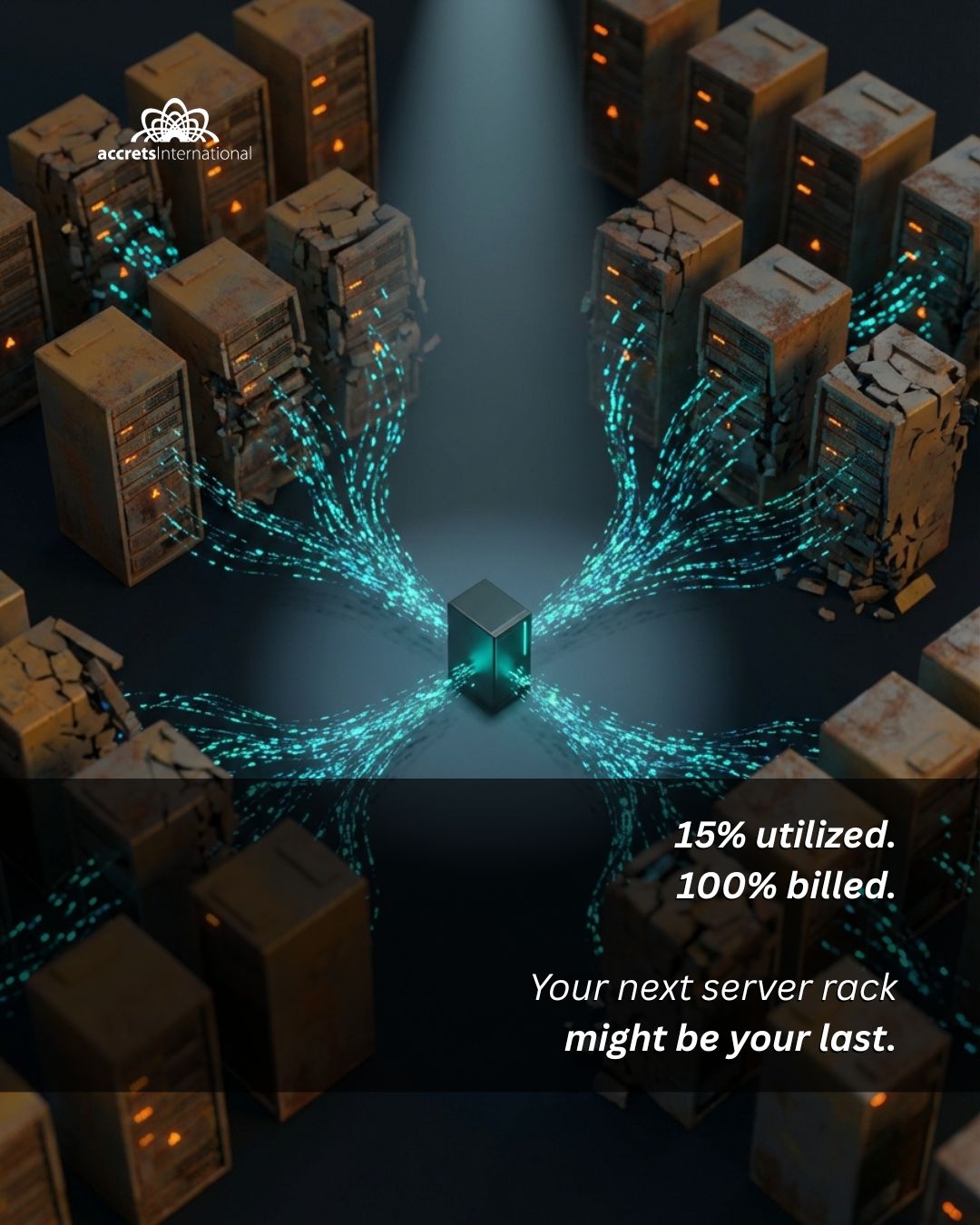
The number behind that conversation: most legacy server
environments run at 15–20% utilisation. Full power. Full
cooling. Full rack lease. For capacity that's mostly idle.
P2V migration is the mechanism that ends this. The process
clones a physical server's OS, applications, and data —
converts it into a virtual machine hosted on a single dense
modern host. The outcome: 10 to 20 aging physical servers
collapsed into one. Floor space recovered. Energy costs drop.
Hardware maintenance contracts retired.
The execution concern that stops most migrations is downtime
risk. The parallel-run methodology addresses this directly. A
target virtual environment is built and continuously synced
alongside the live physical server. Application owners validate
performance in isolation before sign-off. Cutover is a
scheduled maintenance window. Rollback is turning the physical
server back on.
Post-consolidation, the DR footprint shrinks considerably.
Protecting 50 virtual machines requires a fraction of the
storage and compute of a mirrored physical site. The IT team's
focus shifts from replacing drives and managing warranty
contracts to hypervisor optimisation and business-facing
applications.
For IT leaders mapping consolidation into their infrastructure
roadmap, Accrets runs scoping calls to assess current footprint,
dependency complexity, and migration risk.
Start that conversation at accrets.com/contact-us
#datacenteroptimization #P2Vmigration #costefficiency #ITconsolidation #infrastructuremodernization
budget cycle: the data centre is too expensive, too fragile,
and too far behind where the business needs to go.
The number behind that conversation: most legacy server
environments run at 15–20% utilisation. Full power. Full
cooling. Full rack lease. For capacity that's mostly idle.
P2V migration is the mechanism that ends this. The process
clones a physical server's OS, applications, and data —
converts it into a virtual machine hosted on a single dense
modern host. The outcome: 10 to 20 aging physical servers
collapsed into one. Floor space recovered. Energy costs drop.
Hardware maintenance contracts retired.
The execution concern that stops most migrations is downtime
risk. The parallel-run methodology addresses this directly. A
target virtual environment is built and continuously synced
alongside the live physical server. Application owners validate
performance in isolation before sign-off. Cutover is a
scheduled maintenance window. Rollback is turning the physical
server back on.
Post-consolidation, the DR footprint shrinks considerably.
Protecting 50 virtual machines requires a fraction of the
storage and compute of a mirrored physical site. The IT team's
focus shifts from replacing drives and managing warranty
contracts to hypervisor optimisation and business-facing
applications.
For IT leaders mapping consolidation into their infrastructure
roadmap, Accrets runs scoping calls to assess current footprint,
dependency complexity, and migration risk.
Start that conversation at accrets.com/contact-us
#datacenteroptimization #P2Vmigration #costefficiency #ITconsolidation #infrastructuremodernization
Shared byDakota Silva - 2 months ago
Log in to comment
Loading ..
Related Articles
Mastering Cloud Migration Cutover with a Five-Phase Methodology
Seamless OpenStack Transition: 4-Stage Strategy for Zero Downtime Migration
Revolutionize Alert Management with AIOps: A Pre-Investment Preview
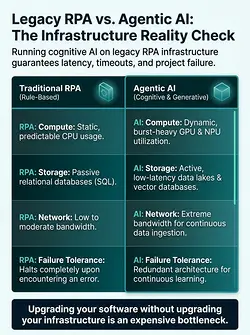
Overcoming AI Deployment Bottlenecks with Modern Hardware
Transforming IT Operations: Moving Beyond Break-Fix to Strategic Growth
0/100