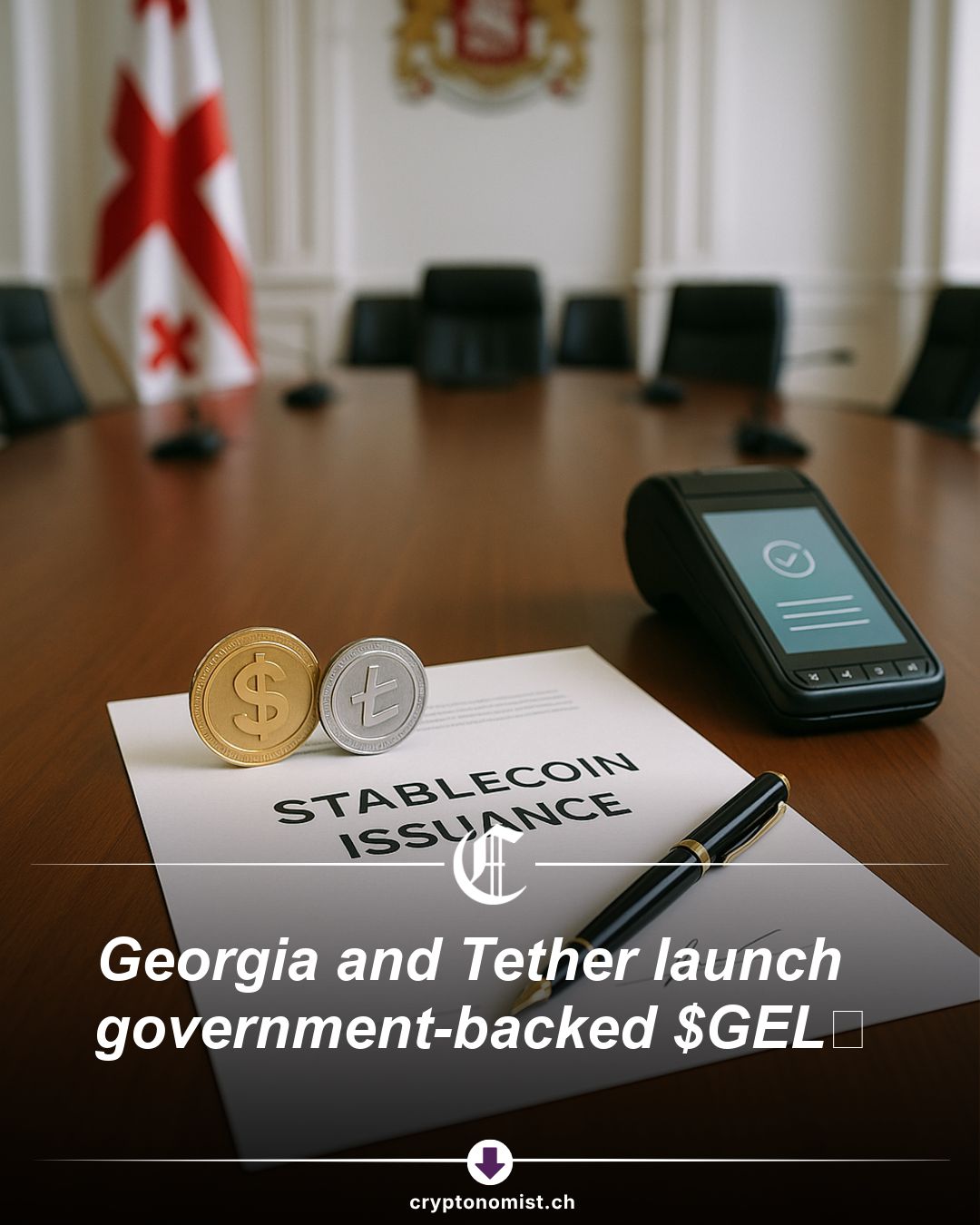

Not a crypto-only experiment: Tether is partnering with the Georgian government to launch GEL₮, a stablecoin linked to the Georgian lari and designed to move into national payment rails.
The objective is clear: faster payments, lower transfer costs, and a blockchain-based settlement layer that can support everyday financial activity. GEL₮ is also meant to enable programmable financial services, which pushes the project beyond a simple token launch.
That matters because Georgia is not treating stablecoins as a side bet. By introducing a dedicated regulatory framework for stablecoins and aligning the discussion with the GENIUS Act, the country is signaling that compliant digital money can be built inside a formal policy structure.
For Tether, this is a strategic extension of the stablecoin model. For the Georgian government, it is a test of whether public-sector support can accelerate adoption while preserving regulatory control.
The upside is stronger payment efficiency for domestic and cross-border settlement, plus a better institutional case for regulated stablecoins. The main risk is execution: integration, regulatory alignment, and user trust will determine whether GEL₮ becomes infrastructure or remains a pilot.
This is not a branding exercise — it reflects stablecoins moving deeper into regulated payment infrastructure, where compliance and settlement utility matter more than crypto-native speculation. #stablecoin #regulation #payments
The objective is clear: faster payments, lower transfer costs, and a blockchain-based settlement layer that can support everyday financial activity. GEL₮ is also meant to enable programmable financial services, which pushes the project beyond a simple token launch.
That matters because Georgia is not treating stablecoins as a side bet. By introducing a dedicated regulatory framework for stablecoins and aligning the discussion with the GENIUS Act, the country is signaling that compliant digital money can be built inside a formal policy structure.
For Tether, this is a strategic extension of the stablecoin model. For the Georgian government, it is a test of whether public-sector support can accelerate adoption while preserving regulatory control.
The upside is stronger payment efficiency for domestic and cross-border settlement, plus a better institutional case for regulated stablecoins. The main risk is execution: integration, regulatory alignment, and user trust will determine whether GEL₮ becomes infrastructure or remains a pilot.
This is not a branding exercise — it reflects stablecoins moving deeper into regulated payment infrastructure, where compliance and settlement utility matter more than crypto-native speculation. #stablecoin #regulation #payments
Shared byAri Garcia - 10 days ago
Log in to comment
Loading ..
Related Articles

BlackRock's Bitcoin ETF Faces $527M Outflows Amid Broader Crypto Pullback

Amelia Tomasicchio at Proof of Talk 2026: Leading Web3 Discussions at Louvre Palace

Leadership Transition at Ondo Finance: Stability Amidst Sudden CEO Loss

Partnering with Unchained Summit Vietnam 2026: Shaping the Future of Web3 and Crypto

Polymarket's Strategic Move to Japan: A Long-Term Regulatory Challenge

Waymo's Flood Recall Highlights Safety Concerns in Autonomous Rides
1
0/100