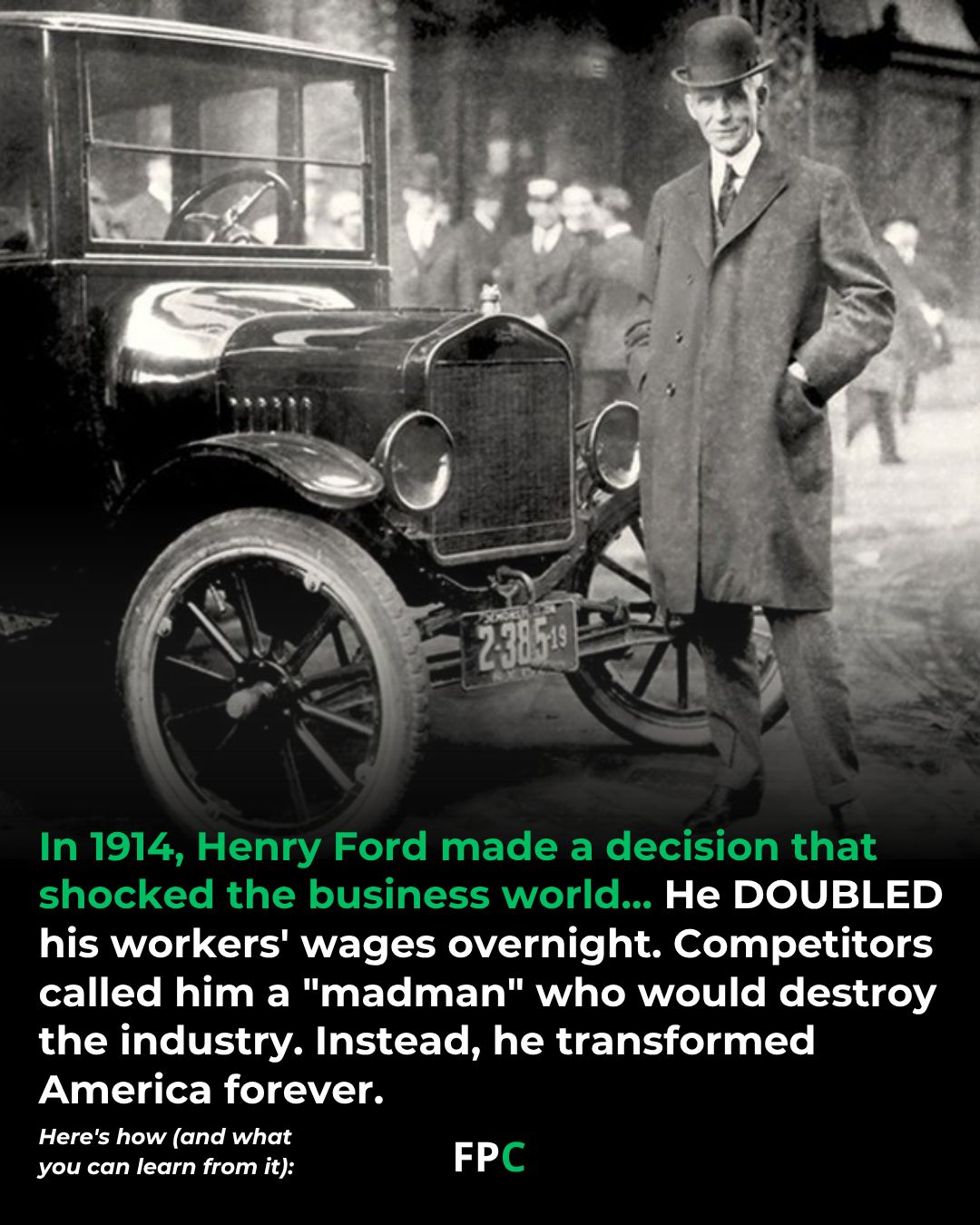

In 1914, Henry Ford made a decision that shocked the business world...
He DOUBLED his workers' wages overnight.
Competitors called him a "madman" who would destroy the industry.
Instead, he transformed America forever. Here's how (and what you can learn from it):
In 1914, Henry Ford did something that looked insane.
He doubled worker pay overnight.
Competitors called him reckless.
Investors called him irresponsible.
Critics said he would destroy the auto industry.
Instead—he changed it forever.
Before the famous "$5 Day,"
Ford had a crisis.
Turnover hit 370%.
Workers quit constantly.
The assembly line was efficient—but people hated working on it.
In 1913 alone, Ford hired 52,000 workers to maintain a workforce of just 14,000.
Training costs exploded.
Productivity suffered.
The system was breaking.
So Ford asked a different question:
What if the solution wasn't paying less—but paying more?
His answer shocked everyone.
$5 per day.
Nearly double the standard wage.
The reaction was immediate.
More than 10,000 people showed up looking for jobs.
Police were called to manage the crowds.
People fought for the chance to work there.
The policy came with strict conditions.
Some were highly controversial.
Workers' lives were monitored.
Inspectors even visited homes.
But the business results were undeniable.
Turnover dropped from 370% to 16%.
Productivity jumped.
Profits doubled within two years.
Then something even bigger happened.
Ford workers could afford the cars they built.
The Model T became attainable.
Employees became customers.
And competitors had no choice.
To attract labor, they raised wages too.
Purchasing power spread.
Consumer spending grew.
A stronger middle class emerged.
Business leaders hated it.
The press attacked him.
Shareholders sued him.
But Ford saw something others missed.
Workers weren't just labor.
They were customers.
Community members.
Participants in the economy.
By 1919, half the cars in America were Model Ts.
And Ford summed it up best:
The $5 Day wasn't charity.
It was strategy.
Because higher wages reduced costs, improved retention, and expanded demand at the same time.
And the real lesson?
The best business decisions often look expensive at first.
But sometimes investing in people isn't a cost - it's the most profitable investment you can make.
Thank you for reading!
Follow First Principles Consultants for more.
#HenryFord #businessstrategy #economichistory #workforcedevelopment #productivity
He DOUBLED his workers' wages overnight.
Competitors called him a "madman" who would destroy the industry.
Instead, he transformed America forever. Here's how (and what you can learn from it):
In 1914, Henry Ford did something that looked insane.
He doubled worker pay overnight.
Competitors called him reckless.
Investors called him irresponsible.
Critics said he would destroy the auto industry.
Instead—he changed it forever.
Before the famous "$5 Day,"
Ford had a crisis.
Turnover hit 370%.
Workers quit constantly.
The assembly line was efficient—but people hated working on it.
In 1913 alone, Ford hired 52,000 workers to maintain a workforce of just 14,000.
Training costs exploded.
Productivity suffered.
The system was breaking.
So Ford asked a different question:
What if the solution wasn't paying less—but paying more?
His answer shocked everyone.
$5 per day.
Nearly double the standard wage.
The reaction was immediate.
More than 10,000 people showed up looking for jobs.
Police were called to manage the crowds.
People fought for the chance to work there.
The policy came with strict conditions.
Some were highly controversial.
Workers' lives were monitored.
Inspectors even visited homes.
But the business results were undeniable.
Turnover dropped from 370% to 16%.
Productivity jumped.
Profits doubled within two years.
Then something even bigger happened.
Ford workers could afford the cars they built.
The Model T became attainable.
Employees became customers.
And competitors had no choice.
To attract labor, they raised wages too.
Purchasing power spread.
Consumer spending grew.
A stronger middle class emerged.
Business leaders hated it.
The press attacked him.
Shareholders sued him.
But Ford saw something others missed.
Workers weren't just labor.
They were customers.
Community members.
Participants in the economy.
By 1919, half the cars in America were Model Ts.
And Ford summed it up best:
The $5 Day wasn't charity.
It was strategy.
Because higher wages reduced costs, improved retention, and expanded demand at the same time.
And the real lesson?
The best business decisions often look expensive at first.
But sometimes investing in people isn't a cost - it's the most profitable investment you can make.
Thank you for reading!
Follow First Principles Consultants for more.
#HenryFord #businessstrategy #economichistory #workforcedevelopment #productivity
Shared bySage Kim - 12 hours ago
Log in to comment
Loading ..
Related Articles

The Nikola Corporation Scandal: From $30B Valuation to Bankruptcy and Pardon

The Rise and Fall of John Law: France's Monetary Catastrophe

Overcoming the Midlife Squeeze: Ray Dalio's Leverage Strategy for Success

Unlocking the Unique Advantages of ADHD: Careers and Skills for Thriving

Master Premortem: Predicting Failures Before They Happen with AI

Unlock Productivity with ADHD Executive Function Mode: Task Hacks & Dopamine Boosts
1
0/100