
The flight home is where most medical travel cases go wrong.
Most of the time, the surgery goes well. The patient boards their flight feeling cautiously optimistic. And then they land, and everything that held the care together starts to unravel. Records do not transfer. The local doctor has no context. Follow-up falls through the cracks.
I want to share a case.
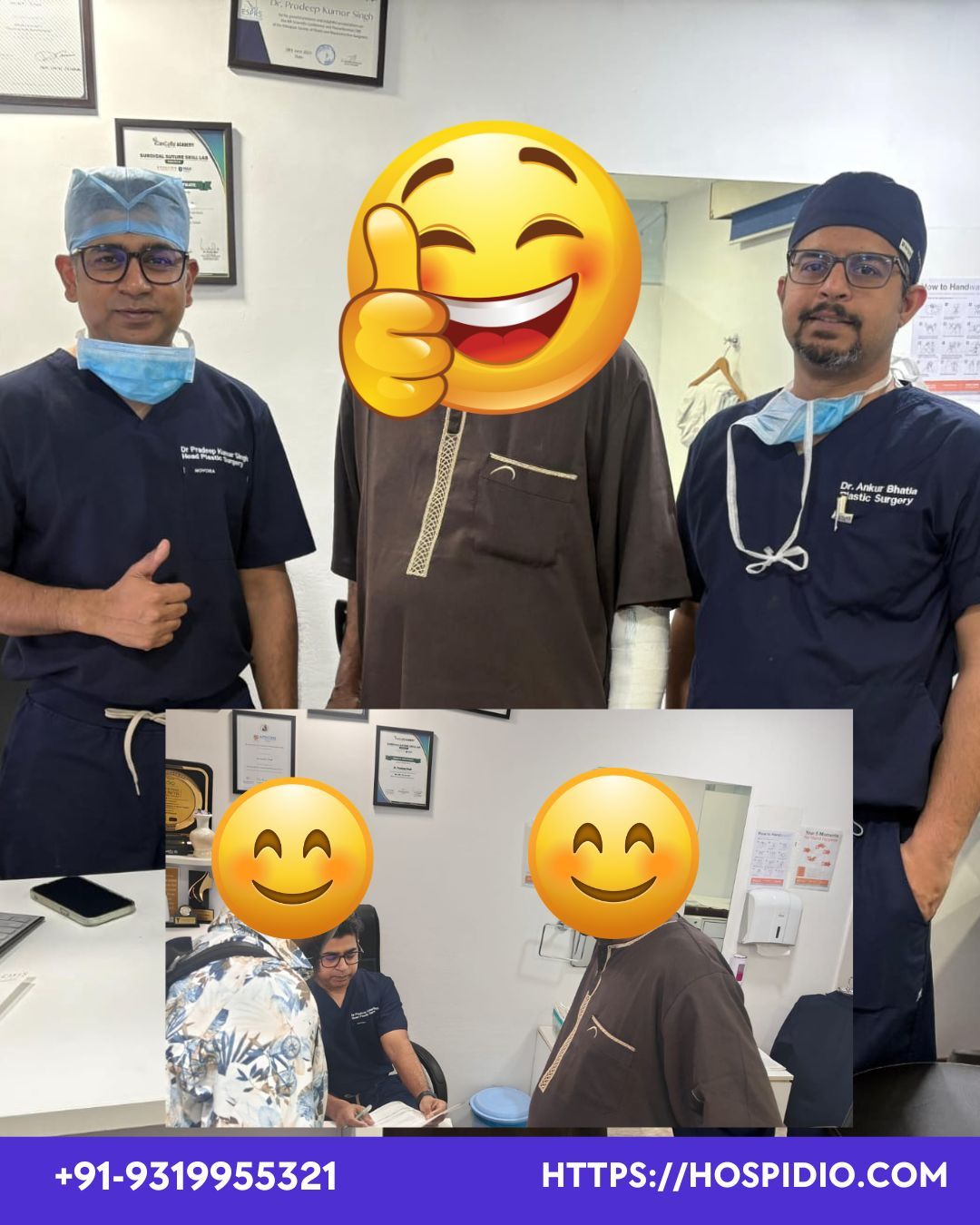
A patient came to us from West Africa. He had a failed surgery behind him from another country and was understandably cautious. He underwent reconstructive surgery at Artemis Hospitals under Dr. Pradeep Kumar Singh. Recovery was not straightforward. There were challenges along the way. But every single one of them was handled.
The patient was due to return for the next stage at three months. He advised him to wait one more month before coming back, a genuinely clinical call based purely on where his recovery stands right now. He is following it without hesitation.
What I find significant is why he is coming back. Not out of obligation. Not because we chased him. Because in the three months since he flew home, he has not felt alone in his recovery for a single day.
This is where I want to be honest about how continuity of care actually works in practice, because it is not something a facilitator can deliver alone.
As a facilitator, the responsibility to maintain that thread of care after the patient lands is ours. That is non-negotiable. But the truth is that continuity of care only holds when the treating physician is equally invested in it.
In this case, Dr. Pradeep has been directly guiding and supporting the patient's local medical team throughout these three months. His quick responsiveness every time a question or concern came up, from either the patient or the local team, is what made the difference. HOSPIDIO maintained the follow-up, but the clinical backbone of that follow-up was him.
This is what equal participation between a facilitator and the treating team looks like. And it is rare enough that when you see it, you notice.
There is another point worth making here. We track follow-up data on every patient we work with. Not just to stay in touch, but because without that data you genuinely do not know what the outcome of your work was. A successful surgery followed by a failed recovery is not a successful case.
You only know the difference if you stayed close enough to see it. That data also tells you what is actually working, which hospitals, which surgeons, which aftercare protocols produce the best outcomes over time. It is the most honest performance metric this industry has and still not taken enough seriously.
1 in 3 medical tourists struggle to get proper follow-up care after returning home. This case shows that the gap is closeable. It just requires the right people on both ends who are willing to stay in it long after the procedure is done.
To Dr. Pradeep, this one is yours. Thank you for the standard you set.
Most of the time, the surgery goes well. The patient boards their flight feeling cautiously optimistic. And then they land, and everything that held the care together starts to unravel. Records do not transfer. The local doctor has no context. Follow-up falls through the cracks.
I want to share a case.
A patient came to us from West Africa. He had a failed surgery behind him from another country and was understandably cautious. He underwent reconstructive surgery at Artemis Hospitals under Dr. Pradeep Kumar Singh. Recovery was not straightforward. There were challenges along the way. But every single one of them was handled.
The patient was due to return for the next stage at three months. He advised him to wait one more month before coming back, a genuinely clinical call based purely on where his recovery stands right now. He is following it without hesitation.
What I find significant is why he is coming back. Not out of obligation. Not because we chased him. Because in the three months since he flew home, he has not felt alone in his recovery for a single day.
This is where I want to be honest about how continuity of care actually works in practice, because it is not something a facilitator can deliver alone.
As a facilitator, the responsibility to maintain that thread of care after the patient lands is ours. That is non-negotiable. But the truth is that continuity of care only holds when the treating physician is equally invested in it.
In this case, Dr. Pradeep has been directly guiding and supporting the patient's local medical team throughout these three months. His quick responsiveness every time a question or concern came up, from either the patient or the local team, is what made the difference. HOSPIDIO maintained the follow-up, but the clinical backbone of that follow-up was him.
This is what equal participation between a facilitator and the treating team looks like. And it is rare enough that when you see it, you notice.
There is another point worth making here. We track follow-up data on every patient we work with. Not just to stay in touch, but because without that data you genuinely do not know what the outcome of your work was. A successful surgery followed by a failed recovery is not a successful case.
You only know the difference if you stayed close enough to see it. That data also tells you what is actually working, which hospitals, which surgeons, which aftercare protocols produce the best outcomes over time. It is the most honest performance metric this industry has and still not taken enough seriously.
1 in 3 medical tourists struggle to get proper follow-up care after returning home. This case shows that the gap is closeable. It just requires the right people on both ends who are willing to stay in it long after the procedure is done.
To Dr. Pradeep, this one is yours. Thank you for the standard you set.
Shared byDakota Garcia - 10 days ago
Log in to comment
Loading ..
Related Articles

Simplifying International Medical Travel with HOSPIDIO's Expert Guide

Navigating the Risks: Identifying Red Flags in Medical Tourism

Empowering Mothers' Health: HOSPIDIO's Cutting-Edge Medical Innovations
Discover Non-Surgical Solutions for Back Pain Relief

Celebrate World Earth Day with HOSPIDIO: Healing Through Environmental Harmony

Discover World-Class Healthcare in India with HOSPIDIO's Expert Bridge
21
0/100