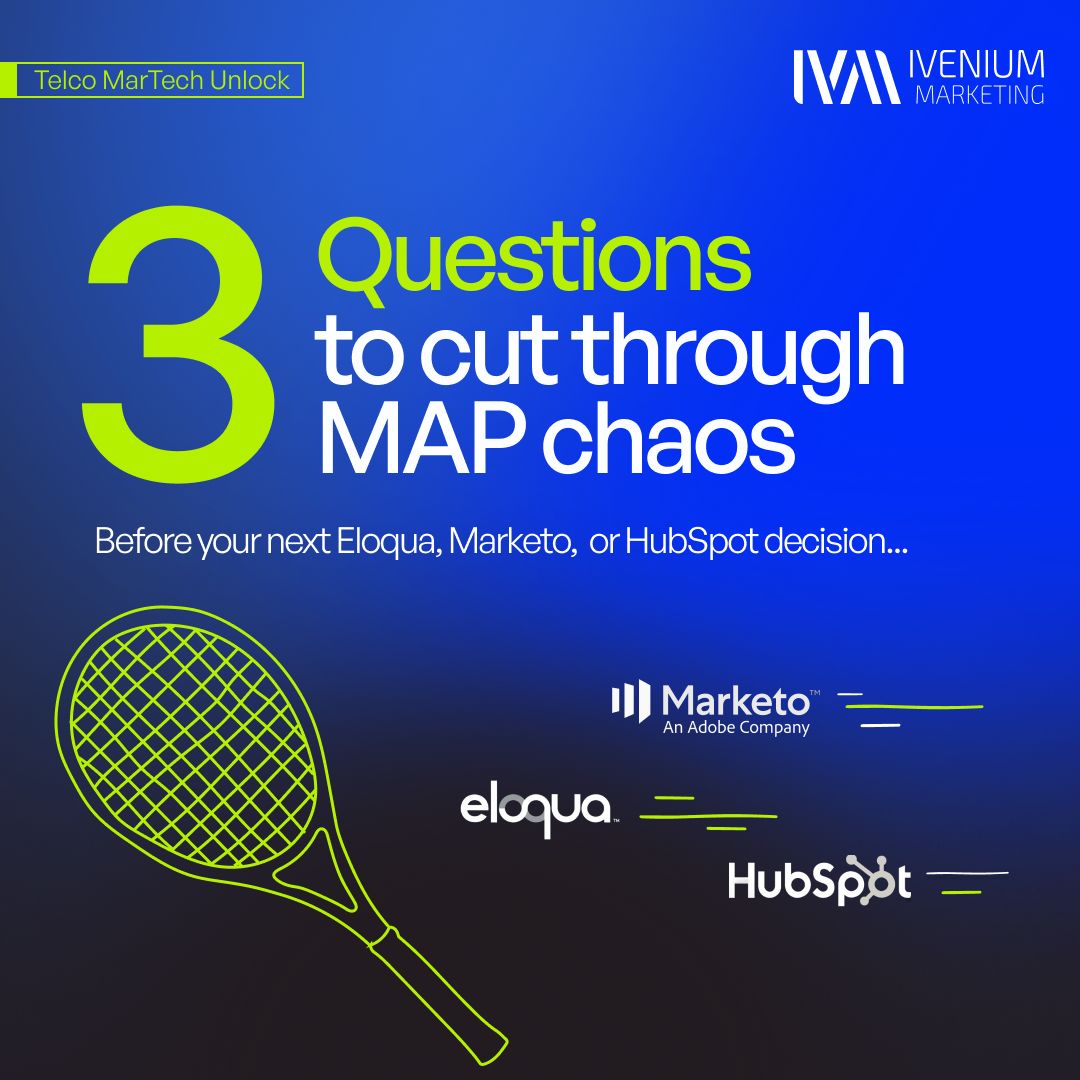
Three Key Questions for Post-Merger MarTech Chaos: A Guide to Streamlining Your Demand Gen Architecture

Hey! Have you read our article "Three MAPs, One Pipeline: The Post-Merger Hangover" yet? We hope you have, because today we're talking about three questions that help leaders deal with MarTech chaos after a merger (and even beyond).
Struggling to build cohesive demand gen architecture? Or stuck with Eloqua, Marketo, and HubSpot fighting over the same pipeline?
Doesn't matter where you are in this mess. Lead scoring conflicts, broken LTA mappings, skyrocketing costs, GDPR consent headaches. These three questions show the way forward.
1. What's the priority: execution speed or complex data models?
Eloqua and Marketo handle account structures and non-linear journeys well. They require real team investment beyond licensing fees. HubSpot speeds up post-merger rollout. It means simplifying logic built over years in Eloqua.
2. Where to place the "brain": in the MAP or data layer?
Scoring, segmentation, and decisions in MAPs make tool changes painful. In Path 3, we move the "brain" to CDP. Eloqua, Marketo, and HubSpot handle execution only. Higher upfront cost, more flexibility for the next merger.
3. Courage to shut down one platform before migration is perfect?
In the article we discuss "aggressively sunsetting Eloqua" in Marketo and HubSpot paths. Redesign processes from scratch instead of copying old flows.
Biggest mistakes? Copying logic 1:1 and getting stuck in endless half-done migrations.
If this sounds familiar, check the full playbook "Three MAPs, One Pipeline: The Post-Merger Hangover". You'll find pros/cons, TCO breakdowns, and first steps for every path. Link in first comment.
Quick 30-min coffee with our expert Lee? DM to book. ☕
#MarTech #MarketingOps
Struggling to build cohesive demand gen architecture? Or stuck with Eloqua, Marketo, and HubSpot fighting over the same pipeline?
Doesn't matter where you are in this mess. Lead scoring conflicts, broken LTA mappings, skyrocketing costs, GDPR consent headaches. These three questions show the way forward.
1. What's the priority: execution speed or complex data models?
Eloqua and Marketo handle account structures and non-linear journeys well. They require real team investment beyond licensing fees. HubSpot speeds up post-merger rollout. It means simplifying logic built over years in Eloqua.
2. Where to place the "brain": in the MAP or data layer?
Scoring, segmentation, and decisions in MAPs make tool changes painful. In Path 3, we move the "brain" to CDP. Eloqua, Marketo, and HubSpot handle execution only. Higher upfront cost, more flexibility for the next merger.
3. Courage to shut down one platform before migration is perfect?
In the article we discuss "aggressively sunsetting Eloqua" in Marketo and HubSpot paths. Redesign processes from scratch instead of copying old flows.
Biggest mistakes? Copying logic 1:1 and getting stuck in endless half-done migrations.
If this sounds familiar, check the full playbook "Three MAPs, One Pipeline: The Post-Merger Hangover". You'll find pros/cons, TCO breakdowns, and first steps for every path. Link in first comment.
Quick 30-min coffee with our expert Lee? DM to book. ☕
#MarTech #MarketingOps
Shared byLogan Ali - 2 months ago
Log in to comment
Loading ..
Related Articles
Overcoming Inefficiencies in HubSpot Setup: Streamline Your Workflow
Ivenium Marketing Achieves Third Consecutive Forbes Diamond Award
Ivenium Marketing Wins Forbes Diamond 2026 for Third Consecutive Year

Streamline Analytics Integration in Your BI Stack for Seamless Workflow
Telco Mergers: Identity, Intent, and Technical Debt Challenges

Achieve Confident Purchase Decisions with Prizm AI's Active Personalization
14
0/100