
Copper and critical mineral supply is no longer a background issue for markets.
A recent conversation with Evy Hambro reinforced a simple point: the supply challenge is not limited to specialist or lesser-known commodities. Copper is central to the problem, and policymakers are increasingly aware of what is at stake.
Public debate often concentrates on rare earths, trade friction, or sudden geopolitical shocks, but the deeper constraint is also visible in the materials that underpin global infrastructure, electrification, and industrial growth.
Copper is a clear example.
Across the sector, production setbacks, slower project delivery, and reduced output guidance are becoming harder to dismiss. At the same time, existing operations are maturing, ore grades are falling, and the capital required to sustain or expand production continues to rise.
Bringing new tonnes to market is not quick. It is not cheap. Even extensions to existing operations can require large amounts of capital, years of work, and disciplined execution before they deliver meaningful output.
That creates a structural challenge.
The market can see demand forming, but supply cannot be switched on at the same pace. The gap between projected need and practical delivery is becoming a more important factor in pricing, capital allocation, and national resource strategy.
For investors, the issue is not just price movement in the next quarter. It is whether the industry can deliver enough credible, financeable and responsibly developed supply to meet long-term demand.
Demand is increasingly visible. Supply remains constrained.
#Copper #CriticalMinerals #Mining #SupplyConstraints #CapitalMarkets #Digbee
A recent conversation with Evy Hambro reinforced a simple point: the supply challenge is not limited to specialist or lesser-known commodities. Copper is central to the problem, and policymakers are increasingly aware of what is at stake.
Public debate often concentrates on rare earths, trade friction, or sudden geopolitical shocks, but the deeper constraint is also visible in the materials that underpin global infrastructure, electrification, and industrial growth.
Copper is a clear example.
Across the sector, production setbacks, slower project delivery, and reduced output guidance are becoming harder to dismiss. At the same time, existing operations are maturing, ore grades are falling, and the capital required to sustain or expand production continues to rise.
Bringing new tonnes to market is not quick. It is not cheap. Even extensions to existing operations can require large amounts of capital, years of work, and disciplined execution before they deliver meaningful output.
That creates a structural challenge.
The market can see demand forming, but supply cannot be switched on at the same pace. The gap between projected need and practical delivery is becoming a more important factor in pricing, capital allocation, and national resource strategy.
For investors, the issue is not just price movement in the next quarter. It is whether the industry can deliver enough credible, financeable and responsibly developed supply to meet long-term demand.
Demand is increasingly visible. Supply remains constrained.
#Copper #CriticalMinerals #Mining #SupplyConstraints #CapitalMarkets #Digbee
Shared byFinley Bose - 19 days ago
Log in to comment
Loading ..
Related Articles

The Importance of Discipline in Mining Leadership: Insights from Evy Hambro

Overcoming ESG Challenges in Mining M&A with Digbee

The Shift to Responsible Mining: Verification Over Assertion

Unlocking the Hidden Value of Credibility in Mining Investments
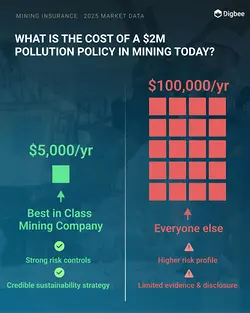
Understanding the Impact of Mining Pollution Policies on Insurance Costs
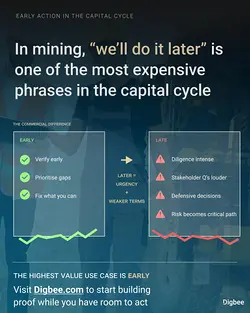
The Cost of 'We'll Do It Later' in Mining Capital Cycles
5
0/100