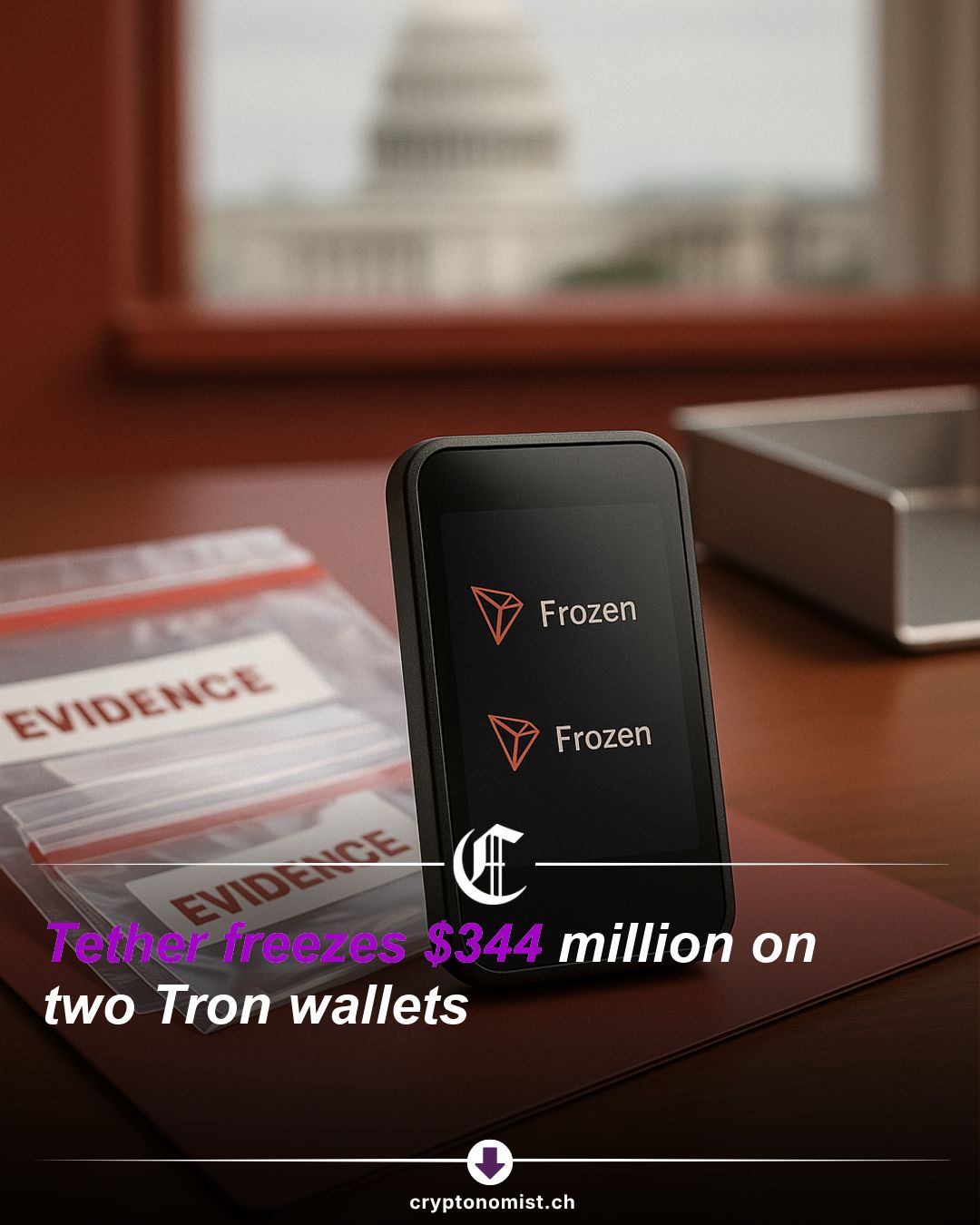

A $344 million freeze on two Tron wallets is more than an enforcement headline — it is another sign that stablecoin issuers are becoming part of the compliance stack. Tether says the action was taken in coordination with OFAC and US law enforcement, even though the alleged misconduct has not been publicly disclosed.
The numbers are striking. Tether says its cumulative cooperation with US authorities has now surpassed $2.1 billion in frozen assets, and $4.4 billion globally, across more than 2,300 cases worldwide.
That scale matters because it shows how USDT is being positioned in practice: not as a safe haven for illicit activity, but as a controllable payment rail that can respond quickly when credible links to sanctioned or criminal networks emerge. Paolo Ardoino has made that stance explicit, and the latest freeze reinforces it.
The broader takeaway is regulatory. Since 2022, Tether has steadily shifted toward a more proactive compliance model, and this move lands at a time when stablecoin issuers are facing rising US pressure under the GENIUS Act.
For market participants, the implication is clear: on-chain monitoring, rapid freeze capabilities, and counterparty risk controls are becoming baseline requirements, not optional features. That may raise compliance costs, but it could also strengthen institutional confidence in compliant stablecoins.
#crypto #tether #stablecoin
The numbers are striking. Tether says its cumulative cooperation with US authorities has now surpassed $2.1 billion in frozen assets, and $4.4 billion globally, across more than 2,300 cases worldwide.
That scale matters because it shows how USDT is being positioned in practice: not as a safe haven for illicit activity, but as a controllable payment rail that can respond quickly when credible links to sanctioned or criminal networks emerge. Paolo Ardoino has made that stance explicit, and the latest freeze reinforces it.
The broader takeaway is regulatory. Since 2022, Tether has steadily shifted toward a more proactive compliance model, and this move lands at a time when stablecoin issuers are facing rising US pressure under the GENIUS Act.
For market participants, the implication is clear: on-chain monitoring, rapid freeze capabilities, and counterparty risk controls are becoming baseline requirements, not optional features. That may raise compliance costs, but it could also strengthen institutional confidence in compliant stablecoins.
#crypto #tether #stablecoin
Shared byDakota Nguyen - A month ago
Log in to comment
Loading ..
Related Articles

BlackRock's Bitcoin ETF Faces $527M Outflows Amid Broader Crypto Pullback

Amelia Tomasicchio at Proof of Talk 2026: Leading Web3 Discussions at Louvre Palace

Leadership Transition at Ondo Finance: Stability Amidst Sudden CEO Loss

Partnering with Unchained Summit Vietnam 2026: Shaping the Future of Web3 and Crypto
Tether Partners with Georgian Government to Launch GEL₮ Stablecoin

Polymarket's Strategic Move to Japan: A Long-Term Regulatory Challenge
0/100