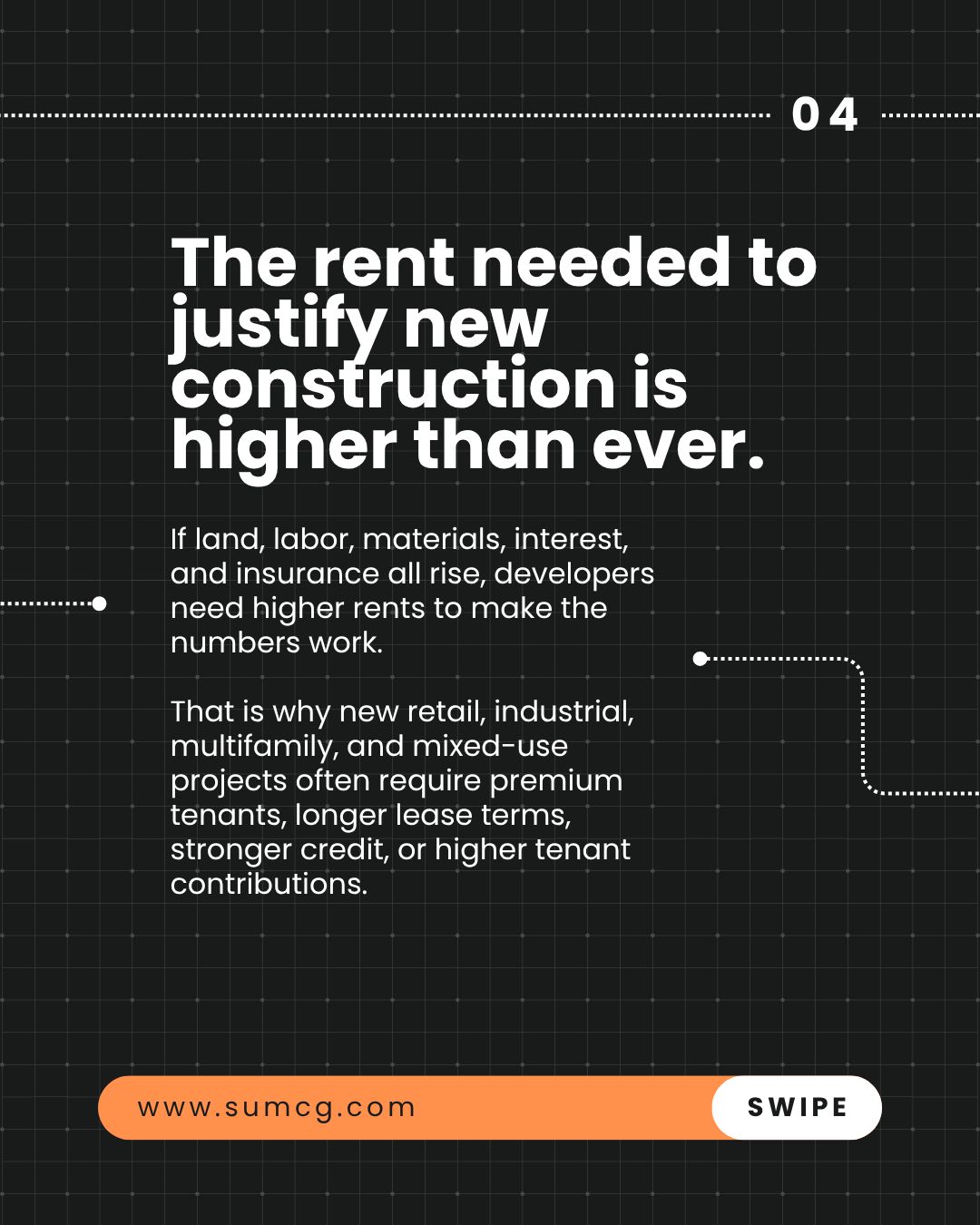

A “cheap” building can become very expensive fast. 💰
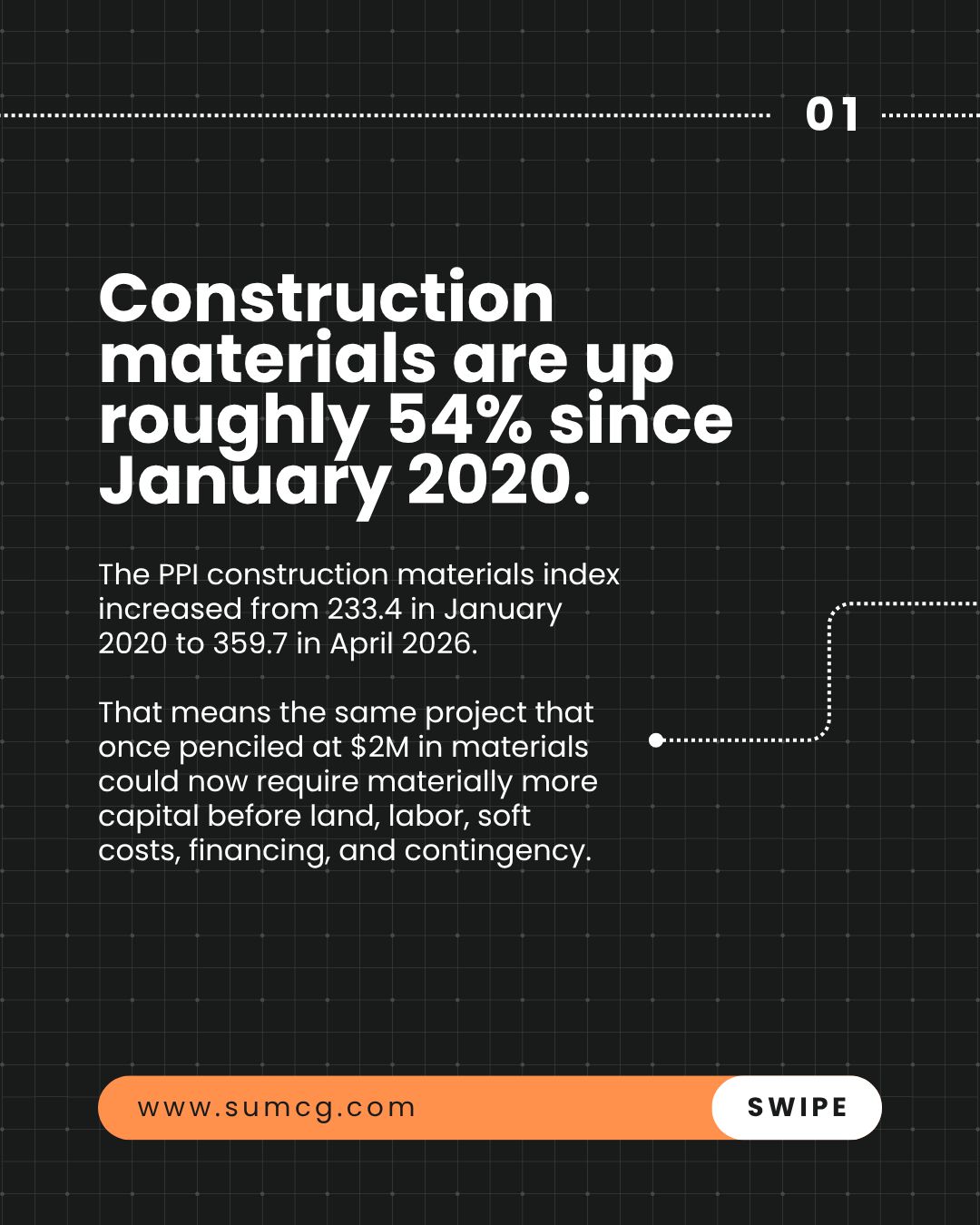
With construction materials up roughly 54% since January 2020, investors, tenants, and developers have to underwrite renovation and replacement costs more carefully than ever.
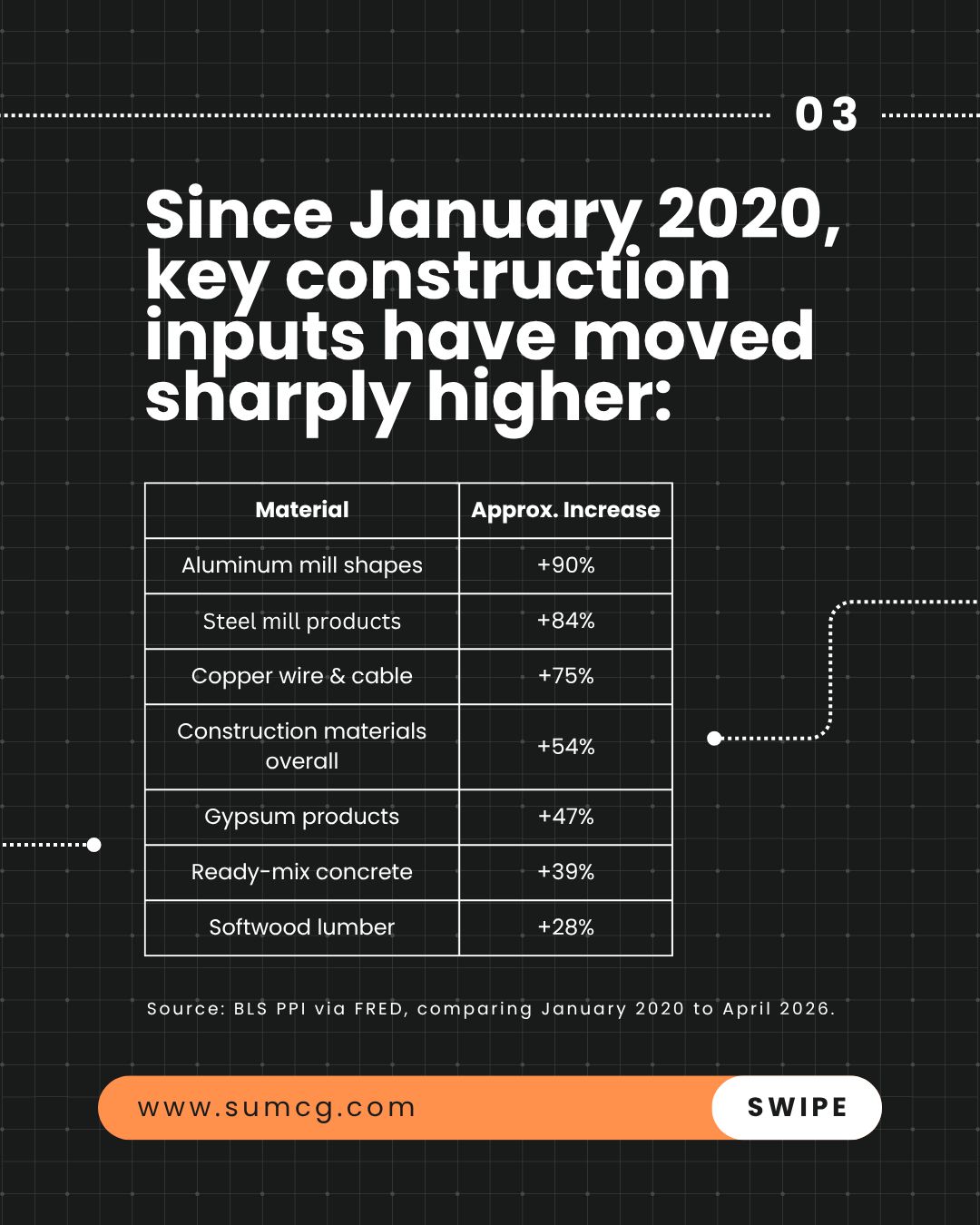
Some inputs have moved even more:
✅ Aluminum mill shapes: +90%
✅ Steel mill products: +84%
✅ Copper wire & cable: +75%
✅ Gypsum products: +47%
✅ Ready-mix concrete: +39%
✅ Softwood lumber: +28%
That changes everything.
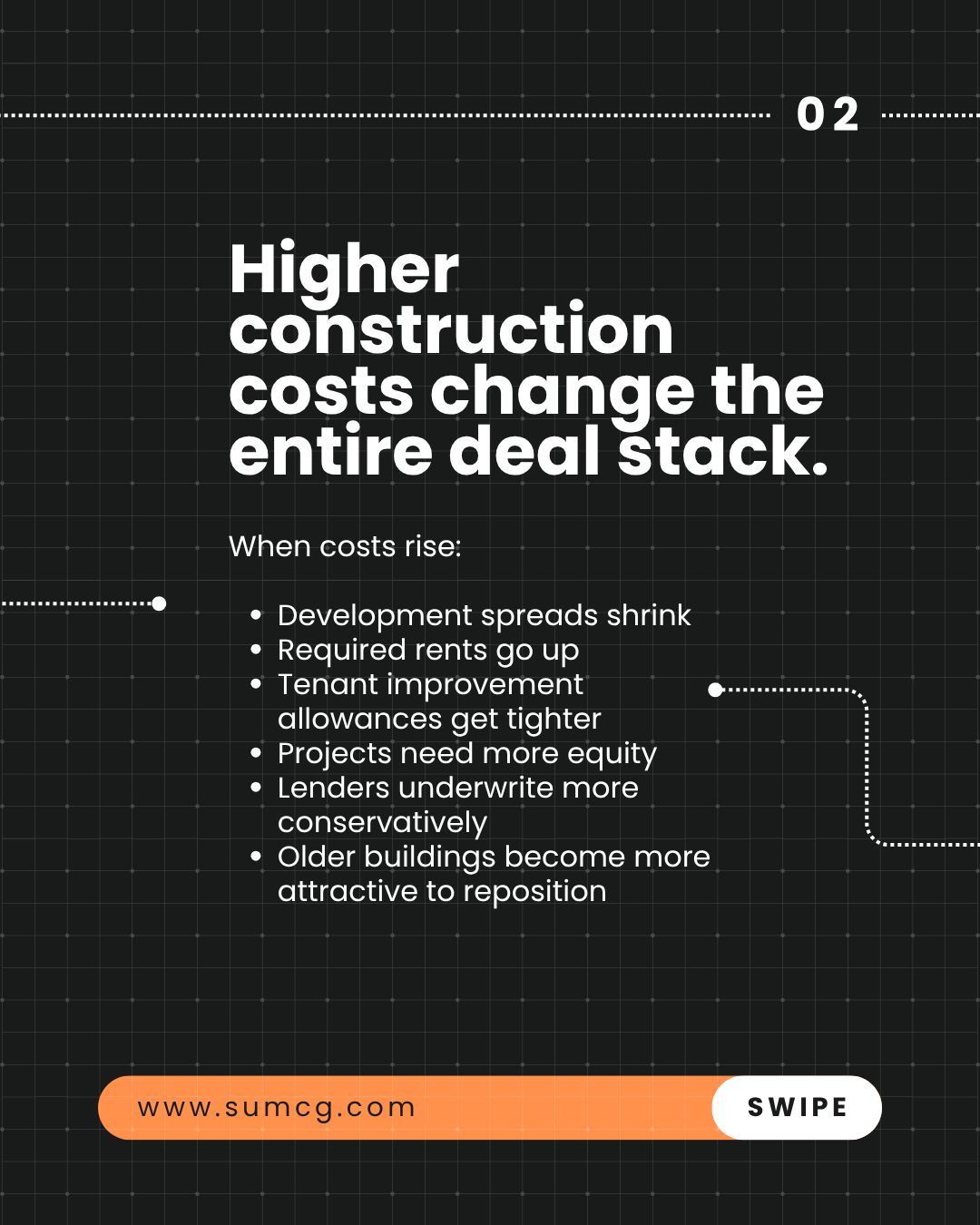
When construction costs rise, it impacts the entire commercial real estate deal stack:
📌 Development spreads shrink
📌 Required rents go up
📌 Tenant improvement allowances get tighter
📌 Projects need more equity
📌 Lenders underwrite more conservatively
📌 Timelines get longer
📌 Existing buildings become more attractive
This is why the cheapest square foot is often the one that already exists.
Adaptive reuse, second-generation restaurant spaces, existing industrial buildings, older retail centers, and properties with usable infrastructure already in place are becoming more valuable in today’s market.
But that does not mean every existing building is a good deal.
Renovation costs have risen, too.
MEP upgrades, roofing, structural repairs, fire suppression, ADA improvements, environmental work, and code compliance can quickly turn a “cheap” building into a very expensive project.
In today’s market, the deal is not just the real estate.
👉🏼 It is the construction budget.
👉🏼 It is the capital stack.
👉🏼 It is the tenant demand.
👉🏼 It is the timeline.
👉🏼 It is whether the project still pencils after contingency, financing costs, and realistic rent assumptions.
Before buying, leasing, or developing a commercial property, ask:
1️⃣ What would it cost to replace this building today?
2️⃣ Can market rents support new construction?
3️⃣ Is adaptive reuse more realistic than ground-up development?
4️⃣ Are TI costs properly accounted for?
5️⃣ Does the project still pencil after contingency and financing costs?
The investors, developers, tenants, and brokers who understand construction costs will have a major advantage in this market. 📊
If you are evaluating a CRE opportunity and want help thinking through the numbers, construction risk, or site strategy, let’s connect.
Raphael Collazo
Summit Commercial Group
📞 502.536.7315
📩 [email protected]
🌐 www.sumcg.com
#commercialrealestate #constructioncosts #realestateinvestment #adaptivereuse #propertydevelopment
With construction materials up roughly 54% since January 2020, investors, tenants, and developers have to underwrite renovation and replacement costs more carefully than ever.
Some inputs have moved even more:
✅ Aluminum mill shapes: +90%
✅ Steel mill products: +84%
✅ Copper wire & cable: +75%
✅ Gypsum products: +47%
✅ Ready-mix concrete: +39%
✅ Softwood lumber: +28%
That changes everything.
When construction costs rise, it impacts the entire commercial real estate deal stack:
📌 Development spreads shrink
📌 Required rents go up
📌 Tenant improvement allowances get tighter
📌 Projects need more equity
📌 Lenders underwrite more conservatively
📌 Timelines get longer
📌 Existing buildings become more attractive
This is why the cheapest square foot is often the one that already exists.
Adaptive reuse, second-generation restaurant spaces, existing industrial buildings, older retail centers, and properties with usable infrastructure already in place are becoming more valuable in today’s market.
But that does not mean every existing building is a good deal.
Renovation costs have risen, too.
MEP upgrades, roofing, structural repairs, fire suppression, ADA improvements, environmental work, and code compliance can quickly turn a “cheap” building into a very expensive project.
In today’s market, the deal is not just the real estate.
👉🏼 It is the construction budget.
👉🏼 It is the capital stack.
👉🏼 It is the tenant demand.
👉🏼 It is the timeline.
👉🏼 It is whether the project still pencils after contingency, financing costs, and realistic rent assumptions.
Before buying, leasing, or developing a commercial property, ask:
1️⃣ What would it cost to replace this building today?
2️⃣ Can market rents support new construction?
3️⃣ Is adaptive reuse more realistic than ground-up development?
4️⃣ Are TI costs properly accounted for?
5️⃣ Does the project still pencil after contingency and financing costs?
The investors, developers, tenants, and brokers who understand construction costs will have a major advantage in this market. 📊
If you are evaluating a CRE opportunity and want help thinking through the numbers, construction risk, or site strategy, let’s connect.
Raphael Collazo
Summit Commercial Group
📞 502.536.7315
📩 [email protected]
🌐 www.sumcg.com
#commercialrealestate #constructioncosts #realestateinvestment #adaptivereuse #propertydevelopment
Shared byHayden Reyes - 2 days ago
Log in to comment
Loading ..
Related Articles

Balancing Parenthood and Brokerage: Essential Skills for Success
Simplifying Commercial Leases with Base Year Structure
Navigating the Emotional Rollercoaster of Commercial Real Estate Brokerage
Exploring Commercial Real Estate: Multifamily, Retail, Industrial, and Office Insights
Navigating the Post-COVID Office Market Shift: Quality Over Quantity
Debunking Common Commercial Real Estate Myths: Insights and Strategies
0/100