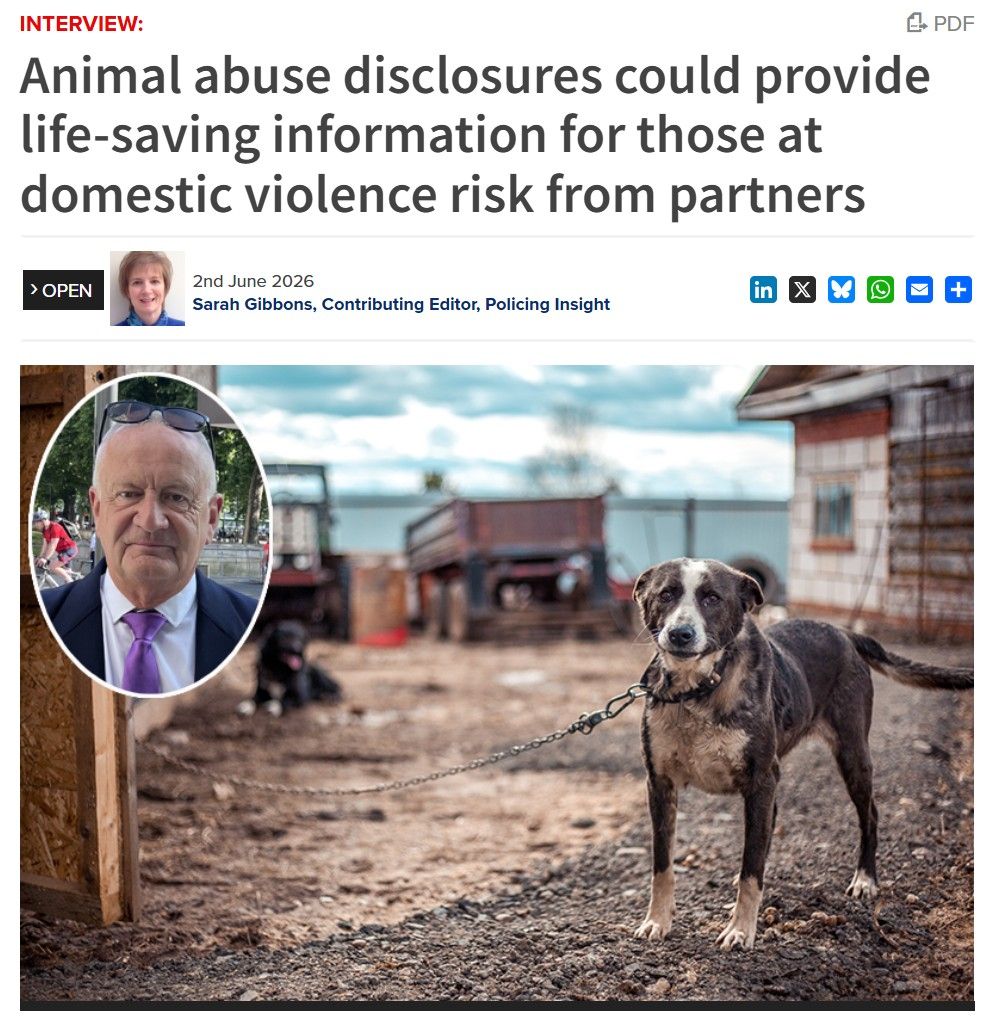

Proposals for an Animal Protection Disclosure Scheme, known as Holly’s Law and modelled on Clare’s Law (the Domestic Violence Disclosure Scheme), could soon be debated in the UK Parliament; former police officer Mark Randell, a campaign manager at the Naturewatch Foundation, explained to Policing Insight’s Sarah Gibbons why the link between animal abuse and coercive control and violence could be crucial in tackling domestic abuse, and how officers can play their part.
❝If you’re in a relationship and want to find out if your partner has a history of animal abuse, you will be able to ask the police, or they can make a ‘right-to-know’ decision and let you know... This could have prevented the murder of Holly, which was horrific and barbaric.❞ - Mark Randell, Naturewatch Foundation
❝These [intelligence] systems are intended to provide a comprehensive risk picture, but in practice, a key category of risk is often missing. This is particularly concerning given the recommendations of the 2004 Bichard Inquiry into the Soham murders, which called for improvements in how ‘soft intelligence’ – including allegations, concerns and non-conviction information – is recorded and shared.❞ - Naturewatch Foundation
❝A disclosure-based system for animal abuse may not solve everything, but it is a credible, practical first step toward protecting both people and animals from preventable harm.❞ - Naturewatch Foundation
❝Officers can still ask questions, such as why you have pets, where they come from, would you leave if it wasn’t for the pet, and who will look after the animal if you leave? They might get evidence about the harm they expect could be caused.❞ - Mark Randell, Naturewatch Foundation
❝If there’s best practice, let’s grab it. For example, if Avon and Somerset Police can publish Clare’s Law numbers online why can’t everyone else? By standardisation, we see a lot of improvements. I think the College of Policing could perhaps dictate more than advise.❞ - Mark Randell, Naturewatch Foundation
[SUBSCRIBER ARTICLE]
#animalprotection #domesticviolence #HollysLaw #animalabuse #preventableharm
❝If you’re in a relationship and want to find out if your partner has a history of animal abuse, you will be able to ask the police, or they can make a ‘right-to-know’ decision and let you know... This could have prevented the murder of Holly, which was horrific and barbaric.❞ - Mark Randell, Naturewatch Foundation
❝These [intelligence] systems are intended to provide a comprehensive risk picture, but in practice, a key category of risk is often missing. This is particularly concerning given the recommendations of the 2004 Bichard Inquiry into the Soham murders, which called for improvements in how ‘soft intelligence’ – including allegations, concerns and non-conviction information – is recorded and shared.❞ - Naturewatch Foundation
❝A disclosure-based system for animal abuse may not solve everything, but it is a credible, practical first step toward protecting both people and animals from preventable harm.❞ - Naturewatch Foundation
❝Officers can still ask questions, such as why you have pets, where they come from, would you leave if it wasn’t for the pet, and who will look after the animal if you leave? They might get evidence about the harm they expect could be caused.❞ - Mark Randell, Naturewatch Foundation
❝If there’s best practice, let’s grab it. For example, if Avon and Somerset Police can publish Clare’s Law numbers online why can’t everyone else? By standardisation, we see a lot of improvements. I think the College of Policing could perhaps dictate more than advise.❞ - Mark Randell, Naturewatch Foundation
[SUBSCRIBER ARTICLE]
#animalprotection #domesticviolence #HollysLaw #animalabuse #preventableharm
Shared bySage Park - 10 hours ago
Log in to comment
Loading ..
Related Articles

New Organised Supply Chain Crime Desk Launched by Opal to Combat Advanced Criminal Networks
Essential Autism Awareness Training for Police: Enhancing Community Trust
NCA's IT Systems Fail Inspection: Need for Long-Term Strategy and Cultural Change

Integrating Technology for a Unified Justice System
Revolutionizing Police Training: Neuroscience Insights from Poker
Building Procedural Justice in Australian Street-Level Drug Law Enforcement
14
0/100