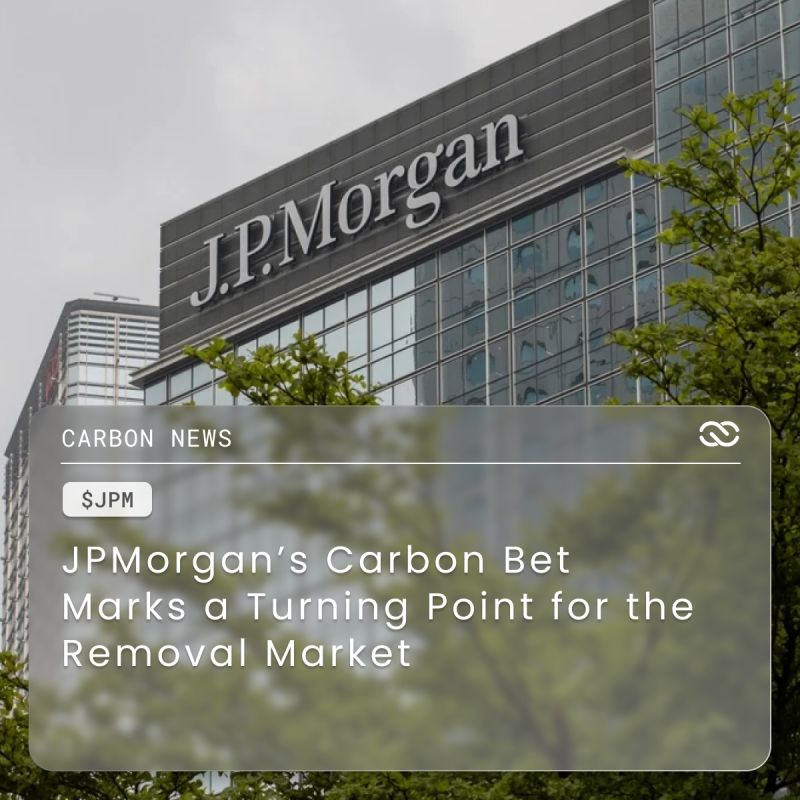
JPMorgan Chase Leads Carbon Removal Shift to Durability and Verification

Carbon removal is moving from niche to necessary—and capital is starting to follow. This month, JPMorganChase Chase signed two notable carbon removal agreements:
• 60,000 tons of durable CDR with Graphyte using biomass-based carbon storage
• 85,000 tons of forest-based credits via Anew Climate and Aurora
Sustainable Lands
The signal is clear: the market is shifting from offsetting emissions to actually removing carbon—and doing so with higher standards for durability and verification.
As Taylor Wright, Head of Operational Sustainability at JPMorgan Chase, puts it:
“Dynamic baselining provides meaningful evidence that these credits meet a high threshold for quality, supporting our interests as both a buyer and as a steward of market integrity.”
First, portfolio diversification is becoming the norm. Engineered solutions like biomass storage are being paired with nature-based approaches such as improved forest management.
Second, long-term contracts—even at relatively small volumes—are doing the heavy lifting. They send demand signals, unlock financing, and help scale supply in a market that is still far from where it needs to be.
Third, leadership is broadening. With Microsoft reportedly slowing new purchases, the market is starting to rely on a wider base of corporate buyers.
The reality: we’re still operating in thousands of tons when future climate scenarios require gigatons. But these early deals are how the market gets built.
JPMorgan’s approach—blending climate finance, technology investment, and carbon removal procurement—offers a blueprint for how institutions can move from ambition to execution.
The question now is not whether carbon removal will scale—but how fast, and who steps up next.
Read the full breakdown here: https://carboncredits.com/jpmorgans-carbon-bet-marks-a-turning-point-for-the-removal-market/
What’s your view—are current corporate strategies moving fast enough to meet long-term carbon removal demand
#carbonremoval #climateaction #sustainability #greenfinance #corporatesustainability
• 60,000 tons of durable CDR with Graphyte using biomass-based carbon storage
• 85,000 tons of forest-based credits via Anew Climate and Aurora
Sustainable Lands
The signal is clear: the market is shifting from offsetting emissions to actually removing carbon—and doing so with higher standards for durability and verification.
As Taylor Wright, Head of Operational Sustainability at JPMorgan Chase, puts it:
“Dynamic baselining provides meaningful evidence that these credits meet a high threshold for quality, supporting our interests as both a buyer and as a steward of market integrity.”
First, portfolio diversification is becoming the norm. Engineered solutions like biomass storage are being paired with nature-based approaches such as improved forest management.
Second, long-term contracts—even at relatively small volumes—are doing the heavy lifting. They send demand signals, unlock financing, and help scale supply in a market that is still far from where it needs to be.
Third, leadership is broadening. With Microsoft reportedly slowing new purchases, the market is starting to rely on a wider base of corporate buyers.
The reality: we’re still operating in thousands of tons when future climate scenarios require gigatons. But these early deals are how the market gets built.
JPMorgan’s approach—blending climate finance, technology investment, and carbon removal procurement—offers a blueprint for how institutions can move from ambition to execution.
The question now is not whether carbon removal will scale—but how fast, and who steps up next.
Read the full breakdown here: https://carboncredits.com/jpmorgans-carbon-bet-marks-a-turning-point-for-the-removal-market/
What’s your view—are current corporate strategies moving fast enough to meet long-term carbon removal demand
#carbonremoval #climateaction #sustainability #greenfinance #corporatesustainability
Shared byHayden Diaz - 20 days ago
Log in to comment
Loading ..
Related Articles

Vietnam-France Railway Friendship and Urban Mobility Forum: A Deep Dive

Recognizing the Unseen Heroes: Informal Waste Workers in Vietnam
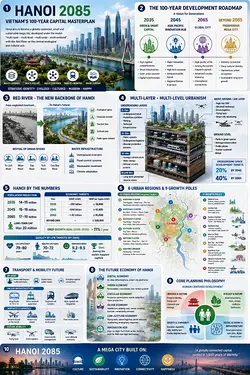
Hanoi's 100-Year Masterplan Aims for Sustainable, Smart Mega City by 2085

Vietnam's Rapid Growth as Global Investor Beyond Manufacturing

Vietnam's Carbon Finance Leadership at Da Nang High-Tech Climate Hub

Microsoft's 15-Year Carbon Removal Deal with Svante: Pioneering Indigenous-Led Projects
312
0/100