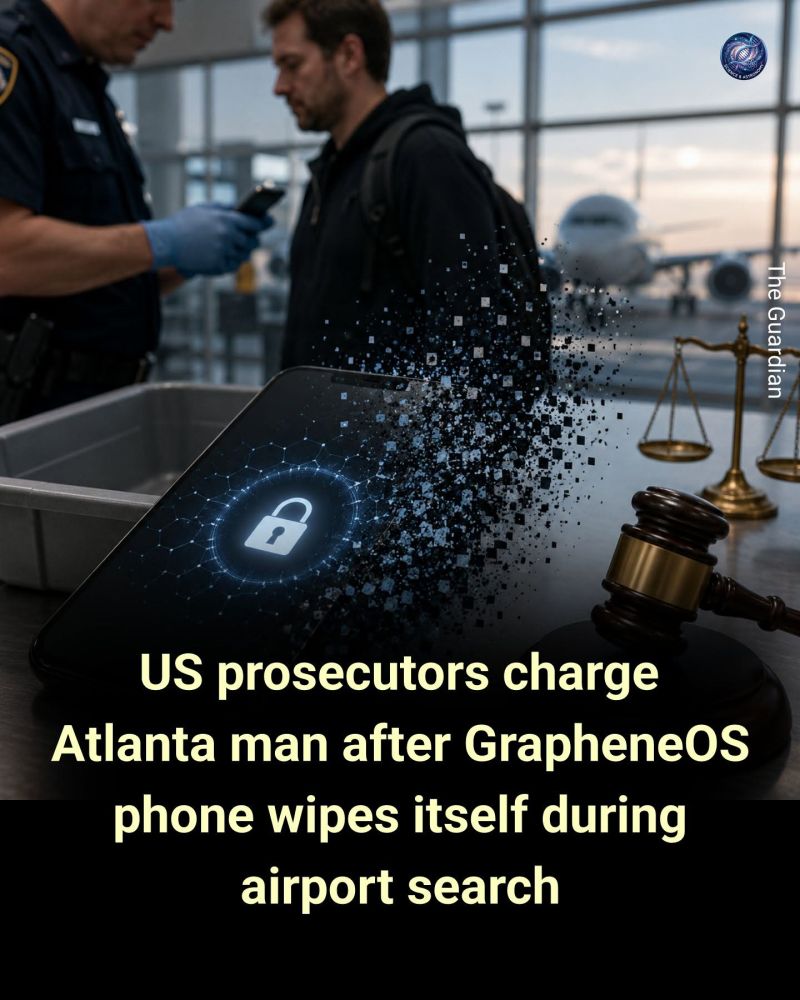

Imagine a security feature on your smartphone that acts like a digital self-destruct mechanism when you are forced to surrender your device. In a fascinating intersection of cybersecurity and constitutional law, a federal court case in Atlanta is bringing this exact technology into the legal spotlight.
The situation unfolded when border agents demanded access to the smartphone of Samuel Tunick, a U.S. citizen returning through Hartsfield-Jackson airport. Tunick was utilizing #GrapheneOS, an advanced, privacy-focused operating system that includes a built-in countermeasure known as a duress PIN. Instead of providing his standard unlock code, he supplied this secondary PIN to the authorities. When entered, a #duress #PIN does not open the phone but instead triggers an immediate and irreversible #cryptographic wipe of all local data.
Federal prosecutors have responded by charging Tunick with the intentional destruction of property to prevent a government seizure, marking an unprecedented legal test of anti-forensic security features. Tunick's defense attorneys contend that the device seizure was an unlawful pretext targeting his association with environmental activism.
This trial forces the justice system to grapple with the complex reality of modern cryptography and data protection. It raises a profound question about whether employing defensive privacy mechanisms programmed into our personal devices constitutes a legitimate exercise of personal security or a criminal obstruction of law enforcement. The outcome of this clash between digital architecture and border authority could permanently redefine the boundaries of our privacy rights in the modern technological era.
The situation unfolded when border agents demanded access to the smartphone of Samuel Tunick, a U.S. citizen returning through Hartsfield-Jackson airport. Tunick was utilizing #GrapheneOS, an advanced, privacy-focused operating system that includes a built-in countermeasure known as a duress PIN. Instead of providing his standard unlock code, he supplied this secondary PIN to the authorities. When entered, a #duress #PIN does not open the phone but instead triggers an immediate and irreversible #cryptographic wipe of all local data.
Federal prosecutors have responded by charging Tunick with the intentional destruction of property to prevent a government seizure, marking an unprecedented legal test of anti-forensic security features. Tunick's defense attorneys contend that the device seizure was an unlawful pretext targeting his association with environmental activism.
This trial forces the justice system to grapple with the complex reality of modern cryptography and data protection. It raises a profound question about whether employing defensive privacy mechanisms programmed into our personal devices constitutes a legitimate exercise of personal security or a criminal obstruction of law enforcement. The outcome of this clash between digital architecture and border authority could permanently redefine the boundaries of our privacy rights in the modern technological era.
Shared byFinley Lim - A day ago
Log in to comment
Loading ..
Related Articles

Debate Over AI Detector Reliability Sparks Concerns in Academia

Next-Gen AI Chip Startups: Innovative Approaches to Break Nvidia Dominance

Guardrails for AI: Ensuring Safety and Protection in an Increasingly Automated World

China’s Self-Driving Electric Trucks: Transforming Logistics

CycloTech's Revolutionary CycloRotor System: Redefining eVTOL Flight
The Downfall of SaaS Lock-In: The Impact of LLMs on Traditional Switching Costs
1928
0/100