

A data centre fire is a physical incident with digital consequences. The key question is whether the design prevents common-cause failure.
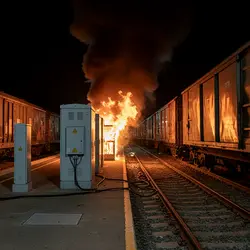
Industry reporting on 7 to 9 May 2026 describes a significant fire at NorthC's Data Centre in Almere, Netherlands, with service disruption and staged restoration over subsequent days. The ignition cause and root-cause findings were not confirmed in reporting.
For protective security and resilience leaders, the practical takeaway is that high-consequence facilities need engineered separation and tested restoration pathways. Compartmentation, fire-rated barriers, and separation of primary and backup plant reduce the likelihood that one technical area failure becomes a multi-system outage.
Monitoring and response procedures also matter, including rapid triage, safe isolation, and clear restoration sequencing. For organisations consuming critical services, dependency governance is part of security. Understand whether critical workloads rely on a single site, and test failover assumptions, not only in theory but in exercises.
Controls that failed:
- Fire containment and compartmentation effectiveness (details not confirmed in reporting)
- Separation of critical plant and backup systems (details not confirmed in reporting)
- Dependency risk from single-site reliance
Practical lessons:
- Validate compartmentation and separation to reduce common-cause failure
- Ensure monitoring and response supports rapid isolation and safe restoration
- Test customer failover and continuity assumptions through exercises
- Maintain crisis communications and stakeholder notification playbooks
If your organisation depends on a single facility or provider site, it is worth stress-testing that assumption.
Sources:
#PhysicalSecurity #Resilience #BusinessContinuity #CriticalInfrastructure #DataCentres #RiskManagement
Industry reporting on 7 to 9 May 2026 describes a significant fire at NorthC's Data Centre in Almere, Netherlands, with service disruption and staged restoration over subsequent days. The ignition cause and root-cause findings were not confirmed in reporting.
For protective security and resilience leaders, the practical takeaway is that high-consequence facilities need engineered separation and tested restoration pathways. Compartmentation, fire-rated barriers, and separation of primary and backup plant reduce the likelihood that one technical area failure becomes a multi-system outage.
Monitoring and response procedures also matter, including rapid triage, safe isolation, and clear restoration sequencing. For organisations consuming critical services, dependency governance is part of security. Understand whether critical workloads rely on a single site, and test failover assumptions, not only in theory but in exercises.
Controls that failed:
- Fire containment and compartmentation effectiveness (details not confirmed in reporting)
- Separation of critical plant and backup systems (details not confirmed in reporting)
- Dependency risk from single-site reliance
Practical lessons:
- Validate compartmentation and separation to reduce common-cause failure
- Ensure monitoring and response supports rapid isolation and safe restoration
- Test customer failover and continuity assumptions through exercises
- Maintain crisis communications and stakeholder notification playbooks
If your organisation depends on a single facility or provider site, it is worth stress-testing that assumption.
Sources:
#PhysicalSecurity #Resilience #BusinessContinuity #CriticalInfrastructure #DataCentres #RiskManagement
Shared byJordan Lee - 10 days ago
Log in to comment
Loading ..
Related Articles

Ramraiding Mitigation: Protecting High-Value Retail Stores

Why Security Bars Alone Aren't Enough for Business Protection

Preventing Vehicle Attacks: Security Lessons from a West Hollywood Incident

Securing Non-Traditional Entry Points in Multi-Tenancy Facilities
Critical Security Insights: Protecting Small Assets with Big Consequences

Lessons from a Distribution Centre Arson: Insider Sabotage and Security Gaps
2
0/100