Preventing Vehicle Attacks: Security Lessons from a West Hollywood Incident

A "smash-and-grab" is often a vehicle attack, not a hand-tool attack. If a vehicle can reach the frontage, glazing is not a barrier.
Reporting on a West Hollywood incident on 8 May 2026 describes suspects using a stolen pickup truck to ram the frontage of The RealReal on Melrose Avenue, enter quickly, and steal merchandise before fleeing. Total loss value and arrests were not confirmed in reporting.
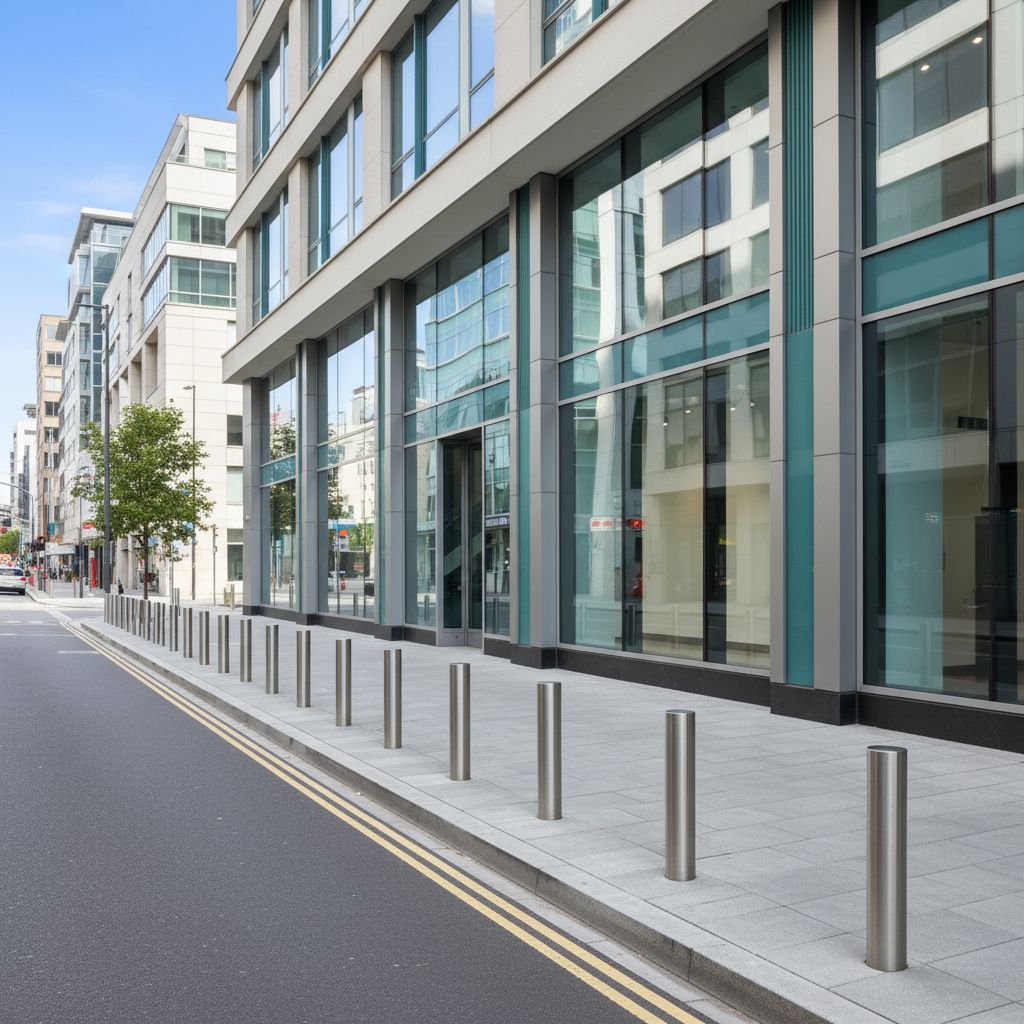
The practical protective security lesson is straightforward. For high-value, street-facing sites, the credible forced-entry tool may be a vehicle. If there is no engineered hostile vehicle mitigation at the frontage, the organisation is relying on detection after the breach, which often means detection after the loss.
Controls should focus on delay and denial at the approach path, for example rated bollards or barriers, meaningful setback, and frontage design that reduces rapid entry. Supporting controls include monitored alarms, measurable response, and after-hours stock placement that reduces exposure.
Controls that failed:
- No effective hostile vehicle mitigation at the frontage
- Frontage resistance limits against vehicle impact
- After-hours detection and response did not prevent loss (details not confirmed in reporting)
Practical lessons:
- Assess vehicle approach paths and consequence, then engineer barriers accordingly
- Treat frontage design as a security control set, not only an architectural feature
- Ensure alarms are monitored and response is tested and measurable
- Reduce exposure through secure after-hours stock storage
If your site has high-value frontage, it is worth reviewing whether a vehicle is in your threat model.
Sources:
#PhysicalSecurity #RetailSecurity #HostileVehicleMitigation #CrimePrevention #RiskManagement #SecurityDesign
Reporting on a West Hollywood incident on 8 May 2026 describes suspects using a stolen pickup truck to ram the frontage of The RealReal on Melrose Avenue, enter quickly, and steal merchandise before fleeing. Total loss value and arrests were not confirmed in reporting.
The practical protective security lesson is straightforward. For high-value, street-facing sites, the credible forced-entry tool may be a vehicle. If there is no engineered hostile vehicle mitigation at the frontage, the organisation is relying on detection after the breach, which often means detection after the loss.
Controls should focus on delay and denial at the approach path, for example rated bollards or barriers, meaningful setback, and frontage design that reduces rapid entry. Supporting controls include monitored alarms, measurable response, and after-hours stock placement that reduces exposure.
Controls that failed:
- No effective hostile vehicle mitigation at the frontage
- Frontage resistance limits against vehicle impact
- After-hours detection and response did not prevent loss (details not confirmed in reporting)
Practical lessons:
- Assess vehicle approach paths and consequence, then engineer barriers accordingly
- Treat frontage design as a security control set, not only an architectural feature
- Ensure alarms are monitored and response is tested and measurable
- Reduce exposure through secure after-hours stock storage
If your site has high-value frontage, it is worth reviewing whether a vehicle is in your threat model.
Sources:
#PhysicalSecurity #RetailSecurity #HostileVehicleMitigation #CrimePrevention #RiskManagement #SecurityDesign
Shared byLogan Lim - 11 days ago
Log in to comment
Loading ..
Related Articles

Ramraiding Mitigation: Protecting High-Value Retail Stores

Why Security Bars Alone Aren't Enough for Business Protection

Navigating Data Centre Fire Risks: Prevention and Recovery Strategies

Securing Non-Traditional Entry Points in Multi-Tenancy Facilities
Critical Security Insights: Protecting Small Assets with Big Consequences

Lessons from a Distribution Centre Arson: Insider Sabotage and Security Gaps
5
0/100