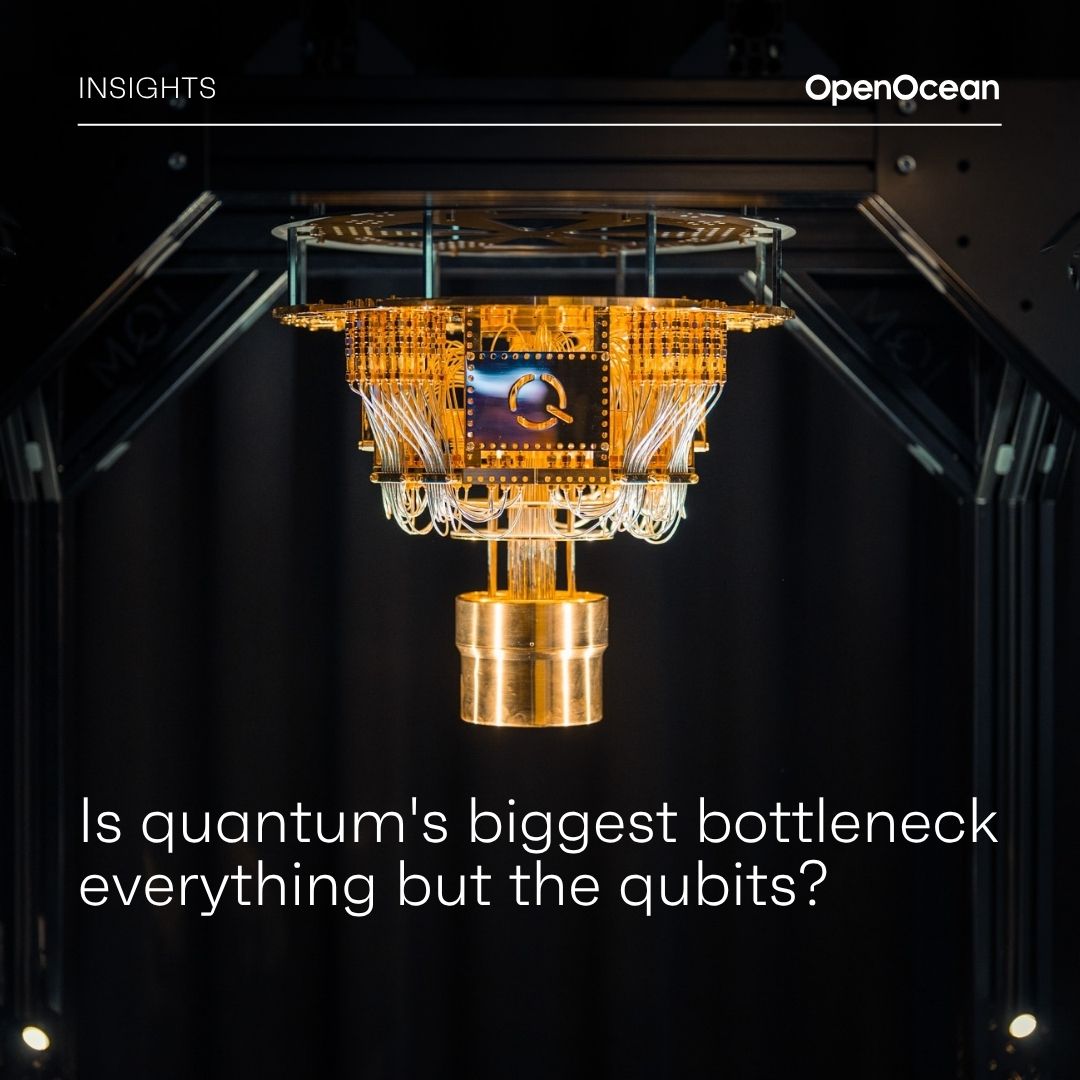

Is quantum's biggest bottleneck everything but the qubits?
Quantum computing used to be a physics bet. When we backed IQM Quantum Computers as a lab spin-out, the challenge was simply building a working machine.
Today, public markets are embracing hardware companies and governments worldwide are committing billions to sovereign infrastructure. Credible roadmaps point to fault-tolerance by 2030, and qubit scaling has consistently outpaced expectations.
But our conversations have shifted to a more practical question: who’s going to solve the commercial friction?
Right now, three massive bottlenecks stand in the way of true enterprise adoption:
1. Software is still far too academic: You should not need a PhD in quantum mechanics to run a basic workflow, yet current simulation and orchestration layers break down under real conditions.
2. The math on hardware ROI is brutal: A multimillion-dollar system that becomes obsolete in 24 months only makes sense in specific niches where quantum-hybrid approaches can undeniably surpass increasingly powerful classical AI models.
3. The supply chain remains fragile: It is still heavily reliant on bespoke, manual lab processes tailored to single hardware modalities, rather than hardware-agnostic, industrial-grade manufacturing.
In our next post, we’ll be sharing how the second wave of quantum winners will solve these friction points. Stay tuned!
#quantum computing #enterprise adoption #quantum friction points #quantum software #quantum hardware ROI
Quantum computing used to be a physics bet. When we backed IQM Quantum Computers as a lab spin-out, the challenge was simply building a working machine.
Today, public markets are embracing hardware companies and governments worldwide are committing billions to sovereign infrastructure. Credible roadmaps point to fault-tolerance by 2030, and qubit scaling has consistently outpaced expectations.
But our conversations have shifted to a more practical question: who’s going to solve the commercial friction?
Right now, three massive bottlenecks stand in the way of true enterprise adoption:
1. Software is still far too academic: You should not need a PhD in quantum mechanics to run a basic workflow, yet current simulation and orchestration layers break down under real conditions.
2. The math on hardware ROI is brutal: A multimillion-dollar system that becomes obsolete in 24 months only makes sense in specific niches where quantum-hybrid approaches can undeniably surpass increasingly powerful classical AI models.
3. The supply chain remains fragile: It is still heavily reliant on bespoke, manual lab processes tailored to single hardware modalities, rather than hardware-agnostic, industrial-grade manufacturing.
In our next post, we’ll be sharing how the second wave of quantum winners will solve these friction points. Stay tuned!
#quantum computing #enterprise adoption #quantum friction points #quantum software #quantum hardware ROI
Shared byBlair Ray - 11 days ago
Log in to comment
Loading ..
Related Articles
Hygraph Launches AI Agents for Streamlined Content Management

Join Sunstead for an Evening of Innovation in European Tech

Quantum Winners of Tomorrow: Discovering the Next Big Tech Innovators
Raoul L. at Helsinki Events: Automation, Reporting, and ESG Insights
IQM Quantum Computers Achieves Three Major Milestones: A New Era in Quantum Technology
Building Conviction in Technical Startups: Insights from Deeptech Venture Network
8
0/100