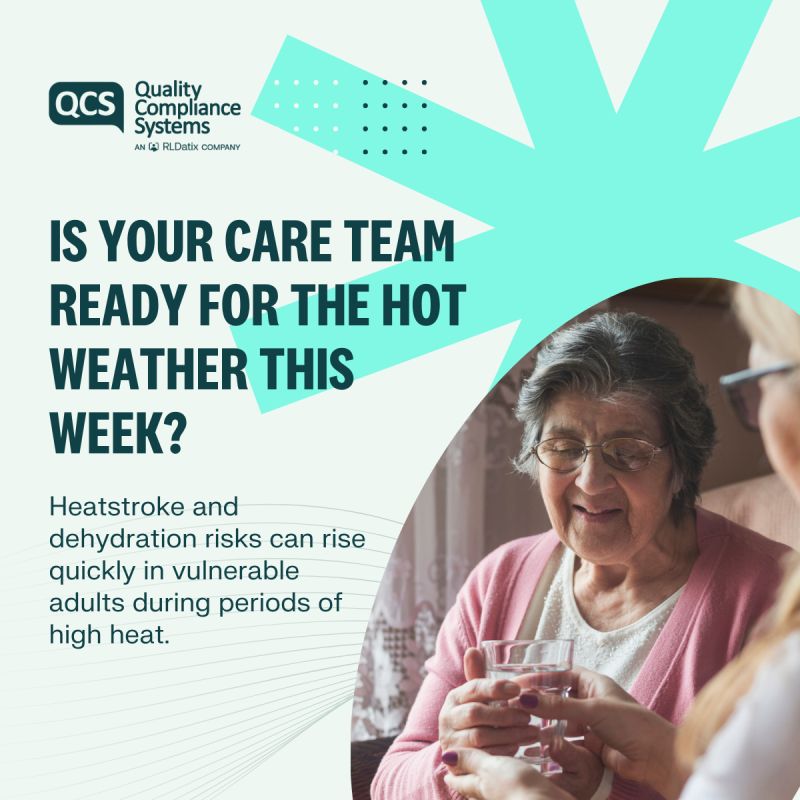

Are your teams ready for this week’s hot weather?
With temperatures across parts of the UK expected to reach 30°C, now is the time for care providers to review hot weather safety measures for vulnerable residents and people receiving care at home.
High temperatures can quickly increase the risk of dehydration, heat exhaustion and heatstroke, particularly for older adults and people with complex health needs.
Our QCS guidance explores:
• The signs of heatstroke in vulnerable adults
• Heat exhaustion vs heatstroke
• Hydration and environmental checks
• Practical steps for care teams during hot weather
• What CQC expects from providers during periods of high heat
Read the full guide here: https://buff.ly/OBPWqB5
#SocialCare #CareHomes #Heatwave #CareCompliance
With temperatures across parts of the UK expected to reach 30°C, now is the time for care providers to review hot weather safety measures for vulnerable residents and people receiving care at home.
High temperatures can quickly increase the risk of dehydration, heat exhaustion and heatstroke, particularly for older adults and people with complex health needs.
Our QCS guidance explores:
• The signs of heatstroke in vulnerable adults
• Heat exhaustion vs heatstroke
• Hydration and environmental checks
• Practical steps for care teams during hot weather
• What CQC expects from providers during periods of high heat
Read the full guide here: https://buff.ly/OBPWqB5
#SocialCare #CareHomes #Heatwave #CareCompliance
Shared byRowan Lee - 9 days ago
Log in to comment
Loading ..
Related Articles

Explore QCS Webinar Library for Expert Guidance on Social Care Practices

Take Back Control: Upcoming Webinar on Care Compliance Simplification

QCS Supports Dementia Action Week 2026 with Expert Guidance and Resources

CareBrain Joins QCS: Merging Expertise and AI for Social Care Advancement

Guide to Early Recognition of Dementia in Care Settings for 2026

Rewatch Our AI in Social Care Webinar: Compliance and Safety
1
0/100