The Most Dangerous Sleep Experiment: What Randy Gardner Taught Us About Consciousness

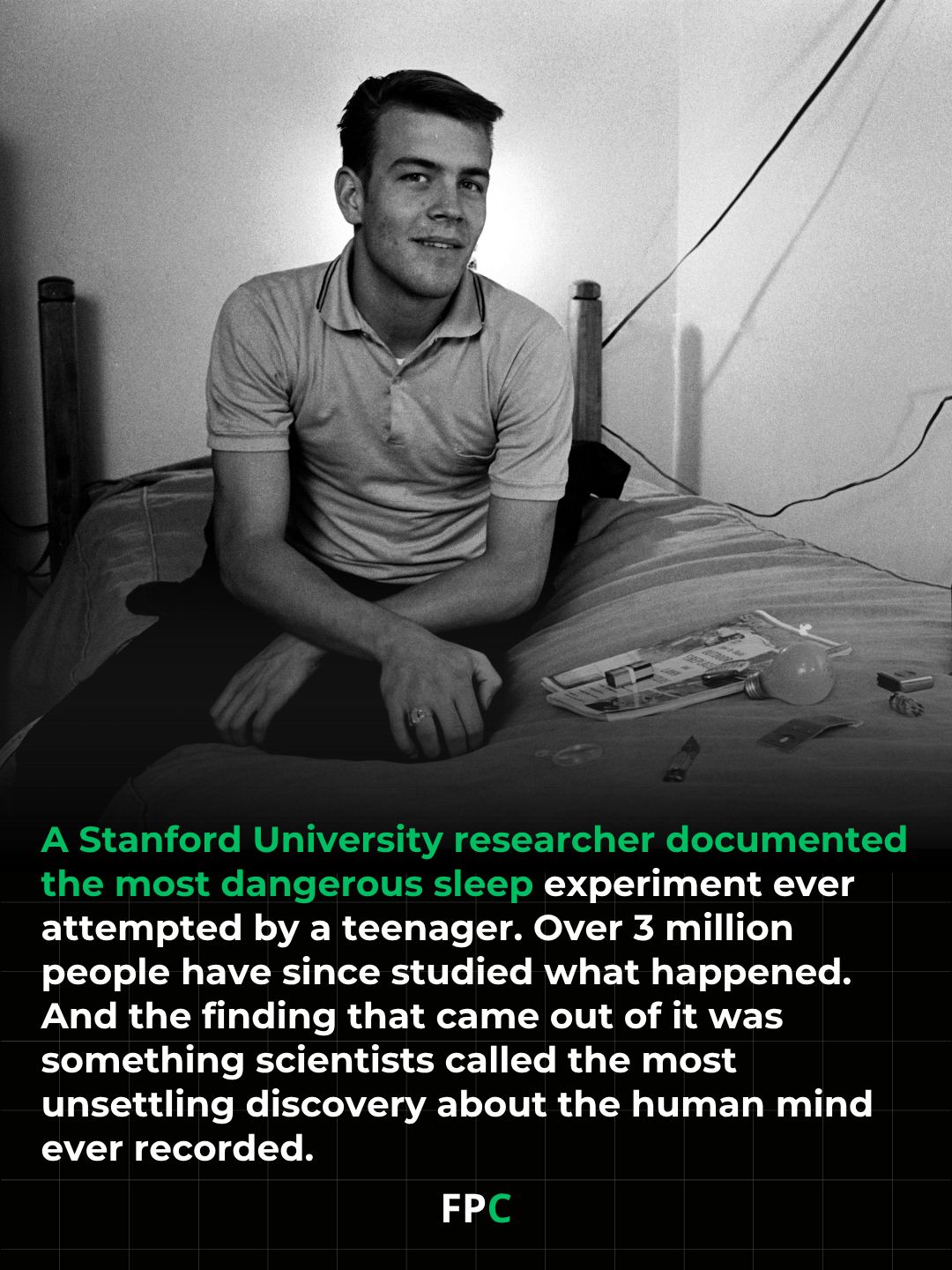
A Stanford University researcher documented the most dangerous sleep experiment ever attempted by a teenager.
Over 3 million people have since studied what happened.
And the finding that came out of it was something scientists called the most unsettling discovery about the human mind ever recorded.
In 1964, a 17-year-old named Randy Gardner decided to attempt something insane:
Stay awake longer than anyone in history.
No stimulants.
No medical intervention.
Just willpower—and a brain pushed past its limits.
His target:
264 hours awake.
11 straight days without sleep.
At first, the effects looked predictable.
Fatigue.
Memory issues.
Slower thinking.
Then everything changed.
By Day 3—his memory started collapsing.
He’d forget sentences halfway through speaking.
By Day 4—a second reality appeared.
He spoke to people who weren’t there.
Walked toward places that didn’t exist.
His eyes were open—but his mind wasn’t fully connected to reality anymore.
Researchers noticed something terrifying:
The hallucinations weren’t random.
They looked like dreams.
Narratives.
Emotion.
Symbolic imagery.
His brain wasn’t shutting down.
It was blending dream states into waking consciousness.
By Day 9—he became paranoid.
Convinced researchers were plotting against him.
Then came the strangest discovery.
His EEG scans showed sleep activity—while he was still awake and walking around.
Parts of his brain had entered sleep states.
Other parts kept him functioning.
Awake.
Asleep.
Somehow both at once.
And that changed how researchers viewed consciousness itself.
Because the line between dreaming and reality—may be thinner than we think.
After 264 hours—Randy finally slept.
14 hours and 40 minutes.
Then he woke up.
Normal again.
The hallucinations disappeared.
The paranoia faded.
His memory returned.
Researchers were stunned.
Not because he survived—but because of what sleep deprivation revealed.
Sleep may not just restore the body.
It may protect the boundary between internal imagination and external reality.
Without enough sleep—that boundary starts breaking down.
And the real lesson?
Sleep isn’t laziness.
It’s maintenance for consciousness itself.
Because when the brain loses the ability to separate dreams from reality—
everything else starts to unravel.
Thank you for reading!
Follow First Principles Consultants for more.
#sleepdeprivation #consciousness #humanmind #dreamsreality #sleepscience
Over 3 million people have since studied what happened.
And the finding that came out of it was something scientists called the most unsettling discovery about the human mind ever recorded.
In 1964, a 17-year-old named Randy Gardner decided to attempt something insane:
Stay awake longer than anyone in history.
No stimulants.
No medical intervention.
Just willpower—and a brain pushed past its limits.
His target:
264 hours awake.
11 straight days without sleep.
At first, the effects looked predictable.
Fatigue.
Memory issues.
Slower thinking.
Then everything changed.
By Day 3—his memory started collapsing.
He’d forget sentences halfway through speaking.
By Day 4—a second reality appeared.
He spoke to people who weren’t there.
Walked toward places that didn’t exist.
His eyes were open—but his mind wasn’t fully connected to reality anymore.
Researchers noticed something terrifying:
The hallucinations weren’t random.
They looked like dreams.
Narratives.
Emotion.
Symbolic imagery.
His brain wasn’t shutting down.
It was blending dream states into waking consciousness.
By Day 9—he became paranoid.
Convinced researchers were plotting against him.
Then came the strangest discovery.
His EEG scans showed sleep activity—while he was still awake and walking around.
Parts of his brain had entered sleep states.
Other parts kept him functioning.
Awake.
Asleep.
Somehow both at once.
And that changed how researchers viewed consciousness itself.
Because the line between dreaming and reality—may be thinner than we think.
After 264 hours—Randy finally slept.
14 hours and 40 minutes.
Then he woke up.
Normal again.
The hallucinations disappeared.
The paranoia faded.
His memory returned.
Researchers were stunned.
Not because he survived—but because of what sleep deprivation revealed.
Sleep may not just restore the body.
It may protect the boundary between internal imagination and external reality.
Without enough sleep—that boundary starts breaking down.
And the real lesson?
Sleep isn’t laziness.
It’s maintenance for consciousness itself.
Because when the brain loses the ability to separate dreams from reality—
everything else starts to unravel.
Thank you for reading!
Follow First Principles Consultants for more.
#sleepdeprivation #consciousness #humanmind #dreamsreality #sleepscience
Shared byFinley Silva - 6 days ago
Log in to comment
Loading ..
Related Articles

Overcoming the Midlife Squeeze: Ray Dalio's Leverage Strategy for Success
Unlocking the Unique Advantages of ADHD: Careers and Skills for Thriving

Master Premortem: Predicting Failures Before They Happen with AI

Unlock Productivity with ADHD Executive Function Mode: Task Hacks & Dopamine Boosts

How Costco Predicts Recessions by Observing Shopping Habits
Understanding ADHD: The Science Behind Task Initiation and Neural Regulation
2
0/100