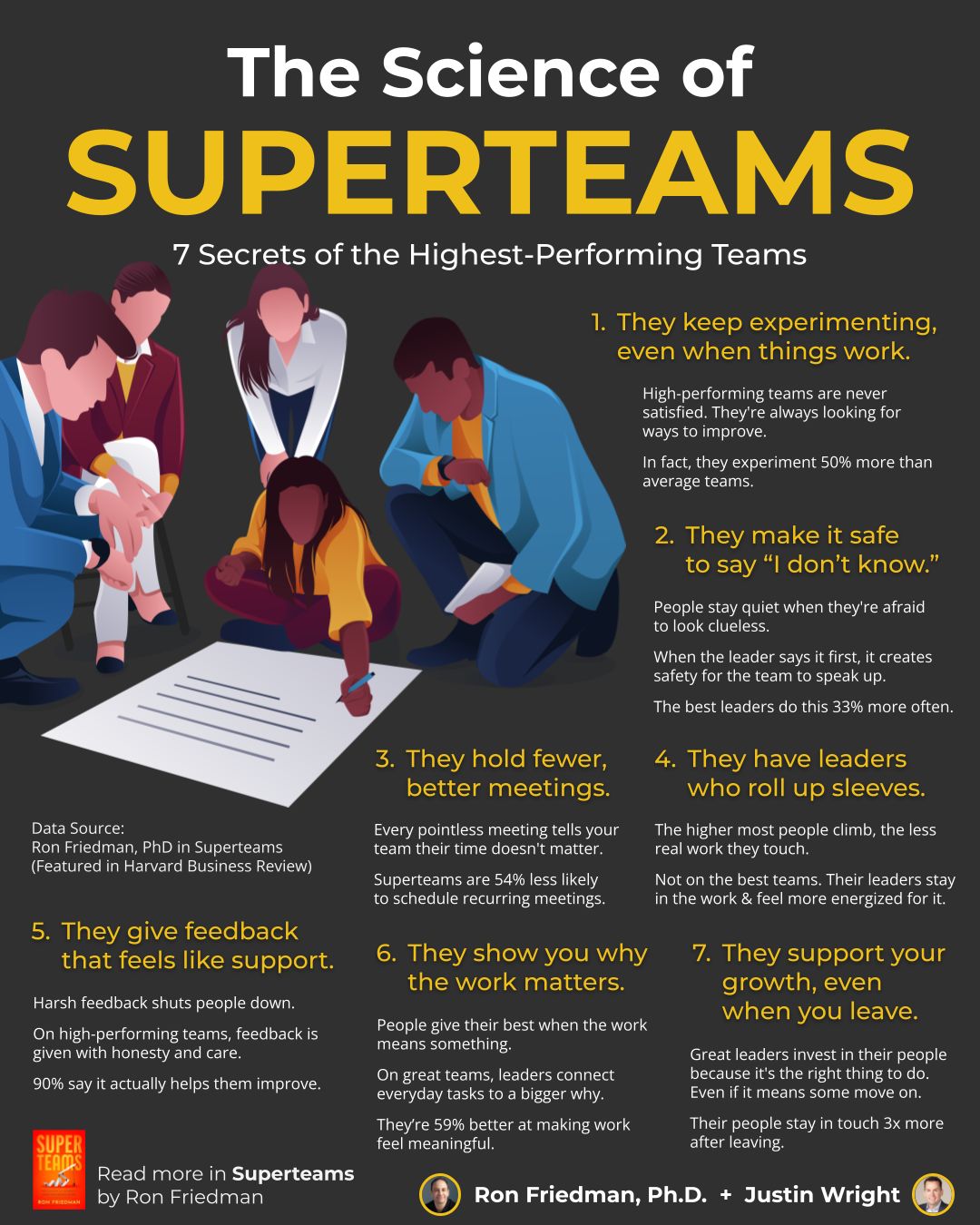

My friend Ron Friedman, Ph.D. spent years studying what makes great teams great. Not opinions, data.
He interviewed 6,000 people across finance, law, healthcare, and tech.
He captured the findings in his new book.
I was surprised by a lot of it.
For example:
The top 8% of teams keep experimenting even when things are working well.
Most teams do the opposite. When something works, they relax.
They stop questioning. They stop testing. And slowly, they fall behind.
I've watched it happen. To companies. To teams. To myself.
Every time I plateaued, it started the same way.
I got comfortable.
I assumed what worked yesterday would work tomorrow.
Look at the Oklahoma City Thunder.
In 2022, they were one of the worst teams in the league.
24 wins, 58 losses.
Three seasons later, they were champions.
What changed?
They didn't get more talented.
They got better at learning.
That's just one of the patterns Ron found.
A few others stuck with me:
1. The best teams are 50% better at avoiding pointless meetings, so people can do real work.
2. They make it safe to say "I don't know," so problems get addressed early.
3. They give feedback that builds people up instead of tearing them down.
His new book is Superteams.
It was just featured in Harvard Business Review.
It's packed with data-backed findings.
I don't recommend many books.
This one earned it.
It's out today: https://geni.us/superteams
♻️ Repost to share with your network. Thank you!
P.S. Want a PDF of this cheat sheet? Get it free: BrillianceBrief.com
#teambuilding #leadership #businessgrowth #learningculture #datadriven
He interviewed 6,000 people across finance, law, healthcare, and tech.
He captured the findings in his new book.
I was surprised by a lot of it.
For example:
The top 8% of teams keep experimenting even when things are working well.
Most teams do the opposite. When something works, they relax.
They stop questioning. They stop testing. And slowly, they fall behind.
I've watched it happen. To companies. To teams. To myself.
Every time I plateaued, it started the same way.
I got comfortable.
I assumed what worked yesterday would work tomorrow.
Look at the Oklahoma City Thunder.
In 2022, they were one of the worst teams in the league.
24 wins, 58 losses.
Three seasons later, they were champions.
What changed?
They didn't get more talented.
They got better at learning.
That's just one of the patterns Ron found.
A few others stuck with me:
1. The best teams are 50% better at avoiding pointless meetings, so people can do real work.
2. They make it safe to say "I don't know," so problems get addressed early.
3. They give feedback that builds people up instead of tearing them down.
His new book is Superteams.
It was just featured in Harvard Business Review.
It's packed with data-backed findings.
I don't recommend many books.
This one earned it.
It's out today: https://geni.us/superteams
♻️ Repost to share with your network. Thank you!
P.S. Want a PDF of this cheat sheet? Get it free: BrillianceBrief.com
#teambuilding #leadership #businessgrowth #learningculture #datadriven
Shared byAlex Reid - 11 days ago
Log in to comment
Loading ..
Related Articles
Creating High-Performance Cultures: The Importance of Truth and Tension in Leadership
Transforming from Manager to Leader: Empowering Your Team for Success
Navigating Criticism: 8 Emotionally Intelligent Responses
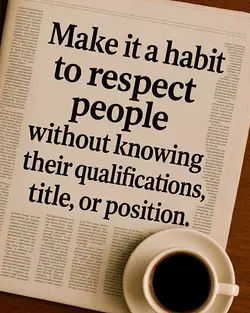
Leading with Respect: The True Measure of Leadership
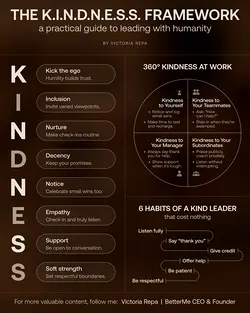
Transforming Workplace Culture: The Power of Kindness in Leadership

Choosing the Right API Type for Your Project: A Comprehensive Guide
700
0/100