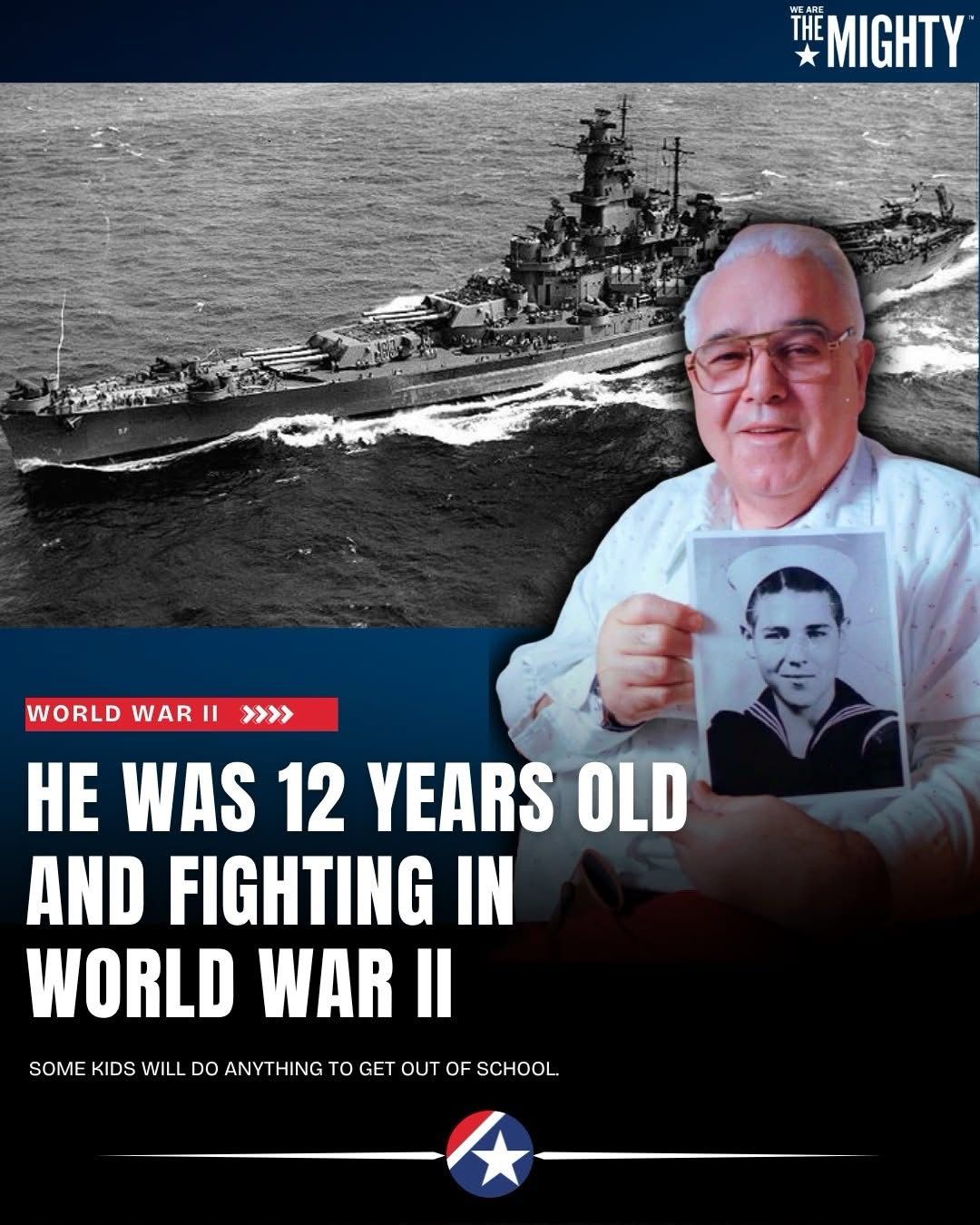

Calvin Graham was only 12 years old when he enlisted in the Navy during World War II. He ended up fighting at Guadalcanal, earning medals, and spending decades trying to get back what the Navy took from him.
The baby-faced Graham was only 12 years old at the time and did everything he could think of to make himself appear older. As a Smithsonian magazine article in 2012 explained, Graham arrived clean-shaven, wore his older brother’s clothes and a fedora, and spoke in a deep voice.
The boy still had some of his baby teeth—a telltale sign of his actual age. When a dentist gazed into Graham’s mouth, he confronted the young boy. Graham stuck to his story for as long as possible, then informed the dentist he knew others who were allowed to enlist that day despite being underage.
“Finally, he said he didn’t have time to mess with me, and he let me go,” Graham said.
When the Japanese attacked Pearl Harbor on December 7, 1941, Graham was a student in Texas with a disturbing home life. He moved out of the family’s house because of an abusive stepfather, and once the U.S. entered the war, Graham desperately wanted in.
He lied to his mother that he was off to see relatives, disguising the fact he was headed to San Diego for basic training. From there, the Navy assigned the boy sailor to the USS South Dakota.
One of the war’s most decorated warships, the South Dakota saw extensive action during the Guadalcanal Campaign. In the middle of the first major Allied offensive in the Pacific during WWII, there was nowhere for Graham to hide.
During the Second Naval Battle of Guadalcanal, Graham sustained shrapnel injuries to his jaw and mouth, knocking out his front teeth, but that was not the worst of it. One blow caused him to fall through three stories of superstructure.
“I took belts off the dead and made tourniquets for the living and gave them cigarettes and encouraged them all night,” Graham recalled, per Smithsonian magazine. “It was a long night. It aged me.”
After the South Dakota arrived in New York for repairs, Graham, who received a Bronze Star, Purple Heart, and other medals for his actions, appeared in newsreel footage. His mother recognized him.
As a result, the preteen served three months in the brig before the Navy took away his medals and disability benefits and dishonorably discharged him.
Graham struggled readjusting to civilian life. For years, how his time in the Navy ended bothered him. Whatever his transgression, service meant a lot to Graham; in fact, he went on to serve in the Marine Corps.
Graham was closing in on his 50th birthday when his discharge was changed to honorable and he was given back his medals, all except for the Purple Heart.
His family accepted the Purple Heart on his behalf in 1994.
Full story by Stephen Ruiz found in the comments
#WorldWarII #NavyHistory #USNavy #MilitaryHistory
The baby-faced Graham was only 12 years old at the time and did everything he could think of to make himself appear older. As a Smithsonian magazine article in 2012 explained, Graham arrived clean-shaven, wore his older brother’s clothes and a fedora, and spoke in a deep voice.
The boy still had some of his baby teeth—a telltale sign of his actual age. When a dentist gazed into Graham’s mouth, he confronted the young boy. Graham stuck to his story for as long as possible, then informed the dentist he knew others who were allowed to enlist that day despite being underage.
“Finally, he said he didn’t have time to mess with me, and he let me go,” Graham said.
When the Japanese attacked Pearl Harbor on December 7, 1941, Graham was a student in Texas with a disturbing home life. He moved out of the family’s house because of an abusive stepfather, and once the U.S. entered the war, Graham desperately wanted in.
He lied to his mother that he was off to see relatives, disguising the fact he was headed to San Diego for basic training. From there, the Navy assigned the boy sailor to the USS South Dakota.
One of the war’s most decorated warships, the South Dakota saw extensive action during the Guadalcanal Campaign. In the middle of the first major Allied offensive in the Pacific during WWII, there was nowhere for Graham to hide.
During the Second Naval Battle of Guadalcanal, Graham sustained shrapnel injuries to his jaw and mouth, knocking out his front teeth, but that was not the worst of it. One blow caused him to fall through three stories of superstructure.
“I took belts off the dead and made tourniquets for the living and gave them cigarettes and encouraged them all night,” Graham recalled, per Smithsonian magazine. “It was a long night. It aged me.”
After the South Dakota arrived in New York for repairs, Graham, who received a Bronze Star, Purple Heart, and other medals for his actions, appeared in newsreel footage. His mother recognized him.
As a result, the preteen served three months in the brig before the Navy took away his medals and disability benefits and dishonorably discharged him.
Graham struggled readjusting to civilian life. For years, how his time in the Navy ended bothered him. Whatever his transgression, service meant a lot to Graham; in fact, he went on to serve in the Marine Corps.
Graham was closing in on his 50th birthday when his discharge was changed to honorable and he was given back his medals, all except for the Purple Heart.
His family accepted the Purple Heart on his behalf in 1994.
Full story by Stephen Ruiz found in the comments
#WorldWarII #NavyHistory #USNavy #MilitaryHistory
Shared byDakota Jordan - 13 days ago
Log in to comment
Loading ..
Related Articles

Unveiling the Real Story of Mike Vining: Vietnam War Hero and Delta Force Legend

Discover the Heroic Life of Jimmy Stewart in the New WWII Movie
Transparent Discussion with Ramón ‘CZ’ Colón-López at SOFWeek

Senate Bill to Increase Veterans' Disability Payments: What You Need to Know
Navigating Leadership Transition from Military to Civilian Life

The Self-Made Genius: Percy Spencer's Journey from Navy Sailor to Microwave Inventor
8
0/100