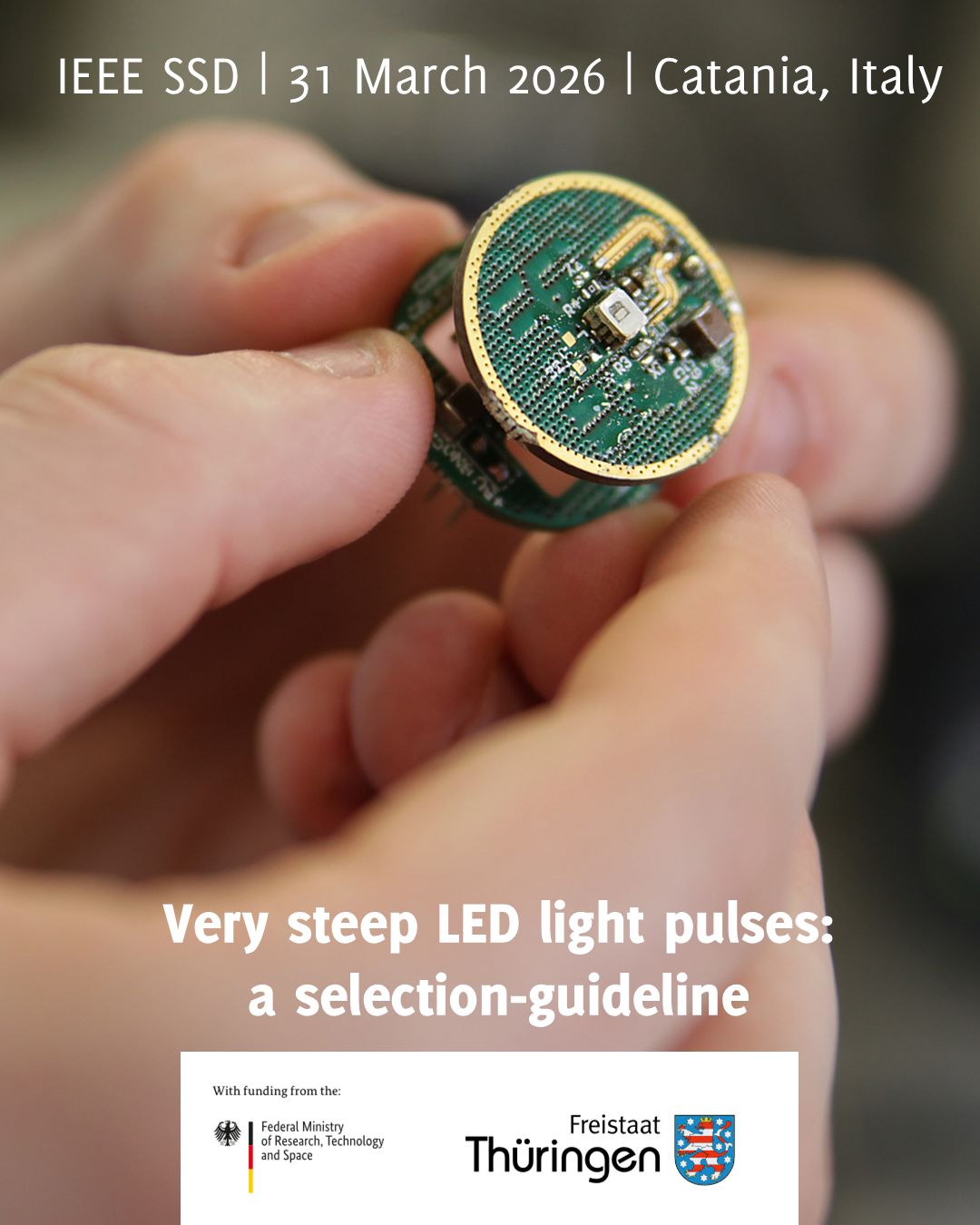
LED Pulse Selection Guide for Advanced Diagnostics: Insights from IEEE SSD 2026

Switching instead of filtering – Vincent Haude, Alexander Rolapp, and Michael Meister are presenting “Very steep LED light pulses: a selection-guideline” at the IEEE International Multi-Conference on Systems, Signals and Devices (SSD 2026): https://ssd-multiconf.org.
For many applications, such as #invitro #diagnostics, filters can be eliminated by measuring time-resolved signals. Take #fluorescence, for example. To measure it, excite fluorophores using off-the-shelf LEDs, switch off the excitation light, then measure the resulting fluorescence, and repeat. For such setups, fast optical switching times are required from the LEDs.
The authors offer a practical guide to choose the right LED for any application. By examining several parameters like those involved in LED packages, wavelength or power, they explain how to find possible limitations and chart a path to optimise a #measurement system.
Learn more on our #research and #development on #sensor systems for #invitro #diagnostics under www.imms.de/ivd or contact Vincent Haude, Alexander Rolapp or Michael Meister directly.
FUNDING:
Parts of this work have been carried out in the FluoResYst project funded by the Federal Ministry of Research, Technology and Space (BMFTR) within the photonics research funding framework under the reference 13N15807 and within the IMMS research group Tireless funded by the German Land of Thüringen.
For many applications, such as #invitro #diagnostics, filters can be eliminated by measuring time-resolved signals. Take #fluorescence, for example. To measure it, excite fluorophores using off-the-shelf LEDs, switch off the excitation light, then measure the resulting fluorescence, and repeat. For such setups, fast optical switching times are required from the LEDs.
The authors offer a practical guide to choose the right LED for any application. By examining several parameters like those involved in LED packages, wavelength or power, they explain how to find possible limitations and chart a path to optimise a #measurement system.
Learn more on our #research and #development on #sensor systems for #invitro #diagnostics under www.imms.de/ivd or contact Vincent Haude, Alexander Rolapp or Michael Meister directly.
FUNDING:
Parts of this work have been carried out in the FluoResYst project funded by the Federal Ministry of Research, Technology and Space (BMFTR) within the photonics research funding framework under the reference 13N15807 and within the IMMS research group Tireless funded by the German Land of Thüringen.
Shared bySkyler Khan - 2 months ago
Log in to comment
Loading ..
Related Articles
Innovative SPAD-Based Quantum Random Number Generator Unveiled at International Workshop
Collaborative Optoelectronics Project Between IMMS Erfurt and Jena's Ernst-Abbe-Hochschule
Innovative Yaw Angle Determination for Nanopositioning Stage at World Interferometry Day
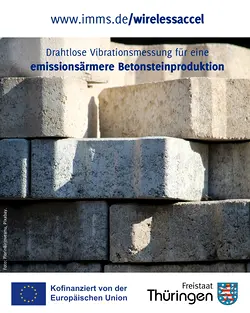
Eco-Friendly Concrete Production: WirelessAccel Project Aims for Sustainable Solutions
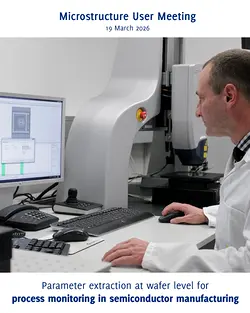
Steffen Michael's Vibrometry Insights at Microstructure User Meeting 2026
OptoNet e.V. Unites Photonics andMicroelectronics for Future Technologies
17
0/100