
Manual shading control rests on an assumption; that occupants will manage solar gain effectively, consistently, across a full building and a full year.
In practice, they don't.
There's a gap in most occupied buildings, between the energy model and the energy reality. Automated shading is one of the more reliable ways to close it.
Automated systems operate to a specification, not a preference.
• When irradiance exceeds a defined threshold ➡️ shading deploys.
• When wind speed approaches a safety limit ➡️ it retracts.
• When cloud cover reduces solar intensity ➡️ the system responds.
A system operating independently of the BMS can conflict with mechanical ventilation, heating or lighting strategies, working alongside the building rather than as part of it. Specified with BACnet or the building's controls platform, automated shading behaves as a building system should.
The specification detail matters. And it's worth getting right from the outset.
Our technical team supports automation specification, from sensor strategy to BMS integration.
If that's a conversation worth having on a current project, we're here: [email protected].
#SolarShading #BuildingPerformance #SmartBuildings #FacadeEngineering #AutomatedShading #ShadingSpecification
In practice, they don't.
There's a gap in most occupied buildings, between the energy model and the energy reality. Automated shading is one of the more reliable ways to close it.
Automated systems operate to a specification, not a preference.
• When irradiance exceeds a defined threshold ➡️ shading deploys.
• When wind speed approaches a safety limit ➡️ it retracts.
• When cloud cover reduces solar intensity ➡️ the system responds.
A system operating independently of the BMS can conflict with mechanical ventilation, heating or lighting strategies, working alongside the building rather than as part of it. Specified with BACnet or the building's controls platform, automated shading behaves as a building system should.
The specification detail matters. And it's worth getting right from the outset.
Our technical team supports automation specification, from sensor strategy to BMS integration.
If that's a conversation worth having on a current project, we're here: [email protected].
#SolarShading #BuildingPerformance #SmartBuildings #FacadeEngineering #AutomatedShading #ShadingSpecification
Shared byEmerson Tran - 11 days ago
Log in to comment
Loading ..
Related Articles

New Dubai Office: Expanding Middle East Shading Solutions
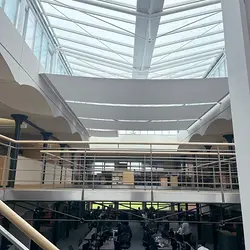
Transforming Open Spaces with Intelligent Shading Solutions

Heatwave Highlights Importance of WELL Certification for Building Performance

Building Performance: The Importance of Early Thermal Modelling and Shading Strategies
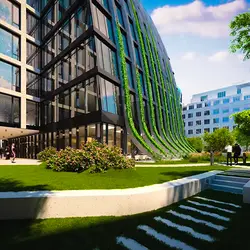
Complex Facade Shading for Prague's Florentinum with TESS™ 400
Maximize BREEAM Benefits with Strategic Solar Shading
7
0/100