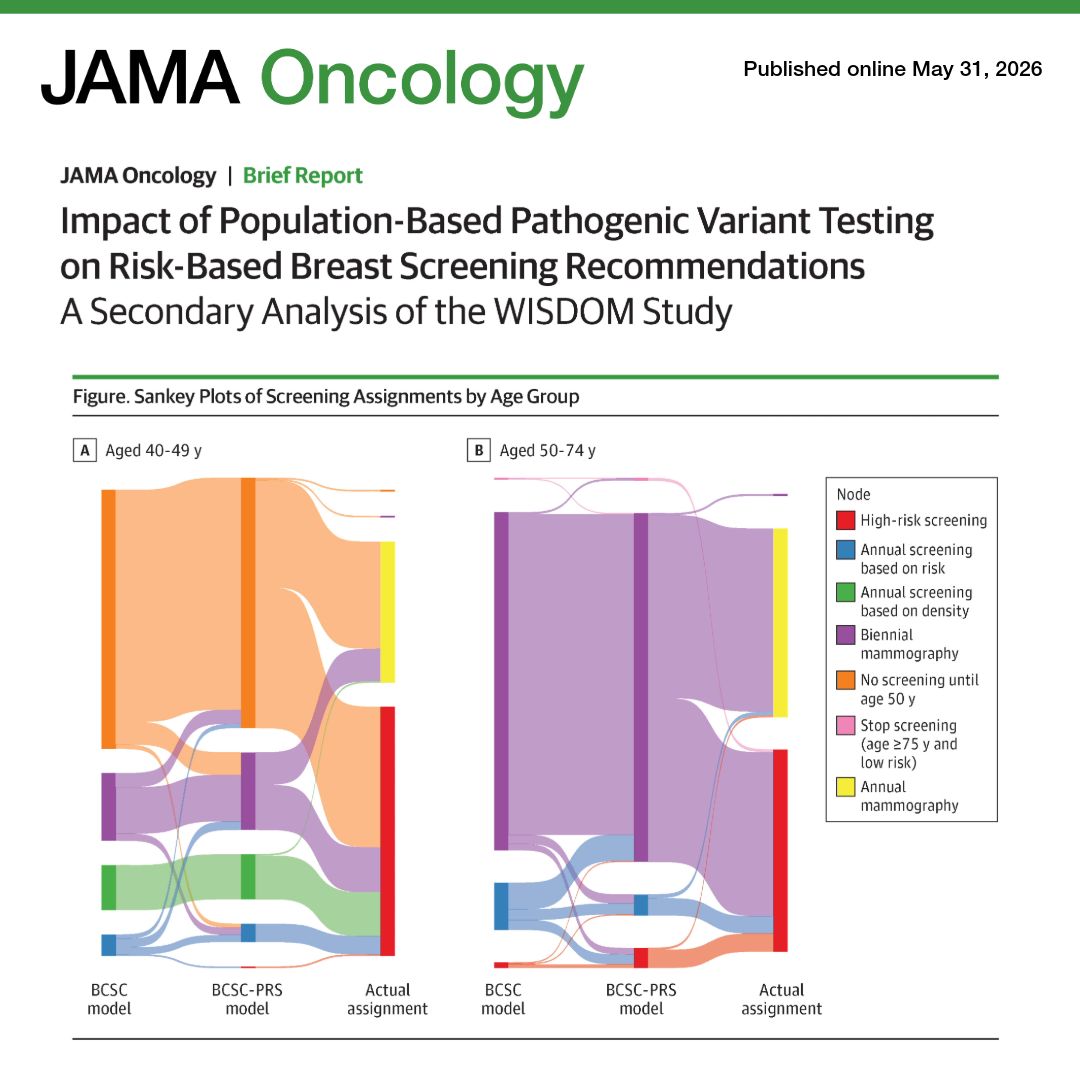

In a cohort study of women with pathogenic variants (PVs) in #BreastCancer genes from the WISDOM risk-based screening trial, most participants would not have been recommended for high-risk screening, such as alternating magnetic resonance imaging (MRI) and mammography every 6 months, based on clinical risk models alone or in combination with polygenic risk scores.
For high-penetrance PV carriers, less than 1% would have been assigned the same intensive surveillance using model-based or combined clinical and polygenic risk assessment as compared to PV-informed strategies.
These results indicate that population-based PV testing identifies different high-risk subgroups than clinical or polygenic risk models and support the inclusion of germline PV testing as an essential component of risk-based breast cancer screening programs.
#ASCO26
https://ja.ma/4nWoDx4
For high-penetrance PV carriers, less than 1% would have been assigned the same intensive surveillance using model-based or combined clinical and polygenic risk assessment as compared to PV-informed strategies.
These results indicate that population-based PV testing identifies different high-risk subgroups than clinical or polygenic risk models and support the inclusion of germline PV testing as an essential component of risk-based breast cancer screening programs.
#ASCO26
https://ja.ma/4nWoDx4
Shared byAvery Kim - 2 days ago
Log in to comment
Loading ..
Related Articles

Combined Helicobacter pylori and FIT Screening: Cost-Effective Colorectal Cancer Prevention

2025 ACC/AHA/ACEP/NAEMSP/SCAI Guideline for Acute Coronary Syndrome Management
AI-Powered CDS in Medicine: Navigating Advertising Challenges and Ethical Standards
Cost-Effective Gastric Cancer Prevention with Co-Testing in Taiwan: A JAMA Analysis
Growth of Provider-Sponsored Health Plans: Trends and Implications from 2018 to 2023
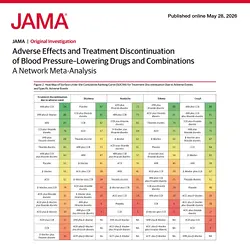
Comprehensive Network Meta-Analysis on Blood Pressure Drug Discontinuation Rates
48
0/100