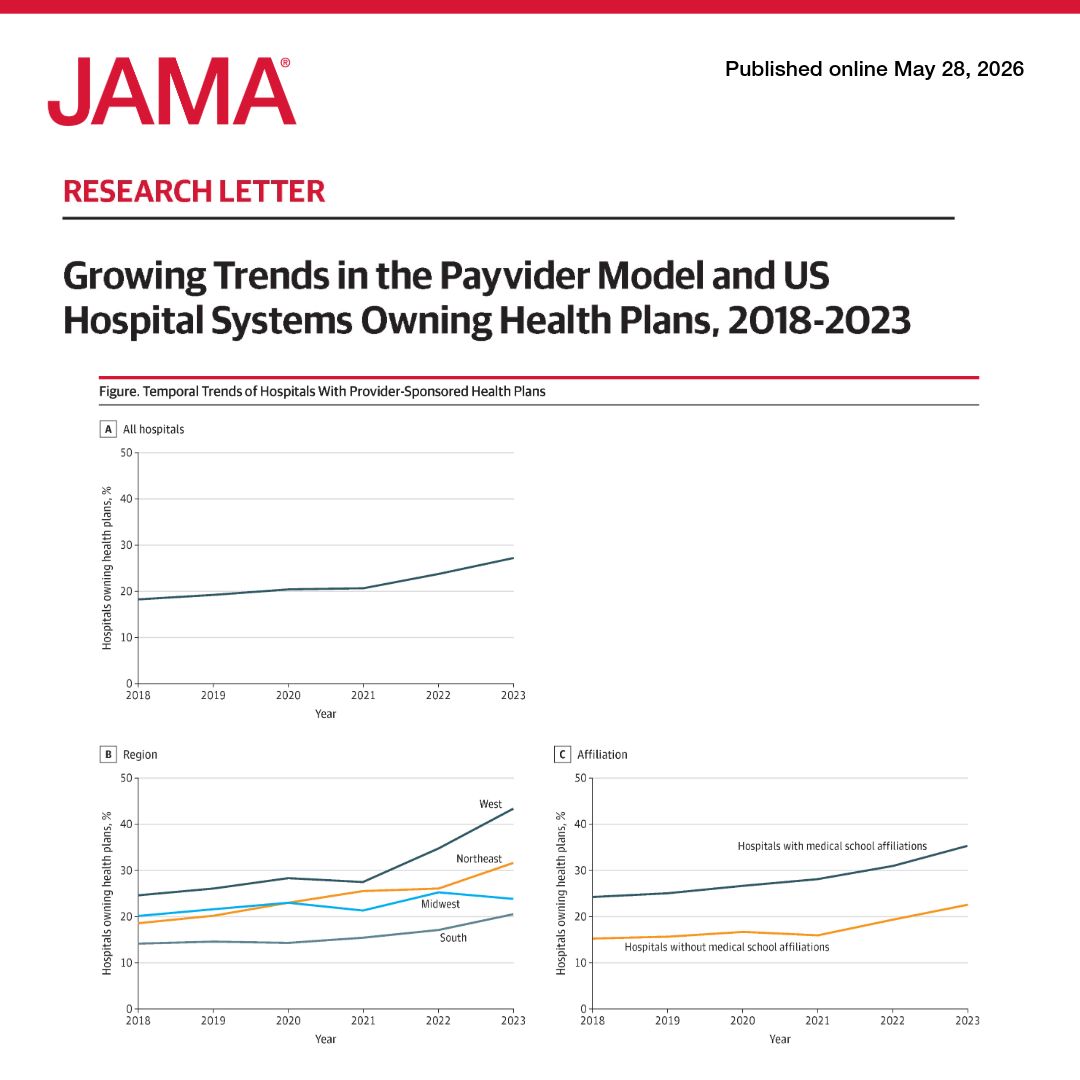

Between 2018 and 2023, hospital-led provider-sponsored health plans (#PSHPs) in the US increased from 18.3% to 27.2%. Growth was largest in the West and most prevalent among nonprofit and medical school-affiliated hospitals, reflecting alignment with population health and financial risk-sharing missions.
PSHPs offer integrated care-and-coverage models, potentially reducing payer-provider friction, but may have limited customer service capabilities and unique implications for clinicians and employers. Ongoing evaluation is needed to determine the long-term effects on patient access, cost, and care quality.
https://ja.ma/3PYdS0C
PSHPs offer integrated care-and-coverage models, potentially reducing payer-provider friction, but may have limited customer service capabilities and unique implications for clinicians and employers. Ongoing evaluation is needed to determine the long-term effects on patient access, cost, and care quality.
https://ja.ma/3PYdS0C
Shared byKai Park - 2 days ago
Log in to comment
Loading ..
Related Articles

Combined Helicobacter pylori and FIT Screening: Cost-Effective Colorectal Cancer Prevention

2025 ACC/AHA/ACEP/NAEMSP/SCAI Guideline for Acute Coronary Syndrome Management

AI-Powered CDS in Medicine: Navigating Advertising Challenges and Ethical Standards

Cost-Effective Gastric Cancer Prevention with Co-Testing in Taiwan: A JAMA Analysis
Comprehensive Network Meta-Analysis on Blood Pressure Drug Discontinuation Rates
Breast Cancer Gene Study Reveals Gaps in High-Risk Screening Recommendations
20
0/100