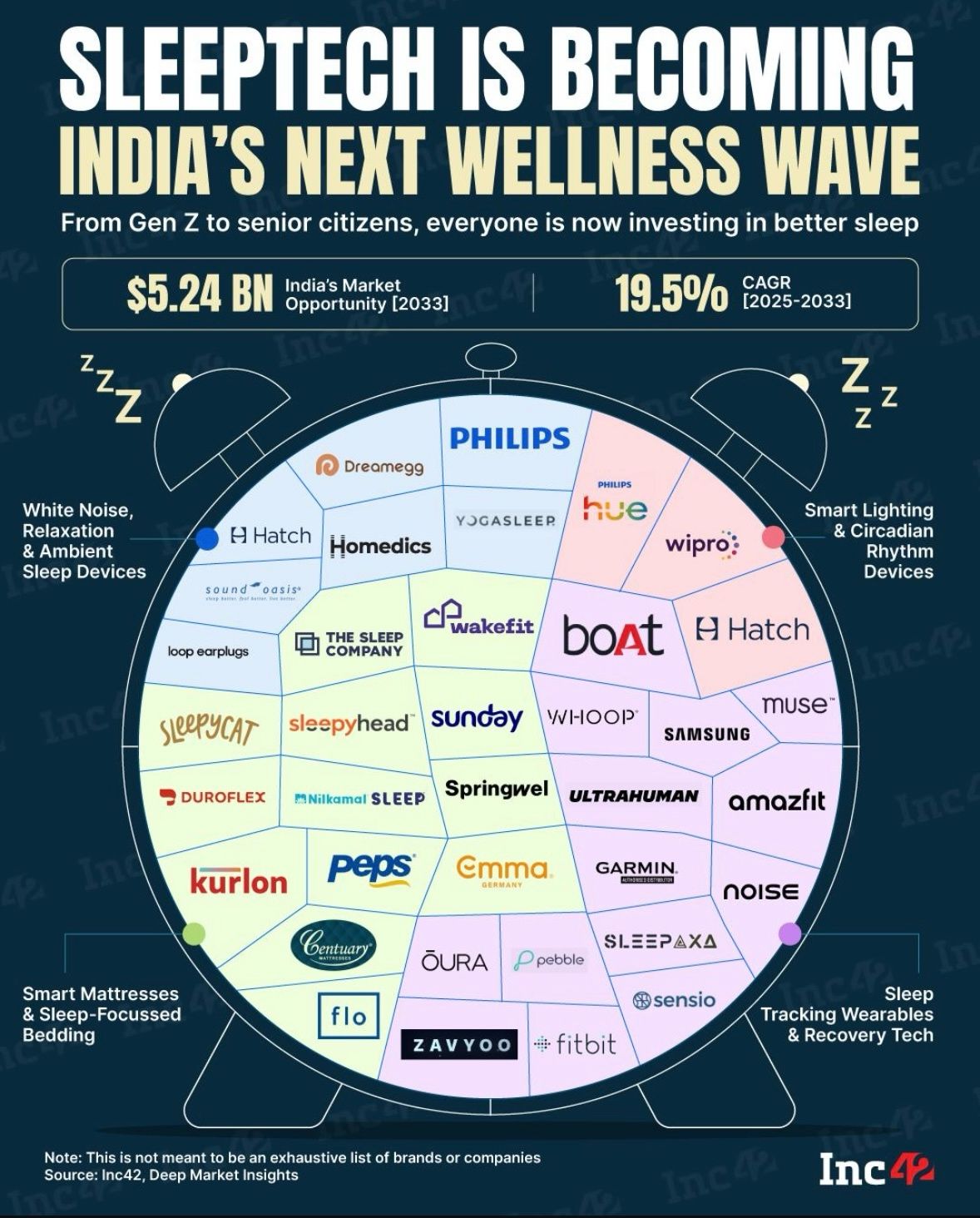

India’s sleep economy is projected to cross $12 billion this decade.
At the same time:
1. 62% of Indians reportedly don’t get quality sleep consistently
2. Wearable adoption is rising rapidly
Which means sleep is quietly becoming India’s next wellness wave.
But most brands are still thinking too small.
Right now, sleep in India is treated like a side effect.
If you’re tired buy magnesium, drink chamomile tea or reduce screen time
But that’s changing fast.
Because sleep is no longer just a health conversation, it’s becoming a longevity and recovery market.
And India is perfectly positioned for it.
Urban stress is rising.
Wearables are exploding.
Remote work blurred time boundaries.
And younger consumers are spending aggressively on optimization.
The result?
Sleep is slowly shifting from passive rest → active wellness infrastructure.
So the future of sleeptech won’t be built around mattresses or supplements alone.
It’ll be built around decision systems.
Because most people don’t actually know:
1. Why they slept badly
2. What disrupted recovery
3. Whether routines are improving anything
That uncertainty is the real market.
And AI is what turns that uncertainty into behavior change.
📌 The first wave was tracking
Apps measured sleep duration, heart rate, movement and sleep stages
But dashboards don’t create outcomes because most users stop checking data after a few weeks.
📌 The next wave is adaptive intervention
Not “Here’s your sleep score.”
But:
1. Detecting stress patterns before sleep quality drops
2. Adjusting routines dynamically based on behavior
3. Predicting burnout from recovery trends
4. Recommending interventions tied to environment and physiology
That’s where retention compounds.
And a few global brands are already proving this works.
📍Oura
Oura’s AI driven readiness system helped push the company beyond 2.5 million rings sold and a valuation above $5B.
Because the product evolves with user behavior instead of acting like a static tracker.
📍Eight Sleep
Eight Sleep uses AI to dynamically regulate bed temperature based on biometric signals.
Users reported up to 1 hour more sleep per night and stronger recovery metrics.
The company crossed $500M+ valuation by positioning itself around recovery optimization not “smart mattresses.”
So where is the real opportunity for Indian brands?
And the answer is in lightweight AI layers on top of existing wellness behaviors.
1) AI sleep copilots connected to wearables and routines
2) Adaptive supplement and recovery recommendations
3) Personalized wind down systems based on stress and lifestyle
4) Predictive recovery insights for founders, athletes and professionals
Because the future of wellness isn’t static personalization.
It’s continuously responsive systems that evolve with the user.
And the brands that understand this early won’t just sell sleep products, they’ll own recovery infrastructure.
At the same time:
1. 62% of Indians reportedly don’t get quality sleep consistently
2. Wearable adoption is rising rapidly
Which means sleep is quietly becoming India’s next wellness wave.
But most brands are still thinking too small.
Right now, sleep in India is treated like a side effect.
If you’re tired buy magnesium, drink chamomile tea or reduce screen time
But that’s changing fast.
Because sleep is no longer just a health conversation, it’s becoming a longevity and recovery market.
And India is perfectly positioned for it.
Urban stress is rising.
Wearables are exploding.
Remote work blurred time boundaries.
And younger consumers are spending aggressively on optimization.
The result?
Sleep is slowly shifting from passive rest → active wellness infrastructure.
So the future of sleeptech won’t be built around mattresses or supplements alone.
It’ll be built around decision systems.
Because most people don’t actually know:
1. Why they slept badly
2. What disrupted recovery
3. Whether routines are improving anything
That uncertainty is the real market.
And AI is what turns that uncertainty into behavior change.
📌 The first wave was tracking
Apps measured sleep duration, heart rate, movement and sleep stages
But dashboards don’t create outcomes because most users stop checking data after a few weeks.
📌 The next wave is adaptive intervention
Not “Here’s your sleep score.”
But:
1. Detecting stress patterns before sleep quality drops
2. Adjusting routines dynamically based on behavior
3. Predicting burnout from recovery trends
4. Recommending interventions tied to environment and physiology
That’s where retention compounds.
And a few global brands are already proving this works.
📍Oura
Oura’s AI driven readiness system helped push the company beyond 2.5 million rings sold and a valuation above $5B.
Because the product evolves with user behavior instead of acting like a static tracker.
📍Eight Sleep
Eight Sleep uses AI to dynamically regulate bed temperature based on biometric signals.
Users reported up to 1 hour more sleep per night and stronger recovery metrics.
The company crossed $500M+ valuation by positioning itself around recovery optimization not “smart mattresses.”
So where is the real opportunity for Indian brands?
And the answer is in lightweight AI layers on top of existing wellness behaviors.
1) AI sleep copilots connected to wearables and routines
2) Adaptive supplement and recovery recommendations
3) Personalized wind down systems based on stress and lifestyle
4) Predictive recovery insights for founders, athletes and professionals
Because the future of wellness isn’t static personalization.
It’s continuously responsive systems that evolve with the user.
And the brands that understand this early won’t just sell sleep products, they’ll own recovery infrastructure.
Shared byTaylor Raman - 10 days ago
Log in to comment
Loading ..
Related Articles

Google Pay's Universal Commerce Protocol: AI Agents and Commerce Evolution
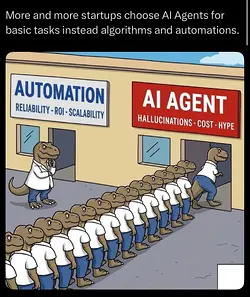
Balancing AI Agents and Automation in Real-World Workflows

AI's Surprising Role in Recovering Forgotten Bitcoin: A Man's $400,000 Recovery Story

Revolutionizing Fintech: How AI is Transforming Loan Approvals and Fraud Detection
Visual AI's Impact on Mobile Market: Downloads vs. Traditional Chatbots
Amazon's AI Hiring Bot: Mistake: The Dark Side of AI's Learning from Historical Data
141
0/100